Which factors should you prioritise?
First work out how much fridge and freezer space you need, then compare the annual energy use of formats that meet those needs.
Fridge only
Consider it if: you store few frozen foods or already have enough freezer space.
Limitation: on its own, it won’t meet a regular need for frozen storage.
Fridge-freezer
Consider it if: you regularly use both the fridge and freezer compartments but don’t need to store very large quantities of frozen food.
Limitation: check that the freezer compartment has enough space for your biggest shops.
Separate freezer
Consider it if: you regularly need to store more frozen food than a fridge-freezer suited to your household can hold.
Limitation: this second appliance takes up space and also runs continuously.
| Factor |
What to check |
Who is this for? |
| Annual energy use |
Compare the kWh/year and usable capacities of models with a similar format and capacity, rather than looking at their energy rating alone. |
When an appliance stays plugged in all year, I want to know its stated energy use before choosing its size; around 42% of consumers prioritise this factor. |
| Capacity split |
Check the usable capacity of the fridge and freezer separately, based on your usual shopping habits. |
If I mainly store fresh food with a few frozen items, I need two suitably sized compartments without making either one unnecessarily large; around 33% of consumers prioritise this split. |
| Large freezer capacity |
Work out the maximum amount you regularly store, then consider the space needed and kWh/year of any additional appliance. |
For bulk buys or food I’ve prepared to freeze, I need enough room for a substantial amount of frozen food on a regular basis; around 25% of consumers prioritise this capacity. |
Fridge-freezers available on Joybuy
These models combine refrigeration and freezing in a single appliance. Compare their stated total capacity with your needs, then check the capacity of each compartment, kWh/year and dimensions on the individual product page before choosing.
 Image unavailable
Candy CFQQ5T817EPS, four doors, 467 L
Worth considering if you’re looking for a four-door fridge-freezer and have enough space for it. The title lists a capacity of 467 L, an E rating and Total No Frost; check how the capacity is split between the fridge and freezer, along with the dimensions and clearance needed.
View on Joybuy
 Image unavailable
Haier HTW5618ENMG, three doors, 360 L
Worth considering if a three-door fridge-freezer suits the way you like to organise your food. The title lists a capacity of 360 L, an E rating, Total No Frost, Wi-Fi and My Zone; compare the capacity of both compartments with your shopping needs and check that you have enough space.
View on Joybuy
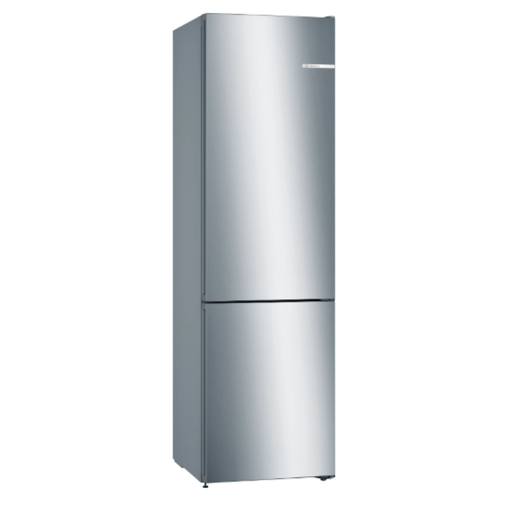 Image unavailable
Bosch KGN39VLEB, 368 L, E rating
Worth comparing if you need both fridge and freezer space in one appliance. The title lists a total capacity of 368 L and an E rating; check how much space is available for frozen food, the kWh/year and the installation clearances.
View on Joybuy
 Image unavailable
Bosch KGN33NLEB, bottom freezer, 282 L
Worth considering if this total capacity suits the way you store fresh and frozen food. The title specifies 282 L and an E rating; check the usable capacity of each compartment and the dimensions before choosing this format.
View on Joybuy
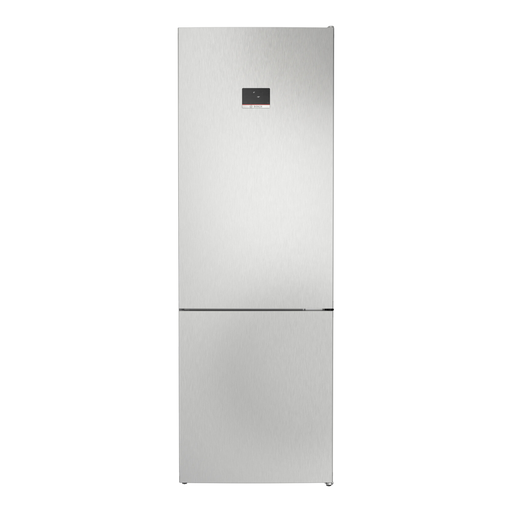 Image unavailable
Bosch KGN497LDF, 440 L, D rating
Worth considering if you regularly use both compartments and are looking for the stated total capacity of 440 L. Check the usable capacity of each compartment, kWh/year and dimensions. If a frost-free freezer is important to you, confirm the defrosting system on the product page.
View on Joybuy
Frequently asked questions
How can I compare energy labels without overestimating the savings?
Compare the kWh/year of appliances with a similar format and usable capacity, then use the A to G rating as another point of reference. The energy use shown on the label won’t necessarily match the results in every home: installation and usage also make a difference.
What capacity should I look for to avoid buying an appliance that’s too large?
UFC-Que Choisir gives an average guideline of 100 to 150 litres for one person, then 50 litres for each additional person. Adjust this starting point to how often you shop and check separately how much freezer space you need.
Should I choose No Frost to use less energy?
No. No Frost alone doesn’t prove that one model will use less energy than another. If reducing the need for defrosting matters to you, look at this feature, then compare the kWh/year and usable capacities. UFC-Que Choisir notes that ice build-up can increase energy use on relevant appliances.
What should I check before installing a fridge-freezer or freezer?
Measure the space and follow the manual for your chosen model, including guidance on clearances, ventilation and setting it up after transport. UFC-Que Choisir recommends keeping refrigeration appliances away from heat sources; always follow the instructions for your specific model.


