What should you look for?
When planning your shopping and meals at home, first work out whether your main priority is fresh food, frozen food, available space or the energy consumption of an appliance that runs continuously.
Fridge
Consider this: if most of your food is fresh and you don’t need to freeze food for long periods, or already have another appliance for this.
Bear in mind: it won’t provide the freezer capacity you need for large stocks of frozen food.
Fridge-freezer
Consider this: if you need space for both fresh and frozen food in one place.
Bear in mind: the total capacity is split between two compartments, and one may be too small for your needs.
Fridge and separate freezer
Consider this: if you need more freezer space for long-term storage than a fridge-freezer offers, while still having everyday access to fresh food.
Bear in mind: you’ll need space for two appliances, both of which run continuously.
| Criteria |
What to check |
Who is it for? |
| Fresh food capacity |
The fridge compartment’s capacity in litres and the storage layout, rather than just the total capacity. |
If I mainly store fresh food after regular small shops, I want easy access to it without giving too much space over to frozen food; around 30% of consumers prioritise fresh food storage. |
| Freezer capacity |
The capacity in litres dedicated to freezing in the fridge-freezer or separate freezer. |
To store bulk purchases or prepared portions, I need enough freezer space; this is the top priority for around 30% of consumers. |
| Space and capacity split |
The dimensions of the space available and, for a fridge-freezer, the capacity of each compartment. |
If two appliances won’t fit in the available space, I need to find a capacity split that suits my shopping habits; around 20% of consumers prioritise this space and layout constraint. |
| Energy consumption and features |
The stated annual energy consumption and useful features, comparing appliances of a similar type and capacity. |
I’d rather avoid extra capacity or features I won’t use in an appliance that’s always plugged in; managing this continuous use is a priority for around 20% of consumers. |
Refrigeration appliance brands to know
There are no brand profiles to display in this section.
Appliances to compare on Joybuy
These appliances illustrate two ways to organise your food shopping: a fridge-freezer for keeping fresh and frozen food in one place, or a chest freezer to supplement a fridge. Compare the usable capacity of each compartment and the space needed for your layout.
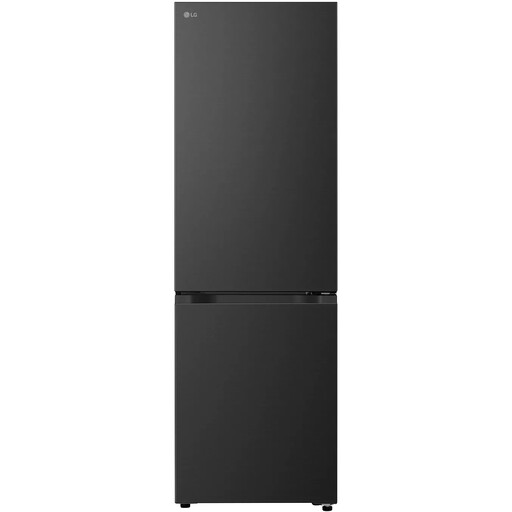 Image unavailable
LG GBBS312AEV, 333 L black fridge-freezer
For storing fresh and frozen food in one appliance. This model is listed with a total capacity of 333 L, an A energy rating and No Frost technology; check the capacity of each compartment and the space needed for installation.
View on Joybuy
 Image unavailable
Candy CFQQ5T817EPS, 467 L four-door fridge-freezer
For fresh and frozen food storage in a multi-door appliance. This silver model is listed with a total capacity of 467 L, an E energy rating and Total No Frost; check how the capacity is split, the overall dimensions and which way the doors open before choosing where to put it.
View on Joybuy
 Image unavailable
Bosch KGN33NLEB, 282 L fridge-freezer with bottom freezer
For keeping fresh and frozen food in one appliance, with the freezer at the bottom. The stated total capacity is 282 L and the energy rating is E; check the separate compartment capacities and allow for the ventilation clearance needed for installation.
View on Joybuy
 Image unavailable
Samsung RF50C530EB1, 495 L multi-door fridge-freezer
For a household looking for plenty of space for both fresh and frozen food in one appliance. This black model is listed with a total capacity of 495 L and an E energy rating; measure the space and required clearances, then compare the capacity of each compartment with your needs.
View on Joybuy
 Image unavailable
CHiQ JR99DWE, 99 L chest freezer
For adding freezer space while keeping a fridge for fresh food. This 99 L white chest freezer is listed with an E energy rating and a removable basket; allow for manual defrosting and check the annual energy consumption on the label before comparing its continuous use with another model.
View on Joybuy
Frequently asked questions
Do fridges and freezers have an energy label?
Yes, for appliances covered by European Commission Delegated Regulation (EU) 2019/2016. This includes mains-powered refrigeration appliances with a capacity of more than 10 L and up to 1,500 L, subject to the exclusions set out in the regulation. Compare models of a similar type and capacity.
Can a repairability index help you choose between two fridges?
Not under the French regulatory index for this category: the lists published by the French Ministry for the Ecological Transition for repairability and durability indices do not include fridges or freezers. Instead, ask about the warranty and repair terms, as well as the information available on spare parts.
How can you compare the energy consumption of two refrigeration appliances?
Compare their stated annual energy consumption, looking at models with a similar type, capacity and features, rather than comparing their energy ratings alone. ADEME points out that these appliances run continuously; the figure stated for each model is more useful for comparing them than an average based on other appliances.
What should you do with your old appliance when replacing it?
Arrange for it to be taken away before your new fridge or freezer is delivered. Ask the retailer how collection of an old equivalent appliance works and what practical arrangements you’ll need to make for its removal.


