What should you look for?
A fridge, a fridge freezer and a separate freezer don’t offer the same kind of storage. First decide what types of food you need to store, then check which models will fit your space.
Fridge
Choose this if: you mainly store fresh food or already have a separate freezer.
Bear in mind: check whether the appliance has no freezer or just a small freezer compartment. You may need another appliance for frozen food.
Fridge freezer
Choose this if: you store fresh and frozen food every day and want both in one appliance.
Bear in mind: the space allocated to each compartment varies by model, so you can’t tell from the total capacity alone.
Upright freezer
Choose this if: you mainly need to store frozen food in easy-to-access drawers.
Bear in mind: you’ll need a separate space for it, with enough room to open the door and access the drawers.
Chest freezer
Choose this if: you freeze large quantities of food and have enough floor space.
Bear in mind: it can take more sorting to reach food at the bottom. A chest freezer isn’t necessarily suitable for an unheated room.
| What to consider |
What to check before buying |
Who this matters to |
| Capacity split |
Compare the litres allocated to fresh and frozen food, rather than looking only at the total capacity shown on the European label. |
If my freezer is overflowing while my fridge has enough space, I’m mainly looking for a capacity split that addresses the imbalance. Around 33% of consumers would put this need first. |
| Energy use and noise |
Check the annual energy consumption in kWh and the noise level on the label. Compare appliances with similar capacities and configurations that meet the same needs. |
If an appliance runs continuously near living areas, I want to keep its energy use under control without overlooking the noise. Around 27% of consumers would share this priority. |
| Installation |
Measure the space and access routes, then check the manual for door opening requirements, clearances and the recommended ambient temperature range. |
With a narrow alcove or a room that isn’t kept at a steady temperature, I need to be able to install and use the model as intended. Around 20% of consumers would put this compatibility first. |
| Repair or replace |
If time allows, arrange a diagnosis and quote before deciding to replace the appliance. |
When my old appliance breaks down, I want to know whether it can be repaired before buying another one. This would be the first consideration for around 20% of consumers. |
Fridge freezers available on Joybuy
These appliances combine refrigeration and freezing in one unit. Before choosing a type, compare how much space each function gets and check the installation requirements. A fridge or separate freezer would suit a different split of storage needs.
 Image unavailable
Samsung RB33B612EBN, 344 L black fridge freezer
For storing fresh and frozen food in one appliance. The stated total capacity is 344 L and the energy rating is E. Check the clearances and door opening space available where you plan to put it.
View on Joybuy
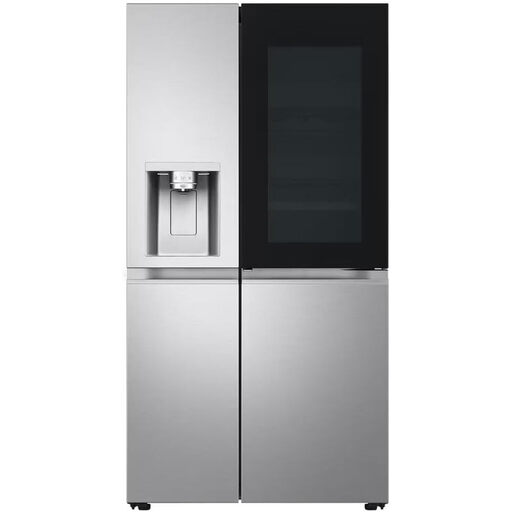 Image unavailable
LG GSXE90BSAD, 628 L American-style fridge freezer
For a household looking for a large fridge and freezer in one appliance. The stated total capacity is 628 L and the energy rating is D. Check access routes and the available space, and make sure you can connect the water supply specified for this model.
View on Joybuy
 Image unavailable
Bosch KGN33NLEB, 282 L fridge freezer with bottom freezer
For keeping fresh and frozen food in a fridge freezer with the freezer at the bottom. The stated total capacity is 282 L and the energy rating is E. Check the installation requirements and door-opening direction before ordering.
View on Joybuy
 Image unavailable
CHiQ JR525WSE, 525 L side-by-side fridge freezer
For splitting a generous amount of space between fresh and frozen food. The product title lists 333 L of fridge capacity, 192 L of freezer capacity and an E energy rating. Compare its annual energy consumption and check the full dimensions before choosing this style.
View on Joybuy
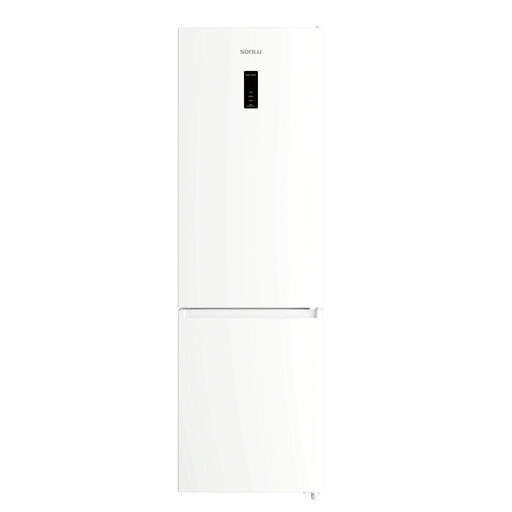 Image unavailable
Sonlu CD‑400RW, 355 L fridge freezer
For everyday use, with space for both fresh and frozen food. The title lists 252 L of fridge capacity, 103 L of freezer capacity, a width of 60 cm, a reversible door and an E energy rating. Also check the depth, clearances and annual energy consumption.
View on Joybuy
Frequently asked questions
What temperature should I set after installation?
Keep an eye on the temperature in the coldest area of the fridge, which should be 4 °C as recommended by Anses, and follow the appliance manual. Anses also explains that freezing food at home to −18 °C stops bacteria from multiplying, but doesn’t kill most micro-organisms.
What should I do with my old fridge or freezer?
In France, the Ministry for the Ecological Transition explains that retailers can take back an old appliance of the same type when you buy a new one. Ask the retailer how collection is arranged, especially if your new appliance is being delivered. ADEME also says that refrigeration appliances must be taken to an appropriate collection point.
Is it worth repairing an appliance before replacing it?
Ask for a diagnosis and a quote if the repair timescale works with your need to keep food cold. You can then compare repairing the appliance with replacing it, without assuming that a repair will also solve a lack of storage space or an installation issue.
Can you install any chest freezer in a garage?
No. A chest freezer’s shape alone doesn’t determine whether it can cope with the temperature in your garage. Check the recommended ambient temperature range in the manual, or look for explicit guidance from the manufacturer for the exact model. For example, Liebherr only describes some of its FrostProtect chest freezers as suitable for garage use.
How do I compare the energy consumption of two appliances?
Compare the annual kWh figures on the energy labels of appliances that meet the same storage needs. The European Commission says the label also shows the energy rating, capacity and noise level. So the rating letter alone doesn’t tell you how much usable space an appliance has.


