If you want to keep fresh and frozen food in one appliance, start by comparing the capacity of each compartment in a fridge-freezer. A one-door fridge is better suited to households that mainly need space for fresh food, while separate fridge and freezer appliances are worth considering if freezing plays a bigger part in your routine and you have room for two appliances. In every case, check the available space, then compare energy use and noise levels between models of a similar size and capacity.
Which households are these options suited to?
Households that do a weekly shop
The fridge needs enough room for your weekly shop, prepared meals and any extra items you pick up between shops. UFC-Que Choisir distinguishes between these uses in its fridge-freezer testing protocol, so check the usable capacity of the fresh-food compartment, not just the total capacity of the appliance.
Households that regularly freeze meals
Space for frozen food and the layout of the drawers may matter more than the total capacity. UFC-Que Choisir also looks at more intensive freezing needs. If you often add food to freeze after your shop, check the specifications of the compartment designed for this purpose.
Households with limited kitchen space
An alcove, nearby wall or narrow doorway could rule out a model that otherwise meets your storage needs. Whirlpool and Bosch’s installation guidance shows why it’s important to check the dimensions, door opening and ventilation requirements in the manual for the model you’re considering.
What should you check before choosing?
First, decide how much space you need for fresh and frozen food. This will help you choose the right format. Then check that the appliance, or both appliances, will fit in your kitchen.
Fridge-freezer
Consider this if: you regularly use both compartments and want them together in a single appliance.
Bear in mind: the amount of space for freezing varies by model. A large total capacity doesn’t guarantee enough room for frozen food.
One-door fridge
Consider this if: you mainly store fresh food or already have a separate freezer.
Bear in mind: check whether it has a freezer compartment and, if so, its capacity. A one-door format alone won’t meet a significant need for frozen-food storage.
Separate fridge and freezer
Consider this if: you need a separate freezer and have enough room to install two appliances.
Bear in mind: you’ll need to check two spaces and compare the energy use of both appliances together, not just the fridge on its own.
| Criteria |
What to check |
Who it matters to |
| Fresh-food capacity |
Compare the fridge’s usable capacity with your usual shopping, separately from the freezer capacity. UFC-Que Choisir suggests 100 to 150 l as a starting point for one person, plus 50 l for each additional person. Adjust this to suit your needs. |
If I fill the fridge during my weekly shop, I want enough room for fresh food and planned meals without choosing an unnecessarily bulky appliance; around 25% of consumers are said to prioritise fresh-food capacity. |
| Freezing capacity |
Check the freezer’s usable capacity in litres and the layout of its drawers. If you regularly freeze fresh food, also look at the specifications for this use. |
When I prepare meals in advance or buy a large amount of frozen food, I need enough freezer space for my needs rather than a large total capacity that’s poorly divided; nearly 25% of consumers are said to prioritise this need. |
| Installation |
Measure the appliance, the space where it will go and the delivery route. Check that the doors can open and that the required ventilation is possible. For a built-in model, also check the housing and fixings. |
With an alcove or nearby wall, I need to know the appliance will fit and the doors will open before comparing capacities; around 31% of consumers are said to put this compatibility first. |
| Energy use and noise |
For models of a similar size and capacity, compare the annual energy consumption on the energy label and the stated noise level in dB(A). |
In an open-plan kitchen, I pay attention to noise as well as the electricity used by an appliance that runs continuously; around 19% of consumers are said to make this their main concern. |
What should you avoid before placing your order?
-
Choosing based on total capacity alone
For a fridge-freezer, this figure combines the fridge and freezer capacity. It could therefore hide a freezer compartment that’s too small for your prepared meals or frozen-food shopping.
Work out how much space you need for each use, then compare the usable capacity of both compartments in the specifications for the exact model.
-
Comparing energy ratings alone
ADEME points out that fridges and freezers run continuously and that their size affects energy use. An energy rating alone isn’t enough to compare appliances of different capacities or formats.
For models that meet similar storage needs, compare the annual energy consumption shown on the label, the usable capacities and the noise levels.
-
Checking the width without planning for installation
An appliance may fit in the space but still cause problems when opening the doors, or if the ventilation requirements aren’t met. A built-in model must also fit its housing and fixing system.
Measure the space and delivery route, then check the installation manual for the model you’re considering before placing your order.
Brands to know when comparing formats
These ranges offer useful points of comparison for formats and installation. The specifications mentioned apply to the models listed, not every model from each brand.
Bosch
Bosch offers freestanding fridge-freezers, one-door fridges and configurations that pair a fridge with a separate freezer.
- To give you an idea of the format, Bosch lists 237 l of fridge capacity and 89 l of freezer capacity for its 600 mm-wide KGN36VLED fridge-freezer.
- Check the ventilation requirements and installation options in the manual for the model you choose.
Liebherr
The range includes large fridge-freezers worth considering if storage capacity is a priority.
- Liebherr states that the CBNste 8872 has a total capacity of 522 l.
- According to the brand, this model is 91 cm wide, so consider its capacity alongside the space you actually have available.
Whirlpool
The brand’s built-in fridge-freezers can be a useful reference when the housing and door-panel fixings influence your choice.
- Whirlpool lists the WHC20D011B1FR for a 56 cm-wide housing, with sliding hinges and a reversible door.
- These specifications don’t remove the need to check the other housing dimensions, the door panel and the installation manual for this model.
Beko
The range lets you compare the internal layout and features listed for the fresh and frozen compartments.
- Beko offers models with dedicated compartments and air circulation technologies.
- Don’t assume that the food-preservation benefits highlighted by the brand apply across the whole range. Check the capacity, dimensions and energy label for the exact model.
Fridge-freezers and multi-door fridges to consider on Joybuy
These appliances combine fridge and freezer compartments in a single unit. This selection includes freestanding and built-in fridge-freezers, as well as a multi-door model. Compare their capacity and format with your kitchen before deciding.
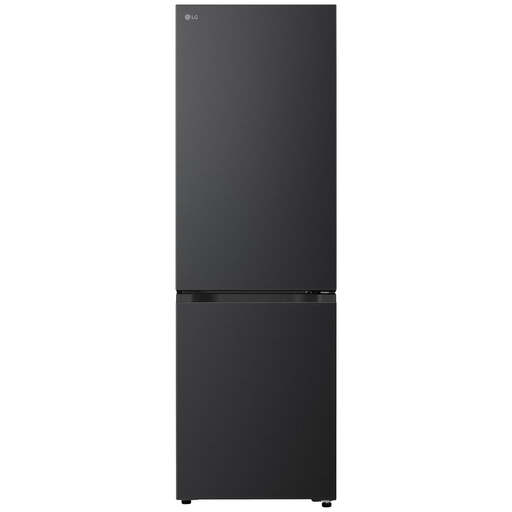 Image unavailable
LG GBBS312CEV, black 333 l fridge-freezer, C rated
Worth considering if you want to combine fresh and frozen food storage in one fridge-freezer. The model is listed with a total capacity of 333 l and a C energy rating. Check the capacity of each compartment, the clearance needed and the delivery route into your kitchen.
View on Joybuy
 Image unavailable
Hisense RB3B250SAWC, built-in 252 l fridge-freezer, C rated
Worth considering if your kitchen has a built-in space for fresh and frozen food. The model is listed with a total capacity of 252 l, No Frost and a C energy rating. Check the housing dimensions, ventilation and fixings in the manual.
View on Joybuy
 Image unavailable
Samsung RF50C530EB1, black 495 l multi-door fridge, E rated
Worth considering if you’re looking for a multi-door appliance that combines both uses and have a suitable space for it. The stated total capacity is 495 l and it has an E energy rating. Measure the delivery route, ventilation space and room needed to open the doors.
View on Joybuy
 Image unavailable
AEG NSC6M18FES, white 249 l built-in fridge-freezer, E rated
Worth considering for a fitted kitchen with a housing and a need for fresh and frozen food storage. The model title lists a total capacity of 249 l, TwinTech No Frost and an E energy rating. Check the detailed capacities, housing dimensions and annual energy consumption in the product specifications.
View on Joybuy
 Image unavailable
Bosch KGN33NLEB, 282 l fridge-freezer, E rated
Worth considering if you prefer a fridge-freezer with the freezer at the bottom. The stated total capacity is 282 l and it has an E energy rating. Check how the capacity is divided between the compartments, as well as the door clearance and ventilation requirements for your space.
View on Joybuy
Frequently asked questions
What capacity should you choose for your household?
Start with the usable capacity of the fresh-food compartment, then adjust it to suit your shopping habits. UFC-Que Choisir suggests 100 to 150 l for one person and an extra 50 l for each additional person. Prepared meals and the amount of freezer space you want may affect your choice.
Is total capacity enough to compare two fridge-freezers?
No. Compare the usable fridge and freezer capacities separately. If you store lots of frozen food or freeze meals, also check the layout of the freezer and the specifications for this use, even if the total capacity seems suitable.
What should you measure before buying a built-in model?
Measure the housing, delivery route and space needed to open the doors. Then check the door-panel fixings and ventilation in the manual for the model you’ve chosen. Installation requirements vary between models.
How can you compare energy use and noise levels?
Compare the stated annual energy consumption and noise levels of appliances with similar formats and capacities. The European Union describes the energy label as a tool for comparison. In an open-plan kitchen, also check the dB(A) rating for the exact model rather than relying on its energy rating alone.


