What to compare
First, choose the type of appliance to suit what you need to store. Then compare the capacity, location and energy use of models that meet that need. Que Choisir describes the available formats and capacity criteria, while ADEME notes that size and features can affect energy use.
Fridge only
Consider this if: you mainly store fresh food and already have enough freezer space.
Check: whether it has a freezer compartment and, if so, its capacity. “One door” alone doesn’t tell you either of these things.
Fridge-freezer
Consider this if: you’re replacing both your fresh-food storage and a supply of frozen food with a single appliance.
Check: the capacity in litres of each compartment. Total capacity alone won’t tell you how much room there is for frozen food.
Separate freezer
Consider this if: your main need is to store frozen food, or the freezer compartment in a fridge-freezer won’t hold enough.
Check: the space available and how easy it is to reach your food. Chest and upright freezers are organised differently.
| Criteria |
What to check before buying |
Who it matters most to |
| Electricity use |
Compare kWh/year for appliances that meet the same need, and check their capacity. Don’t focus on the A to G rating alone. |
If I want to keep electricity costs under control without choosing an appliance that’s too small for my needs, I compare the annual energy use of suitable models. Around 28% of consumers put this first. |
| Capacity and size |
Measure the space, access route and door clearance. Compare the usable capacity in litres of each compartment, not just the total capacity. |
When space is limited or storage habits change, I look for enough capacity to fit the room. Around 28% of consumers put usable capacity and overall size first. |
| Fresh and frozen food capacity |
Assess your fresh and frozen food storage needs separately. For a separate freezer, consider the space available and how easy it is to access. |
If I store a lot of frozen food, I check whether a fridge-freezer compartment will be enough or whether a dedicated appliance better suits my needs. Around 22% of consumers prioritise this capacity. |
| Features and maintenance |
Check the features and interior layout on the product details for the exact model. Don’t assume that a brand’s food-preservation claims apply to its entire range. |
To make maintenance easier, I look at the cooling system and features that suit the way I store food. Around 11% of consumers put easy maintenance and practical features at the top of their list. |
| Delivery, removal and support |
Ask about delivery and collection of your old appliance. Check who the professional seller is and keep your proof of purchase. |
If I need to arrange for an old appliance to be taken away and a new one delivered, I check the arrangements before ordering. Around 11% of consumers prioritise a straightforward replacement and the services involved. |
Appliances to consider on Joybuy
These options cover replacing a fridge-freezer or choosing a separate freezer. Compare capacity, dimensions and kWh/year to suit the way you’ll use it.
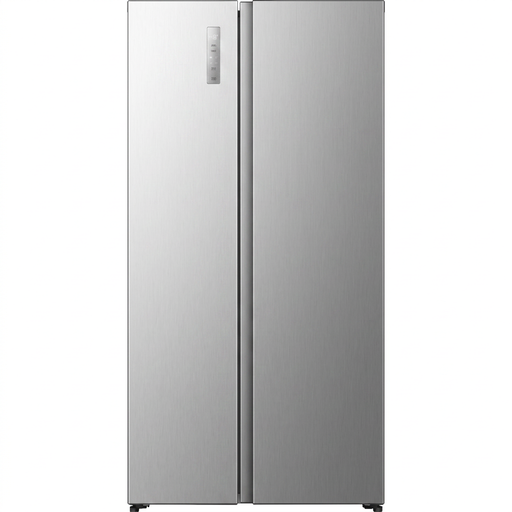 Image unavailable
Hisense RS3P558NEID Side-by-Side 544 L
Worth considering if you’re looking for a combined appliance with plenty of storage for both fresh and frozen food.
Stated capacities: 347 L for the fridge and 197 L for the freezer; 254 kWh/year, D energy rating. Dimensions: 911 × 1786 × 615 mm. Check the space and access route before installation.
View on Joybuy
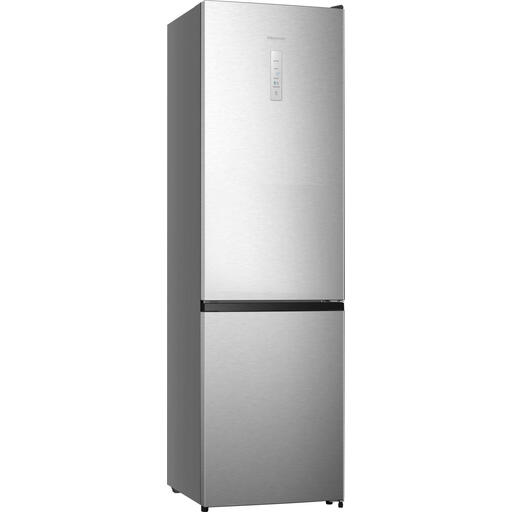 Image unavailable
Hisense RB440N4CCB 336 L
Worth considering if you want a freestanding fridge-freezer and would like to compare its annual energy use with models that meet the same needs.
Stated capacities: 238 L for the fridge and 98 L for the freezer; 135 kWh/year, B energy rating. The product details state 35 dB and a reversible door that opens to 90° without protruding.
View on Joybuy
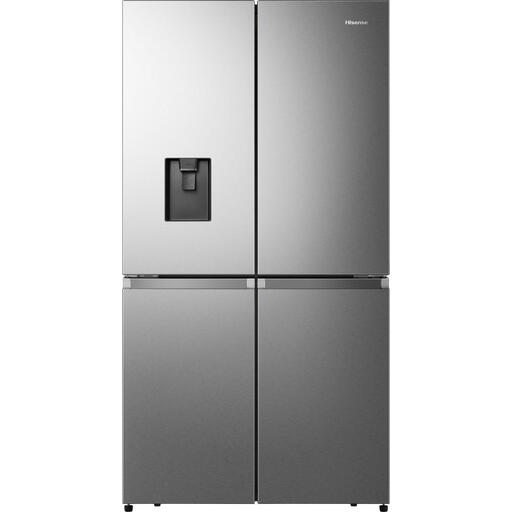 Image unavailable
Hisense RQ758N4SWSE 606 L
Worth considering if you need several fresh and frozen food compartments and have enough space for a four-door appliance.
The product details state 390 L for the fridge and a 216 L freezer or variable-temperature zone, 320 kWh/year and an E energy rating. The variable zone is stated to be adjustable from around −20 °C to +5 °C; the door isn’t reversible.
View on Joybuy
 Image unavailable
AUCMA Convertible Chest Freezer 291 L
Worth considering if your main need is frozen food storage and a chest freezer suits the space you have available.
Stated capacity: 291 L; 226 kWh/year, E energy rating. Dimensions: 1100 × 597 × 872 mm. This model can be converted into a fridge and opens from the top.
View on Joybuy
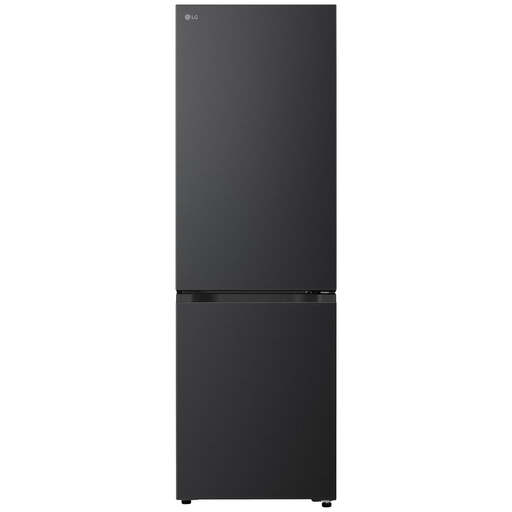 Image unavailable
LG GBBS312CEV 333 L
Worth considering if you’re looking for a fridge-freezer with a bottom freezer and can allow the required clearance for installation.
Stated capacities: 183 L for the fridge, 113 L for the freezer and 37 L for the chill compartment; 169 kWh/year, C energy rating. Stated width: 597 mm. The product details require at least 5 cm of clearance at the back, above and on the sides, as well as a dedicated earthed socket.
View on Joybuy
Frequently asked questions
Is a better energy rating enough to choose an appliance?
No. Compare kWh/year and the fresh and frozen food capacities too, then choose appliances with a suitable function and capacity. The European Commission explains the annual energy use and capacity details shown on the label. The DGCCRF states that the current scale runs from A to G, as of 1 March 2021.
How do you compare the energy use of two appliances?
Compare the kWh/year shown on the labels of models that meet the same needs for fresh and frozen food. ADEME points out that size and extra features can affect your bills, so energy rating alone won’t help you choose the right capacity.
Can you install a freezer in an unheated room?
It depends on the permitted ambient temperature range for the specific model. Check the instructions before choosing a garage or cold pantry. The words “freezer” or “NoFrost” alone aren’t enough to confirm that it’s suitable.
Does the retailer have to take away your old appliance?
In France, when you buy a new appliance, the retailer must take back an equivalent used product free of charge under the “one-for-one” take-back scheme. The DGCCRF explains this requirement. Ask how the collection will be arranged, as this doesn’t mean installation is free.
Who should you contact to exercise your legal guarantee of conformity?
If you’re a private individual who bought goods in France from a professional seller, contact that seller. The Ministry of the Economy states that this mandatory guarantee applies to new, second-hand and reconditioned goods. An optional commercial warranty doesn’t replace it.


