Who are these options for?

Households buying fresh and frozen food each week

If you want to store both types of food in one appliance, compare the capacity in litres for the fridge and freezer compartments, not just the total capacity. UFC-Que Choisir’s guide links the choice of appliance format to your shopping habits.

Households stocking up on frozen food

For long-term storage of frozen food or to freeze food yourself, check the freezer capacity and star rating separately. The Ministry of Agriculture distinguishes between storing food that’s already frozen and freezing food at home.

Households buying very little frozen food

A small compartment may be suitable for occasional use, as long as its star rating matches how long you want to store food. If you plan to freeze fresh food, check that the compartment is designed for this purpose.

What matters for your shopping habits?

Fridge-freezer

Choose this if: you regularly need to store fresh and frozen food in one appliance.

Bear in mind: the space in each compartment varies by model; a large total capacity doesn’t guarantee plenty of room for frozen food.

Fridge with a freezer compartment

Choose this if: you buy very little frozen food and don’t plan to freeze food yourself.

Bear in mind: storage time depends on the compartment’s star rating; not all freezer compartments can keep food until its best-before date.

Separate freezer

Consider this if: your priority is to stock up on frozen food or freeze food regularly, and your fridge already has enough space for fresh food.

Bear in mind: you’ll need to make room for a second appliance and factor in the annual energy consumption of both appliances.

Consideration What to check Best for
Stock of frozen food Compare the freezer capacity in litres and the compartment’s star rating. To freeze food at home, check that it has four stars. If I prepare meals to freeze or keep a stock of frozen food, freezer capacity is what guides my choice. Around 46% of consumers prioritise this.
Balance of fresh and frozen food Check the usable capacity of both compartments separately and compare it with how much you buy between shops. When my shopping needs to last a week or more, I want to avoid running out of space in either compartment. This balance of capacity is the main priority for around 36% of consumers.
Space and convenience Measure the available space, then check the appliance’s dimensions and installation type. Also compare the kWh/an shown on the energy label. If I buy very little frozen food, I’d rather not install a second appliance that I’d rarely use. Around 18% of consumers put convenience first, as long as the compartment suits their needs.

Mistakes to avoid

  • Looking only at the total capacity

    Two fridge-freezers with the same total capacity can have different amounts of space for fresh and frozen food. So a large overall figure doesn’t guarantee that you’ll have the room you need in each compartment.

    Check the fridge and freezer capacities in litres separately on the energy label or model specifications, then compare them with your usual shop.

  • Confusing a freezer compartment with a freezer

    The star rating determines how food can be stored. According to the Ministry of Agriculture, a three-star compartment at −18 °C can store food that’s already frozen until its best-before date; four stars are needed to freeze food.

    Choose a compartment based on how long you want to store food, and check its star rating if you plan to freeze meals or other food yourself.

  • Comparing only the energy rating

    The energy rating letter doesn’t tell you the annual consumption or usable capacity. The label introduced by the European Commission also shows details such as kWh/an, compartment capacities and noise levels.

    Compare all these details across models. If you’re considering a fridge and a separate freezer, factor in both appliances.

  • Forgetting the dimensions and installation type

    A large capacity won’t help if the appliance doesn’t fit its intended space. As examples specific to their models, Bosch lists a width of 60 cm for the KGN39AIAU, compared with 74.7 cm for the Liebherr CBNsdc 765i.

    Measure the available space and check the dimensions, installation type, door opening and clearance requirements in the manual for your chosen model.

Brands to consider

Bosch

A brand worth looking at when comparing freestanding fridge-freezers with clearly listed fridge and freezer capacities.

  • For the KGN39AIAU, Bosch lists a 260 L fridge, a 103 L freezer and NoFrost technology.
  • This model measures 203 × 60 × 66,5 cm: check that its height and depth will suit the space available.

Liebherr

A brand to consider if you’re looking for a large-capacity fridge-freezer and have room for a model wider than some 60 cm options.

  • Liebherr lists a total capacity of 423 L for the CBNsdc 765i, with BioFresh, NoFrost and two DuoCooling circuits.
  • Its listed width of 74,7 cm is worth checking before planning its installation in your kitchen.

Beko

A brand to look at for an integrated fridge-freezer. Check the specifications for the model and the dimensions of your cabinet niche.

  • Beko describes the BCHA306E4SN as an integrated model with a 19 L chill compartment set between 0 and 3 °C.
  • The Semi No Frost system listed for its freezer doesn’t mean you can skip checking the maintenance instructions in the manual.

Whirlpool

A brand to consider when comparing integrated and freestanding fridge-freezers with different No Frost options.

  • Whirlpool’s range includes, among other options, 270 L integrated No Frost fridge-freezers.
  • The No Frost label doesn’t tell you the freezer capacity or kWh/an: check these details for the model you’re considering.

Fridge-freezers and chest freezer on Joybuy

This selection includes four fridge-freezers for storing fresh and frozen food in one appliance, plus a convertible chest freezer to consider alongside a fridge. Compare the capacities and space required with your shopping habits; a convertible mode can’t provide both chilled and frozen storage at the same time.

Candy CFQQ5T817EPS four-door fridge-freezer

Candy CFQQ5T817EPS, 467 L four-door fridge-freezer

If your shopping includes both fresh and frozen food, compare the space in each compartment with the quantities you usually buy.

Listed total capacity of 467 L, Total No Frost technology and energy rating E. Check the dimensions and clearance required before choosing this four-door design.

View on Joybuy

Haier HTW5618ENMG three-door fridge-freezer

Haier HTW5618ENMG, 360 L three-door fridge-freezer

If you want one appliance for fresh and frozen food, check that the layout inside suits your shopping habits.

Listed total capacity of 360 L, Total No Frost, energy rating E, Wi-Fi and My Zone. Check the space required for installation.

View on Joybuy
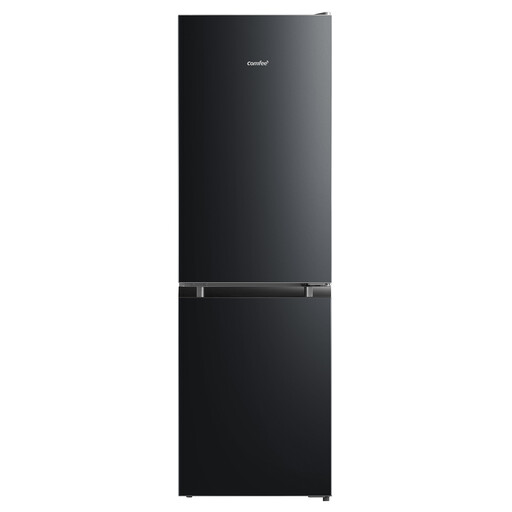
Comfee' by Midea RCB230BL2EU(E) fridge-freezer

Comfee' by Midea RCB230BL2EU(E), 174 L fridge-freezer

With a listed total capacity of 174 L, this fridge-freezer is worth comparing with the amount of fresh and frozen food you keep between shops.

Freestanding, with Low Frost technology and a reversible door. Low Frost doesn’t mean frost-free: check the manual for maintenance guidance and the energy label for kWh/an.

View on Joybuy

CHiQ JR227LSE fridge-freezer

CHiQ JR227LSE, 227 L fridge-freezer

If you shop less frequently, check that its 74 L freezer capacity suits the amount you usually keep in stock, without overlooking your fresh food needs.

153 L fridge and 74 L freezer; listed width of 54 cm, energy rating E, Low Frost technology and a reversible door. Check the energy label for kWh/an and the manual for frost maintenance guidance.

View on Joybuy

AUCMA 291 L convertible chest freezer

AUCMA, 291 L convertible chest freezer

Worth considering if you want to stock up on frozen food and already have a fridge and enough space for a chest freezer.

Listed capacity of 291 L, energy rating E and switchable fridge and freezer modes: they can’t be used simultaneously. Check the dimensions, clearance and defrosting instructions.

View on Joybuy

Frequently asked questions

What fridge capacity should I look for?

UFC-Que Choisir’s guide suggests starting with 100 to 150 L of usable fridge capacity for one person, then adding 50 L for each additional person. Adjust this guide to how often you shop, and check the capacity for frozen food separately: fridge capacity doesn’t tell you how much you can freeze.

Can a freezer compartment replace a freezer?

Not if you want to freeze fresh food regularly: the Ministry of Agriculture distinguishes this from simply storing food that’s already frozen. According to its guidance, a three-star compartment at −18 °C can keep this food until its best-before date, while four stars also allow you to freeze food.

How do I compare the energy consumption of two different formats?

Compare the kWh/an and usable capacities shown on each energy label, rather than looking only at the rating letter. The European Commission says the label also gives information about noise. If you’re considering two separate appliances, check the annual consumption of each one.

What guarantee applies to a new fridge bought from a trader in France?

The legal guarantee of conformity applies to this purchase, according to the Directorate-General for Competition Policy, Consumer Affairs and Fraud Control. It covers any lack of conformity that existed when the goods were delivered and is separate from a retailer’s returns policy for change of mind.

What should I do with my old appliance if I replace it?

ADEME says you can hand your old refrigeration appliance to the retailer or delivery team when it’s replaced, or take it to the dedicated electrical and electronic equipment area at a waste collection centre. Use an appropriate recycling route rather than leaving it with ordinary bulky waste.