What should you compare?
First decide how much freezer space you need, then compare the energy labels and installation requirements of appliances that meet those needs.
Fridge
Consider this if: you keep very few frozen foods and prioritise fridge space.
Bear in mind: check whether it has a freezer compartment before relying on it for your frozen-food stocks.
Fridge-freezer
Consider this if: you regularly use both the fridge and freezer compartments in one appliance.
Bear in mind: the freezer space should be enough for your usual stocks, not just a few occasional purchases.
Separate freezer
Consider this if: you regularly freeze large quantities of food.
Bear in mind: a second appliance takes up space and runs continuously, so check its annual energy consumption and where you’ll put it.
| Factor |
What to check |
Think about your needs |
| Energy consumption |
Check the European energy label for the A to G rating and kWh/year figure. Compare appliances of the same type and with similar usable capacities, rather than looking at the letter alone. |
I’m replacing an appliance that stays plugged in all year, so annual energy consumption is an important factor in my choice. |
| Usable capacity |
Check the fridge and freezer capacities in litres separately. As a guide for fridge space, UFC-Que Choisir recommends 100 to 150 L for one person, plus 50 L for each additional person. Adjust this to suit your household’s habits. |
Do my groceries take up more space in the fridge, or do I need a regular stock of frozen food? |
| Temperature and frost |
Anses recommends keeping the coldest part of the fridge between 0 and +4 °C. Check how to monitor the temperature and, if the appliance is prone to frost, how to defrost it. |
I want to be able to monitor the temperature and carry out any necessary maintenance, without relying on a feature I won’t use. |
| Installation and noise |
Measure the space, access routes and required clearances. Check the noise level in dB; if the room is cold, check the range of ambient temperatures the model can operate in. |
Noise matters in an open-plan kitchen. In an unheated utility room, I need to check the appliance is suitable for the space. |
A guide to the brands
These example models illustrate features to look for; their specifications don’t apply to every model in a brand’s range.
Bosch
The range includes freestanding fridge-freezers, with specifications that vary by model.
- Bosch lists the KGN39AIAU as an A-rated model with 260 L of fridge space, 103 L of freezer space, a noise level of 29 dB and NoFrost.
- The KGN36VXCT, by comparison, is listed as C-rated, with 218 L of fridge space, 103 L of freezer space and a noise level of 35 dB. Check the exact model number before comparing.
Liebherr
The brand offers fridge-freezers with a range of cooling features.
- Liebherr’s specifications for the CNsfd 5704 list a total capacity of 359 L, a noise level of 35 dB and NoFrost.
- Check the dimensions and annual energy consumption of the exact model you’re considering. Specifications for another Liebherr model may not apply.
Beko
Depending on the model, Beko’s fridge-freezers include features designed for different installation conditions.
- For the B5RCNE416HG, Beko lists a C energy rating and says Freezer Guard allows the appliance to operate at ambient temperatures as low as −5 °C.
- This applies to this model only. Check the permitted ambient temperature range for any other model before installing it in a cold room.
Samsung
The range includes fridge-freezers in different capacities, some with smart features.
- Samsung describes the RL38C600CWW as a 390 L fridge-freezer with a C energy rating.
- Check the specifications for the exact model you choose: the capacity and features of one Samsung model don’t represent the whole range.
Fridge-freezers available on Joybuy
These options are fridge-freezers, combining fridge and freezer compartments in one appliance. Compare their stated capacities with your needs for each compartment, then check the energy label for the model you choose.
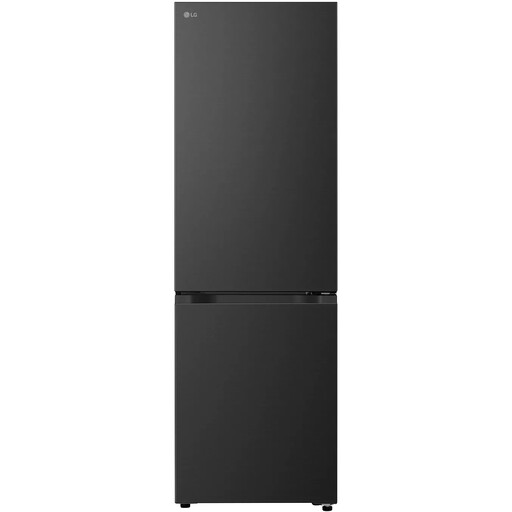 Image unavailable
LG GBBS312AEV, 333 L No Frost fridge-freezer, A-rated
Consider this fridge-freezer if you regularly store fresh and frozen food in one appliance. The model name lists a total capacity of 333 L, No Frost and an A energy rating. Check the label for the capacity of each compartment and the kWh/year figure.
View on Joybuy
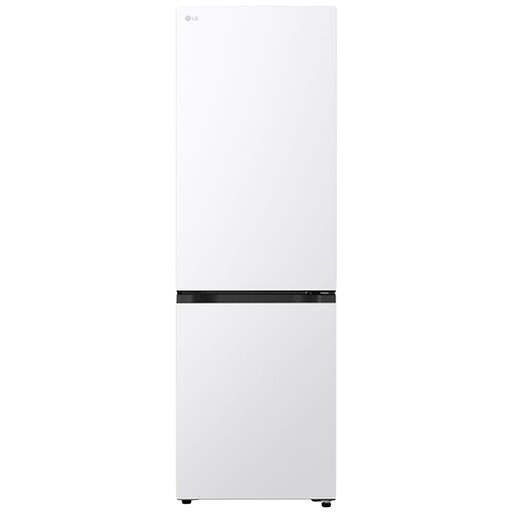 Image unavailable
LG GBBSJ1CCSW, 333 L fridge-freezer, C-rated
This 333 L fridge-freezer is worth considering if you need space for both fresh and frozen food. The model name lists a C energy rating. Check the label to see how the capacity is split between compartments and to find out the kWh/year figure. If you’re installing it in a cold room, also check the permitted ambient temperature range.
View on Joybuy
 Image unavailable
Candy CFQQ5T817EPS, 467 L four-door fridge-freezer, E-rated
This four-door model is worth considering if your storage needs justify its stated total capacity of 467 L. The model name lists Total No Frost and an E energy rating. Measure the available space and compare its kWh/year figure with appliances of a similar capacity.
View on Joybuy
 Image unavailable
Samsung RB33B612EBN, 344 L fridge-freezer, E-rated
This 344 L fridge-freezer is an option if you want one appliance for fresh and frozen food. The model name lists an E energy rating. Check the capacity of each compartment, the kWh/year figure and the ventilation instructions before deciding where to install it.
View on Joybuy
 Image unavailable
CHiQ JR263LGE, 262 L Low Frost fridge-freezer, 54 cm wide
Its stated width of 54 cm may make it a useful option for a narrow space, but remember to check the required clearances. The model name lists a total capacity of 262 L and Low Frost. Check the capacity of each compartment, the kWh/year figure and the model’s defrosting instructions.
View on Joybuy
Frequently asked questions
What should I compare on a fridge or freezer energy label?
The European energy label shows the A to G rating, annual energy consumption in kWh, storage capacities and noise emissions. Focus on comparing kWh/year figures for appliances of the same type and similar capacity. You can scan the label’s QR code to access detailed information about the model in EPREL.
What size fridge does my household need?
UFC-Que Choisir gives an indicative guide of 100 to 150 L for one person, plus 50 L for each additional person. Choose a fridge capacity that suits your shopping and cooking habits, then work out separately how much space you need for frozen food.
What temperature should I set my fridge to?
Anses recommends keeping the coldest part of the fridge between 0 and +4 °C. Check the temperature in this area and leave space for air to circulate around the food.
Is NoFrost essential for keeping energy consumption down?
No. Its benefits depend partly on how much maintenance you want to do. If your appliance builds up frost, defrost it regularly. UFC-Que Choisir says a layer more than 3 mm thick can increase energy consumption by 30%.
Can I put a freezer in an unheated room?
First check the climate class and permitted ambient temperature range for the exact model. Don’t assume a chest or upright freezer is suitable for a garage or cold cellar just because of its type.


