Households doing a weekly shop
If you buy fresh and frozen food for the week in one go, compare the usable capacity of both compartments. A large total capacity can hide a freezer compartment that’s too small for your usual stock.


For a weekly shop that includes fresh and frozen food, start by looking at a fridge freezer, then check the capacity of each compartment separately. If you shop more often and space is limited, a table-top or larder fridge may suit you better. A multi-door model is worth considering if you need the extra storage and have room for it in your kitchen.
How often you shop is not the only factor that determines the size of appliance you need. The amount of space you need for frozen food and the dimensions of your kitchen also matter.
If you buy fresh and frozen food for the week in one go, compare the usable capacity of both compartments. A large total capacity can hide a freezer compartment that’s too small for your usual stock.
If you shop frequently, a compact appliance may be enough, as long as you measure the space, the delivery route and the room needed for the doors to open and for ventilation.
If frozen food regularly makes up a significant part of your shop, check the freezer compartment’s capacity in litres rather than relying on the presence of a freezer compartment alone.
First, measure the space you actually have, then compare the fridge and freezer capacities with what you usually buy. Next, compare energy use and noise levels across appliances that offer similar storage.
Consider this if: you shop frequently and have limited space under your worktop.
Bear in mind: storage capacity is limited; check the freezer compartment’s capacity if there is one.
Consider this if: fresh food is your priority and you rarely buy frozen food or keep it in a separate appliance.
Bear in mind: a small freezer compartment, if included, may not be enough if you regularly stock up on frozen food.
Consider this if: you want to store fresh and frozen food from your weekly shop in one appliance.
Bear in mind: total capacity doesn’t guarantee the balance you want between fridge and freezer space.
Consider this if: your household genuinely needs multiple storage zones and you have a suitable space for the appliance.
Bear in mind: check its dimensions as carefully as its usable capacity and energy use.
| Factor | What to check | Who is it for? |
|---|---|---|
| Fridge and freezer capacity | Check the usable capacity in litres of the fridge and freezer compartments separately on the model’s label. | When I do a weekly shop, I want to be able to put away my fresh food without sacrificing the space I need for frozen food. Around 31% of consumers rank this balance of storage space as their top priority. |
| Size and installation | Measure the space, delivery route and door clearance; check the manual for ventilation requirements. | In a small kitchen, I need to be able to install the appliance and open its doors before I can make use of its capacity. Available space is the top priority for around 31% of consumers. |
| Frozen food storage | Check the freezer compartment’s capacity in litres and see whether its layout suits the amount you usually keep. | If I regularly store frozen food, a small freezer compartment may not have room for everything I want to keep. Freezer capacity is the main priority for around 23% of consumers. |
| Energy use and noise | For appliances with a similar capacity and configuration, compare their kWh/year and noise levels in dB(A). | As an appliance that runs continuously, I want to check how much electricity it uses and, in an open-plan kitchen, how noisy it is. These are the top priorities for around 15% of consumers. |
Que Choisir suggests an average guide of 100 to 150 L for one person, plus 50 L for each additional person. Adjust this starting point to suit how often you shop and how much frozen food you keep. It doesn’t replace checking the separate capacities listed for the model you’re considering. The European Commission says the energy label also shows annual energy consumption and noise emissions, as well as the energy class.
Two large appliances can divide their space differently between fresh and frozen food. So even if the total capacity looks right, that doesn’t mean each compartment will suit your shopping habits.
Make a note of what you usually store in each compartment, then check the model’s usable capacity for both.
An appliance may fit into its designated space but leave too little room for the doors to open or for the required ventilation. Built-in models have additional requirements.
Check the dimensions, delivery route and installation instructions for the exact model. Bosch specifies 200 cm² of ventilation for certain appliances. Don’t assume this applies to a different model without checking.
You may need to modify a cabinet or redo the installation, making it harder to fit the appliance.
ADEME points out that the size of a refrigeration appliance and features you don’t need can affect its energy use. The energy class alone doesn’t tell you how much electricity it uses per year for the capacity you need.
Compare the kWh/year for models with similar capacities and configurations, then check their compartment capacities and noise levels too.
Brand guides can help you compare different formats. However, dimensions and installation requirements vary from model to model.
Worth exploring if you’re choosing between freestanding and built-in models, particularly when measuring a cabinet space.
Worth exploring to help match a fridge format to your kitchen layout and shopping habits.
Worth exploring to compare larder fridges, fridge freezers and multi-door models based on how much space you need for fresh and frozen food.
These Joybuy models include fridge freezers and a multi-door model for households that want to store fresh and frozen food in one appliance. The stated total capacities don’t remove the need to check the space in each compartment and the room required for installation.
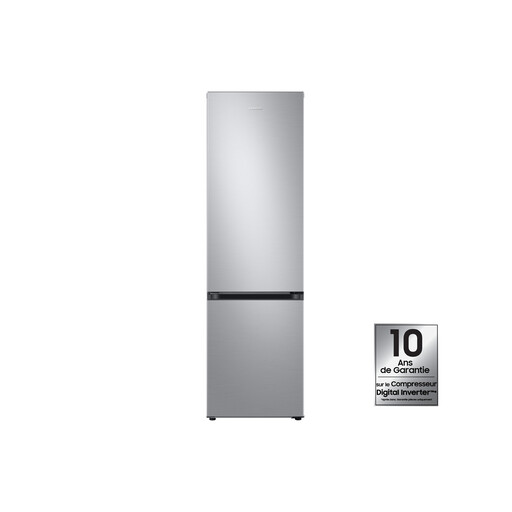 Image unavailable
Worth considering if you want to store fresh and frozen food for your weekly shop in one appliance. The model name indicates a total capacity of 390 L and energy class C. Check the capacity of each compartment, along with the clearances and door space required in your kitchen.
 Image unavailable
Worth considering if organising food across several doors is important to you when doing regular shops. The model is listed with a total capacity of 360 L, Total No Frost technology and energy class E. Check how much space is allocated to the freezer and the clearance required for installation.
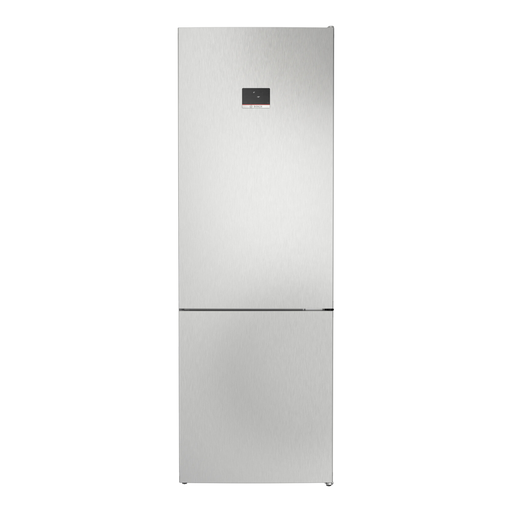 Image unavailable
Worth considering if you need plenty of overall capacity for a weekly shop that includes fresh and frozen food. The model is listed with a capacity of 440 L and energy class D. Measure the space carefully and check the installation instructions.
 Image unavailable
Worth considering if you need a large four-door appliance for your food supplies and have room for it in your kitchen. The model is listed with a capacity of 467 L, Total No Frost technology and energy class E. Its doors are non-reversible, so make sure you check which way they open and how much clearance they need.
 Image unavailable
Worth considering if you want to store fresh and frozen food in a fridge freezer with a stated total capacity of 333 L. The model is listed with energy class C and NatureFRESH™, DoorCooling+™ and LinearCooling™ features. Check the product documentation for the capacity of each compartment and the space required around the appliance.
Start by checking the fridge and freezer capacities separately. Que Choisir suggests an average guide of 100 to 150 L for one person, plus 50 L for each additional person. Adjust this to suit what you actually buy and the space you need for frozen food.
Not necessarily if you’re stocking up for the week. Compare the capacity of the freezer compartment in the specific model with the amount you want to store. A fridge freezer has a separate freezer compartment.
Measure the height, width and depth of the space, the delivery route and the room needed for the doors to open. For a built-in model, check the cabinet space too and follow the ventilation instructions in its manual. Bosch’s recommendation of 200 cm² applies to the specified appliances, not all fridges.
According to the European Commission, the label shows the energy class, annual energy consumption, compartment capacities and noise emissions. When choosing between two appliances, consider these figures together and compare models with similar capacities and configurations rather than looking at the energy class alone.
No. For a new product bought from a professional retailer in France, the Ministry of the Economy states that you can claim under the legal guarantee of conformity for two years. The DGCCRF explains that a commercial guarantee is optional and applies in addition to legal guarantees. Check what it covers and any exclusions.