For prepared meals, choose based on how much you keep chilled and frozen at the same time. The capacity and layout of each compartment matter more than the total capacity alone. A fridge freezer combines both functions; if you’re happy with your fridge but need more room for frozen food, compare a separate freezer, taking its footprint and energy consumption into account, as these appliances run continuously, according to ADEME. In all cases, allow enough space to avoid overfilling the fridge, as recommended by Anses.
Who is this choice for?
Households preparing several meals to keep chilled
You need accessible shelves and zones for ingredients and meals for the next few days, without cramming everything into the fridge. Anses recommends not overfilling the appliance so that air can circulate.
Households that regularly freeze portions
You want to organise meals for later and find each portion easily. The space and layout of the freezer compartment matter just as much as its total capacity. The European Commission lists fridge and freezer capacities separately on the energy label.
Households building up a stock of frozen food
Your fridge may already meet your needs, but you’re comparing separate freezers based on how much you need to store, how easy the food is to reach and how much floor space you have. Que Choisir lists capacity and cooling type among the factors to consider.
What to compare
Fridge with a freezer compartment
Choose this if: you mainly store fresh food and only freeze a few portions.
Check: the capacity and layout of the small compartment, which can’t be inferred from the total capacity.
Fridge freezer
Choose this if: you regularly need space for both chilled meals and frozen portions.
Check: the capacity of each compartment, how easy they are to access and whether the appliance will fit through to its intended spot.
Multi-door fridge freezer
Choose this if: you want wide, separate storage areas for groceries and prepared meals.
Check: the available width and energy consumption against the capacity your household actually needs.
Upright freezer
Choose this if: your fridge is big enough, but you want to organise frozen portions and access them regularly.
Check: whether the drawers fit your containers and the energy consumption of running an additional appliance.
Chest freezer
Choose this if: you’re building up a large stock of food and have enough floor space and clearance to open the lid.
Check: the baskets and how easy it is to reach food at the bottom, which is less straightforward than in an upright freezer with drawers.
| What matters |
What to check |
Who cares most about it |
| Chilled storage space |
Fridge capacity in litres, shelf and drawer layout, appliance dimensions. |
When I’m preparing several meals, I want to store ingredients and dishes without cramming them in. Around 33% of consumers prioritise space for chilled food. |
| Access to frozen portions |
Freezer capacity in litres, number and dimensions of drawers or baskets, defrosting method for the exact model. |
If I often take out a specific portion, I want to find it without moving everything else. Around 27% of consumers prioritise access to frozen portions. |
| Frozen food storage |
Freezer capacity, dimensions and lid clearance, baskets or drawers, and the expected ambient temperature where it will be installed. |
When I need more than everyday storage, I’m looking for extra capacity that suits the space available. Around 20% of consumers put frozen food storage capacity at the top of their priorities. |
| Energy use and space taken up |
Annual energy consumption in kWh, separate fridge and freezer capacities, dimensions and access to the installation area. |
If I’m comparing a large fridge freezer with an additional appliance, I want to take the space it occupies and its energy use into account. Around 20% of consumers are most concerned about running costs and the space taken up. |
Mistakes to avoid
-
Choosing based on total capacity alone
The stated capacity doesn’t tell you how much space is available for chilled and frozen food. The split between compartments affects how a fridge freezer works in practice.
Estimate how much you’ll keep in each area at the same time, then compare the separate capacities and the internal layout.
An additional appliance runs continuously and increases total electricity consumption; the amount depends on the model and how you use it.
-
Assuming reduced frost means no defrosting
Terms indicating reduced frost don’t necessarily mean that defrosting happens automatically.
Check the defrosting method in the product details and manual for the exact model.
Depending on the appliance’s system, manual maintenance may still be needed.
-
Installing a freezer in an unheated room without checking its operating range
Whether an appliance can operate at a low ambient temperature depends on the specific model, not just whether it’s a chest or upright freezer.
Compare the room temperature with the range stated in the product details and manual for the model you’re considering.
Brands to consider by format
Samsung
An example of a fridge freezer to compare capacity and dimensions for an appliance that handles both chilled and frozen food.
- Samsung states a total capacity of 387 L for the RB38C7B6AS9/EF, with a width of 595 mm and a height of 2 030 mm.
- The total capacity doesn’t show how much space is for chilled and frozen food. Measure access points too, and check the capacities for the specific model.
Bosch
A useful point of comparison for a high-capacity multi-door fridge freezer.
- For the KFN96APEA, Bosch states a fridge capacity of 405 L and a freezer capacity of 200 L, along with a width of 905 mm.
- These dimensions and capacities apply to this model. Check your available space and requirements before choosing this format.
Whirlpool
An example of a separate upright freezer for comparing drawers and extra storage capacity.
- The Whirlpool product details state a capacity of 404 L, six drawers, a width of 70 cm and energy consumption of 292 kWh/year for the WHFF6403W4E.
- Compare the capacity and energy consumption with your actual needs, and check that the drawers can accommodate your containers.
Beko
An example of a medium-capacity chest freezer to consider for separate frozen food storage.
- Beko states that the HSM14540 has a capacity of 205 L and static cooling. The product details also give a minimum operating ambient temperature of −15 °C.
- MinFrost is described as reducing frost, not as providing automatic defrosting. The product details contain conflicting information about the freezer’s position, so clarify this for the specific model before buying.
Liebherr
An example of a high-capacity chest freezer to compare if you have enough space.
- Liebherr states a capacity of 359 L and a width of 167 cm for the CFd 2505 Plus.
- SmartFrost and StopFrost don’t mean there’s no need to defrost. Also check that you have enough space to install an appliance of this width.
Haier
An example of a multi-door fridge freezer for comparing the storage zones of a specific model.
- Haier describes the HFR5719ENMG as a four-door appliance, 700 mm wide, with a MyZone area where you can adjust the temperature.
- The manufacturer’s food storage information is based on its test conditions; it doesn’t guarantee the same results for every food, use or model.
Joybuy products related to this topic
This selection features fridge freezers and multi-door models, designed to help you organise fresh food and frozen portions in one appliance.
 No image available
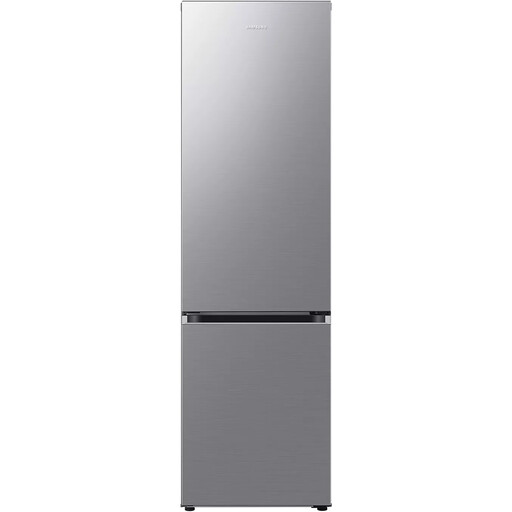
Samsung RB38C603CS9, 390 L fridge freezer, C energy rating
If you want to keep chilled and frozen food in one appliance, check that the split between compartments suits the amounts you usually store.
Stated capacity: 390 L in total. C energy rating. Silver finish.
View on Joybuy
 No image available
Haier HTW5618ENMG, 3-door fridge freezer, 360 L
To keep fresh and frozen food separate, compare the layout of the compartments with your containers and storage habits.
The model name states Total No Frost, E energy rating, Wi-Fi and My Zone.
View on Joybuy
 No image available
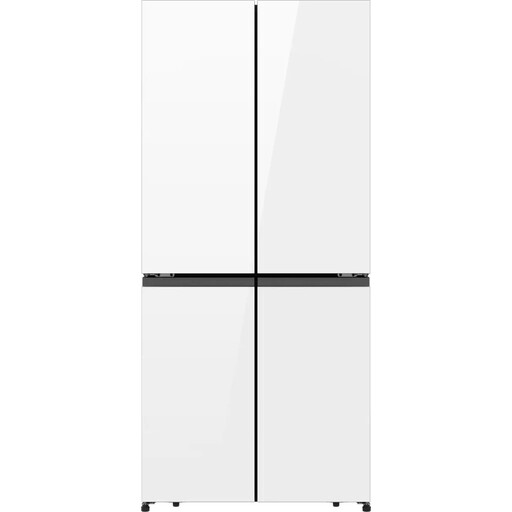
Hisense RQ5P470SETE, 4-door fridge freezer, 483 L
To compare several storage zones in one appliance, check what each stated capacity can actually hold.
Total No Frost, My Fresh Choice, Triple Zone and E energy rating feature in the model name. The 92 L two-star zone is separate from the 87 L freezer compartment, so don’t count it as standard freezer capacity.
View on Joybuy
 No image available
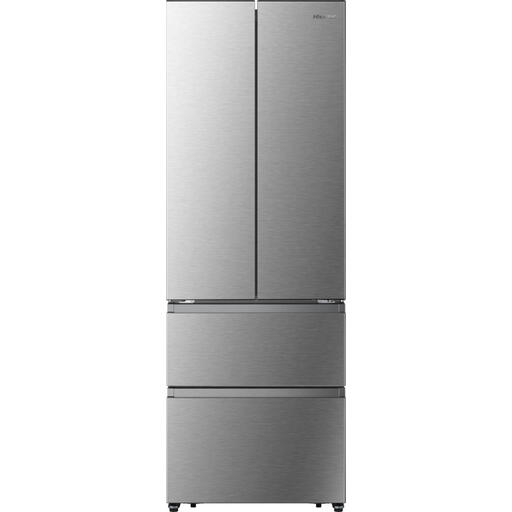
Hisense RF632N4BCE, 485 L fridge freezer, E energy rating
To store chilled and frozen food in separate areas, compare the internal layout with your containers and usual storage habits.
Total No Frost, Inverter, Multi Air Flow and a water dispenser feature in the model name. Stainless steel finish.
View on Joybuy
 No image available
CHiQ JR525WSE, side-by-side fridge freezer, 525 L
A side-by-side layout may suit you if you want to keep chilled and frozen food in separate areas. Check the appliance’s footprint and access to its intended position.
The model name states a fridge capacity of 333 L and a freezer capacity of 192 L, as well as No Frost, Multi-Airflow and an E energy rating.
View on Joybuy
Frequently asked questions
How can I check that an appliance has enough space for chilled and frozen food?
Compare the fridge and freezer capacities shown separately on the energy label, then check that the shelves and drawers suit your containers. The total capacity alone doesn’t tell you how much space is available for frozen portions.
Where can I find the setting for foods that need careful temperature control?
Check the model’s manual to find the coldest area and see how to check its temperature setting. Anses recommends keeping this area at 4 °C and not overfilling the fridge. These are food storage recommendations, not a guarantee linked to any particular appliance format.
Does a freezer described as ‘low frost’ defrost itself?
Not necessarily: reducing frost build-up doesn’t mean defrosting is automatic. Beko describes MinFrost on the HSM14540 and Liebherr describes SmartFrost on the CFd 2505 Plus as frost-reduction features. Check the defrosting method for the specific model in its product details and manual.
What energy consumption should I compare between two appliances?
Compare the kWh/year shown on the energy label for appliances suited to a similar capacity requirement. ADEME points out that fridges and freezers run continuously, and that a larger appliance or an additional one can affect energy consumption. The cost in pounds depends, among other things, on the electricity tariff that applies to you.
What information does a fridge or freezer energy label provide?
For appliances covered by EU energy labelling, it includes details such as the efficiency class on a scale from A to G, annual energy consumption, capacity and noise. The European Commission states that this label has been in use since 1 March 2021; its QR code links to the model information in EPREL.


