If you’re replacing a refrigeration appliance, start by choosing according to the space you regularly need for fresh and frozen food. A fridge-freezer combines both functions, while a separate freezer is mainly worthwhile if you’ll use its extra capacity. Then compare appliances with the same function and similar capacities, looking at kWh/year, the capacity of each compartment and the dimensions. The energy rating alone won’t predict how much it will use in your home.
Who is this choice for?
Households keeping an eye on ongoing energy use
If you’re replacing an old appliance, compare the kWh/year of models with the same function and similar capacities. Don’t assume you’ll make the same savings in every home. ADEME recommends checking the energy label, while the European Commission provides data for the models concerned through EPREL.
Households choosing between a fridge-freezer and a dedicated appliance
If you store both fresh and frozen food, look at the usable capacity of each compartment rather than just the total capacity. A fridge-freezer combines both functions in one appliance, as shown in Bosch’s ranges.
Buyers with access and installation constraints
If the appliance needs to fit through narrow access points or into a fitted kitchen, compare the appliance and packaging dimensions with the delivery route. Samsung France recommends measuring doors, corridors and lifts before delivery.
Which criteria should you look at first?
Before comparing labels, work out whether you regularly run short of space for fresh food, frozen food or both. This will help you decide whether to replace your existing appliance, add dedicated capacity or organise your storage more effectively.
Fridge only
Consider this if: fresh food is your main priority and you already have enough freezer capacity, or rarely buy frozen food.
Bear in mind: this new appliance won’t have a freezer compartment.
Fridge-freezer
Consider this if: you regularly use both the fridge and freezer and want them in one appliance.
Bear in mind: the total capacity is split between two compartments, so their proportions need to suit your habits.
Separate freezer
Consider this if: the food you prepare or buy to freeze regularly exceeds the capacity of a fridge-freezer, and you have room for a second appliance.
Bear in mind: this extra appliance takes up space and runs continuously, as ADEME points out for refrigeration appliances.
Reorganise your storage
Consider this if: you’re mainly short of space because food is hard to find or your appliance is already underfilled.
Bear in mind: you won’t gain any extra capacity and will need to rethink your shopping and how you rotate food.
| Criterion |
What to check before buying |
Who is this for? |
| Annual energy use |
Check the energy rating and kWh/year on the label or in EPREL, then compare appliances with the same function and similar capacities. |
If an appliance runs day and night, I want to know its stated annual energy use without assuming it directly predicts my bill; around 27% of consumers put this criterion first. |
| Fresh and frozen food capacity |
Compare the usable litres of fridge and freezer space separately against your regular needs. |
If my frozen food is overflowing but the fridge is still mostly empty, the balance between compartments guides my choice; this is the top priority for around 33% of consumers. |
| Installation and noise |
Measure the space and access points; for a built-in model, check the housing and fixing system. Check the stated noise level if needed. |
In a fitted kitchen or near a living area, I need to be able to install the appliance and live with its operating noise; these constraints come first for around 27% of consumers. |
| Additional appliance |
Consider how often you need extra storage and how full your existing appliances are. |
If I’d only use a second appliance occasionally, I’d rather rethink my storage before adding one; avoiding overbuying is the top priority for around 13% of consumers. |
Mistakes to avoid
-
Choosing based on the energy rating alone
The letter alone isn’t enough to compare two appliances with different functions or capacities.
For comparable models, look at the rating, kWh/year and litres in each compartment together. The European Commission lets you check data for the models concerned through EPREL.
-
Relying on a fridge-freezer’s total capacity
A large stated capacity can hide a compartment that’s too small for the food you store most often.
Work out your regular needs for fresh and frozen food separately, then compare them with the stated usable capacity of each compartment.
-
Forgetting the delivery route and built-in fit
An appliance that fits in its final position may not fit through the access points. A built-in model also needs to match the existing housing and fixing system.
Measure doors, corridors, the lift and the final space before ordering, then check the fixing system on the model’s product page.
An incompatible housing unit may need to be adapted.
-
Replacing your appliance without arranging collection of the old one
According to the Ministry for Ecological Transition, electrical and electronic equipment is handled through an appropriate take-back scheme.
Ask the retailer how to arrange collection when you buy, or find out where your nearest suitable recycling point is.
Brands to consider when comparing styles
Bosch
Bosch’s ranges include fridges, fridge-freezers and freezers, in both freestanding and built-in styles.
- Product pages for its fridge-freezers let you check capacities and dimensions, as well as noise levels and No Frost features on selected models.
- Check the product page for the model you choose: the features of one Bosch fridge-freezer don’t apply to the whole range.
Liebherr
Liebherr fridge-freezers come in a range of configurations to suit the compartments and overall dimensions you’re looking for.
- Liebherr states that its CBNsfc 5223 Plus has a total capacity of 320 L and a noise level of 35 dB, with BioFresh and NoFrost.
- These figures apply to this specific model. Check the details of any other variant before comparing.
Samsung
Samsung offers freestanding and built-in fridge-freezers, some of which have smart features.
- Samsung France product pages give details including dimensions and usable capacity for the models concerned.
- Check smart features model by model. Samsung says some require Wi-Fi and an account.
Beko
Beko’s fridge-freezer range includes built-in models to consider when the housing and fixing system determine your choice.
- Beko’s product page for the BCHA306E4SN specifies a built-in installation with a sliding hinge system.
- Before choosing, make sure your existing housing and fixing system meet the requirements of the exact model.
Fridge-freezers available on Joybuy
These models combine refrigeration and freezing in one appliance. The main factors in choosing between them are how much capacity you need for each use and your installation requirements. If you’re considering a fridge only or a separate freezer instead, start with that need before comparing products.
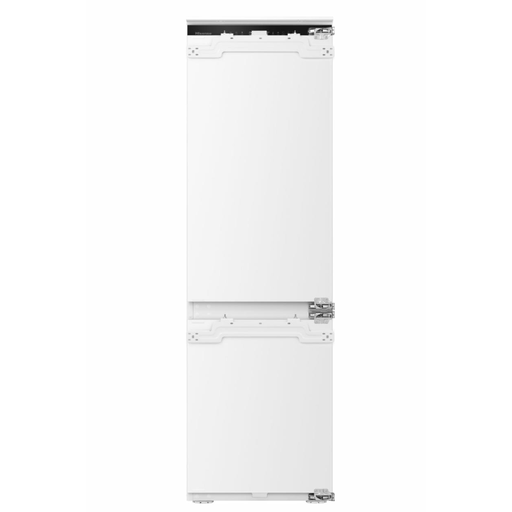 Image unavailable
Hisense RB3B250SAWC, 252 L built-in fridge-freezer
Worth considering if you want to combine fresh and frozen food storage in a fitted kitchen. The model title lists a capacity of 252 L, a C rating and No Frost. Check the housing, fixing system and required clearances before buying.
View on Joybuy
 Image unavailable
Candy CFQQ5T817EPS, 467 L four-door fridge-freezer
Consider this if you regularly need plenty of space for both fresh and frozen food. The title lists a capacity of 467 L, Total No Frost and an E rating. Measure the route to your kitchen and check how the capacity is split on the model’s product page.
View on Joybuy
 Image unavailable
Haier HTW5618ENMG, 360 L three-door fridge-freezer
Compare this if you need space for both types of food and don’t want to choose based on total capacity alone. The title lists a capacity of 360 L, Total No Frost, an E rating and Wi-Fi. Check the capacity of each compartment and the delivery access points.
View on Joybuy
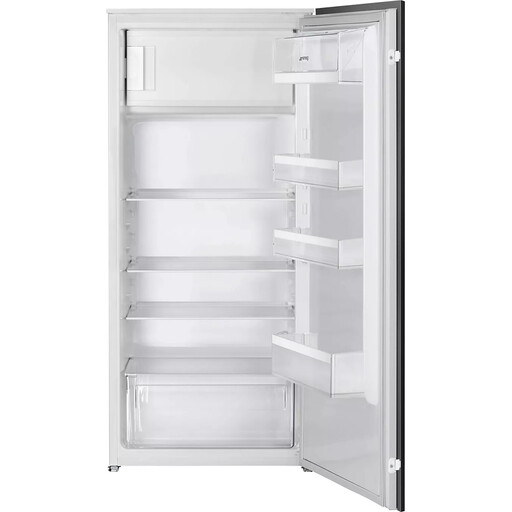 Image unavailable
SMEG S4C122E, 188 L built-in fridge-freezer
Worth considering if you mainly need fresh food storage and want a built-in appliance. The title lists a capacity of 188 L, a top-mounted freezer and an E rating. The stated freezer capacity is 14 L and it needs to be defrosted manually. Check the housing, sliding hinges and required door panel.
View on Joybuy
 Image unavailable
Bosch KGN33NLEB, 282 L fridge-freezer with bottom freezer
Compare this if you prefer a fridge-freezer with the freezer at the bottom. The title lists a capacity of 282 L and an E rating. Check the separate compartment capacities, noise level and installation dimensions before choosing.
View on Joybuy
Frequently asked questions
How can I compare two appliances without relying on the energy rating alone?
Compare appliances with the same function and similar capacities, then look at the rating, kWh/year and usable capacities together. ADEME presents the energy label as a guide to choosing, while the European Commission lets you check data for the models concerned through EPREL.
When should I choose a separate freezer instead of a fridge-freezer?
Consider a separate freezer if you regularly need more freezer space than a fridge-freezer provides and have room for a second appliance. A fridge-freezer combines fresh and frozen food storage in one appliance, but its capacity needs to suit both uses.
What should I measure before my fridge is delivered?
Measure the final space and the whole delivery route, including doors, corridors and the lift, taking the packaging into account. For a built-in model, also check the housing dimensions and fixing system specified by the manufacturer.
What should I do with my old appliance when replacing it?
Arrange for the retailer to collect it or take it to an appropriate recycling scheme. The Ministry for Ecological Transition distinguishes between collection when buying an appliance of the same type and other collection options. Ask about the arrangements before delivery.


