Start by choosing the compartments you really need: a fridge if you rarely freeze food, a fridge-freezer if you regularly use both sections, or a separate freezer if you need the extra storage. To keep energy use down in an appliance that runs constantly, compare the kWh/year and capacities of models designed for the same purpose, rather than looking only at their energy class or convenience features. The ADEME reminds us that refrigeration appliances run all the time; the European energy label lets you compare models individually.
Who is this choice for?
Households replacing a refrigeration appliance
If your appliance has been running for a long time, compare its energy use with that of the models you’re considering. Don’t assume that every replacement will deliver the same savings. The ADEME reminds us that fridges and freezers run continuously and publishes indicative average annual energy consumption figures for different categories.
Households choosing between a fridge and a fridge-freezer
If you don’t store many frozen foods, first decide whether you need a freezer compartment. The European energy label lists chilled and frozen storage volumes separately, so you can compare each capacity with your habits before looking at the kWh/year.
Households interested in a large, feature-packed appliance
Multiple doors, a large capacity or an ice maker can suit specific needs. Compare the capacity you’ll actually use with the energy consumption of the exact model. A technical study by the National Institute of Standards and Technology shows that an ice maker’s components and cycles contribute to its energy use, although the amount depends on operating conditions.
Which criteria should you compare?
First decide how much space you need for fresh and frozen food. Then compare the energy labels and installation requirements of appliances suited to your needs.
Fridge
Consider this if: you don’t regularly need to store frozen food.
The trade-off: check whether the model has a freezer compartment and whether its capacity is enough for occasional use.
Fridge-freezer
Consider this if: you regularly use both the fridge and freezer sections in the same appliance.
The trade-off: choose a balance of capacity that suits your needs. A large total capacity doesn’t guarantee that you’ll use both compartments.
Separate freezer
Consider this if: you regularly need more frozen storage than a suitable fridge-freezer can provide.
The trade-off: this extra appliance also runs continuously, as the ADEME reminds us.
| Criterion | What to check | Think about your needs |
|---|
| Energy consumption |
On the European energy label, compare the kWh/year of models with similar uses and capacities. Also check their energy class, from A to G; the letter alone doesn’t tell you the annual energy consumption. |
I want to keep energy use down in an appliance that runs all the time, without choosing a larger model just to get a different energy class. |
| Capacity |
Check the litre capacity of the fridge and freezer compartments separately. Consider how much of each you typically use. |
I don’t use the same amount of space for fresh and frozen food, so I want a capacity that suits each. |
| Features |
Compare the kWh/year and usable capacity of models with and without the features you want. If you’re considering an ice maker, factor in its maintenance too. The National Institute of Standards and Technology study describes how its cycles contribute to energy use, but doesn’t give a figure that applies to every appliance. |
If I want automatic ice or a frost-free function, I need to decide whether I’ll use it enough to make it worth choosing that model. |
| Location and noise |
Check the dimensions and clearances. For a built-in model, check the niche dimensions and ventilation requirements too. If the appliance will be near a living area, compare the noise level shown on the European energy label. |
My appliance needs to fit in the space available. In an open-plan kitchen, I’ll also check its stated noise level. |
Which pitfalls should you avoid?
-
Choosing based on energy class alone
Appliances with different capacities or uses can’t be compared by their energy class alone. The European energy label also shows their consumption in kWh/year and the capacity of each compartment.
Work out the capacity you need, then compare the kWh/year, fridge and freezer capacities, noise levels and dimensions of similar models.
-
Allowing for more frozen storage than you need
A large compartment that’s rarely used, or an extra freezer you don’t regularly need, means maintaining unused capacity in an appliance that runs constantly. The ADEME reminds us that refrigeration appliances run day and night.
Think about how much frozen food you usually need to store before choosing between a fridge, a fridge-freezer and a separate appliance.
-
Overlooking the energy use of convenience features
An automatic ice maker adds components and operating cycles. The National Institute of Standards and Technology study shows that their contribution depends, among other things, on the temperatures inside the compartments.
If you’re interested in this feature, compare the kWh/year and usable capacity of the exact model with those of a model without an ice maker.
-
Overlooking installation dimensions
A built-in appliance needs to fit its niche and meet its installation requirements. For example, Electrolux lists niche dimensions of 1894 × 560 × 550 mm for the ENP7MD19S model. These dimensions don’t apply to other models.
Measure the space and check the clearances and ventilation required for your chosen model. Keep its model number and product details to hand so you can check its specifications.
A few examples from leading brands
These examples highlight the specifications of specific models and don’t necessarily apply to other appliances from the same brands.
Bosch
The freestanding KGN39AIAU fridge-freezer is an example of how fridge and freezer capacity is divided. Consider whether the balance suits your needs.
- Bosch lists this model as energy class A, with 260 L of fridge capacity, 103 L of freezer capacity and a noise level of 29 dB(A).
- To compare its energy use with that of another fridge-freezer, also check the kWh/year figure for the exact model being sold.
Liebherr
Liebherr lists the CBNbsa20 575i as a freestanding fridge-freezer with a total capacity of 362 L and a noise level of 29 dB.
- Liebherr’s product details list BioFresh and NoFrost features for this model.
- Compare its energy label and product information sheet with those of appliances of a similar capacity before drawing conclusions about energy use.
Whirlpool
The WHK26413XBR6EE is a large-capacity option to consider if your household regularly uses that much storage space.
- Whirlpool lists this model as 415 L, energy class C, 213 kWh/year and 35 dB(A).
- Its 415 L capacity may be more than a smaller household needs. Compare the capacities and kWh/year of appliances suited to your use.
Fridge-freezers available on Joybuy
These are fridge-freezers, designed for households that need both compartments in a single appliance. Before choosing, check the annual energy consumption and capacities on the energy label for the exact model being sold.
 Image unavailable
LG GBBSJ1CCSW, 333 L fridge-freezer, energy class C
Worth considering if you’re looking for a 333 L fridge-freezer. Check how the capacity is divided between the compartments and the kWh/year on this model’s energy label to see if it suits your usual storage needs.
View on Joybuy
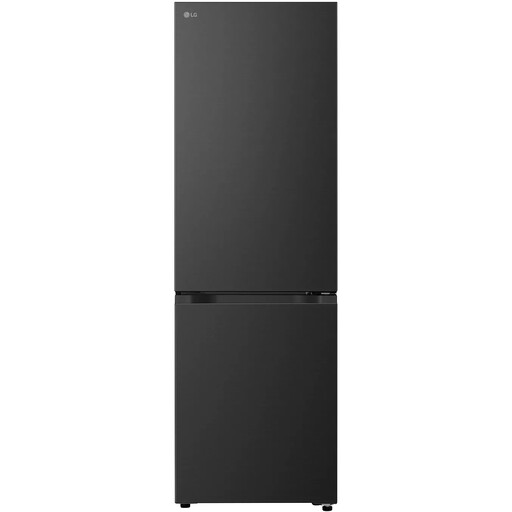 Image unavailable
LG GBBS312AEV, 333 L No Frost fridge-freezer, energy class A
This 333 L fridge-freezer is worth comparing with other appliances of a similar capacity. Its name indicates No Frost and energy class A; also check the kWh/year, the separate compartment capacities and the dimensions needed for installation.
View on Joybuy
 Image unavailable
Haier HTW5618ENMG, 360 L three-door fridge-freezer, energy class E
Its three-door design and 360 L capacity are worth comparing with the space you actually use. The model name indicates Total No Frost, Wi-Fi and My Zone; check the kWh/year on its energy label before deciding whether these features are right for you.
View on Joybuy
 Image unavailable
Samsung RB33B612EBN, 344 L fridge-freezer, energy class E
With a stated capacity of 344 L, this fridge-freezer is worth considering if that’s right for your fridge and freezer needs. Compare its kWh/year and separate compartment capacities. If maintenance is a factor in your decision, also check how it defrosts.
View on Joybuy
 Image unavailable
CHiQ JR263LGE, 262 L Low Frost fridge-freezer
Its stated capacity of 262 L could be a good option if that’s enough for your household. The model name indicates a width of 54 cm and a height of 176 cm. Low Frost requires manual defrosting, so check that you’re happy with this and that the space meets the model’s installation requirements.
View on Joybuy
Frequently asked questions
What should I check first on a refrigeration appliance’s energy label?
Compare the kWh/year and fridge and freezer capacities of appliances designed for the same use. The European energy label also shows the energy class and noise level. Its QR code gives you access to the model’s information in the European Commission’s EPREL database.
Does a better energy class guarantee lower energy use in my home?
No. Check the energy class alongside the kWh/year and the capacity of each compartment. The European energy label gives you a basis for comparing models, while energy use at home can vary depending on how the appliance is used.
Does an ice maker affect a fridge-freezer’s energy use?
Its components and cycles can contribute to energy use. A study by the National Institute of Standards and Technology observed this in four fridge-freezers, with efficiency affected in particular by internal temperatures. The study doesn’t give a figure that applies to every model, so compare the kWh/year of the specific models you’re considering, with and without this feature.


