What should you compare before choosing?
First, work out how much fridge and freezer space you need. The energy figures will then help you compare appliances that offer a similar level of storage.
Fridge on its own
Worth considering: if you mainly store fresh food and rarely freeze anything, or already have enough freezer space elsewhere.
Bear in mind: check that any small freezer compartment is genuinely big enough for the frozen food you keep.
Fridge-freezer
Worth considering: if you need to store both fresh and frozen food in one appliance.
Bear in mind: the total capacity can be misleading if one compartment is too small for your needs.
Separate freezer
Worth considering: if you need to store a large amount of frozen food or prepared meals, as well as your fresh food.
Bear in mind: it won’t keep fresh food chilled and, according to ADEME, adds another appliance that runs continuously.
| What to compare |
What to check |
Your needs |
| Fridge capacity |
Check the usable capacity in litres of the fridge compartment, not just the total capacity. UFC-Que Choisir suggests starting with 100 to 150 L for one person, then adding 50 L for each additional person. |
I shop less often or keep a lot of fresh food, so I need enough space to suit these habits. |
| Freezer capacity |
Compare the usable capacity in litres of the freezer compartment with the amount you want to store. A separate freezer won’t meet your refrigeration needs on its own. |
Do I store enough frozen food and prepared meals to justify a large compartment or a separate appliance? |
| Energy consumption |
Check the kWh/year, energy class and capacity of each compartment. Focus on appliances of the same type and with similar capacities. The model’s entry in EPREL can help you check its specifications. |
As I’m replacing an appliance that stays plugged in all the time, I want to compare energy consumption without confusing the energy class with the kWh/year figure. |
| Installation and noise |
Check the appliance’s dimensions, its position, door clearance and delivery route. For a built-in model, check the housing too. Look at the noise level in dB(A) if the appliance will be near living areas. |
I have a small kitchen or an open-plan living space, so the appliance’s size and noise level are particularly important to me. |
| Features |
Check whether No Frost applies to the compartment you want, then consider any other features in light of how you’ll use the appliance. ADEME warns that a larger size and unnecessary extras, such as ice available at all times, can push up your energy bill. |
I’d like to cut down on defrosting or avoid leaving a door open, but I don’t need to choose every available feature. |
A few examples from well-known brands
These specifications relate to particular configurations. They don’t represent every appliance from each brand or the products featured below.
Bosch
Bosch’s product details for the KGN493WDA describe a freestanding fridge-freezer with 330 L of fridge space and 108 L of freezer space.
- The KGN493WDA details list an energy class D rating, a noise level of 38 dB(A) and No Frost.
- These specifications apply to the KGN493WDA. Check the dimensions and specifications of any other model separately.
Beko
Beko offers fridge-freezers in different configurations, including the B3RCHE305HW and the built-in BCHA306E4SN.
- Beko’s details for the B3RCHE305HW list an energy class D rating, 196,80 kWh/year and 39 dB(A).
- For a built-in model such as the BCHA306E4SN, check the housing and fittings required for that specific model. Don’t assume the figures for another appliance apply.
Liebherr
The ECBNe 7871 is an example of a built-in fridge-freezer with a capacity of 402 L, according to Liebherr’s product details.
- The details for this model list a noise level of 39 dB(A) and housing dimensions of 203,2 to 207,2 × 76,2 × 63,5 cm.
- Check the housing dimensions and delivery route: these measurements are specific to the ECBNe 7871.
Fridge-freezers available on Joybuy
These models combine refrigeration and freezing in one appliance. To compare them, start with how much space you need in each compartment, then check the energy label and the dimensions of your chosen model.
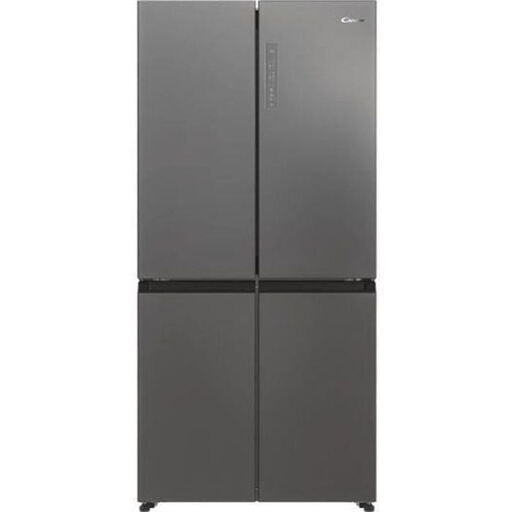 Image unavailable
Candy CFQQ5T817EPS, 4-door fridge-freezer, 467 L
Worth considering if you’re looking for an appliance with plenty of fridge and freezer space. Check that the split between the compartments suits your shopping habits.
The model name indicates Total No Frost and an energy class E rating. Before choosing this four-door format, also measure the space available and the delivery route.
View on Joybuy
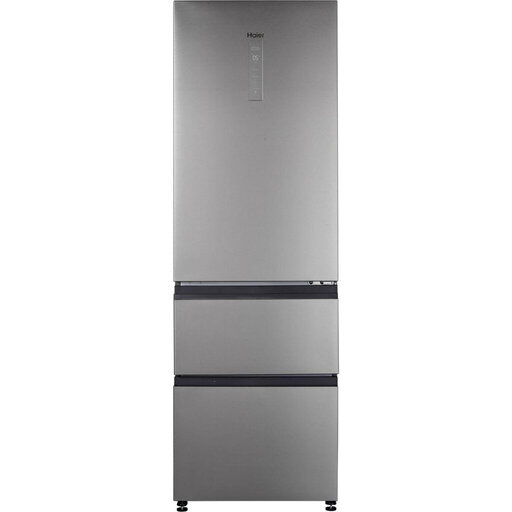 Image unavailable
Haier HTW5618ENMG, 3-door fridge-freezer, 360 L
This model combines both functions in a stated capacity of 360 L. Compare the fridge and freezer capacities with the way you shop and store food.
The model name indicates Total No Frost, an energy class E rating, Wi-Fi and My Zone. Check whether these features are useful to you, and confirm the dimensions and kWh/year in the product details.
View on Joybuy
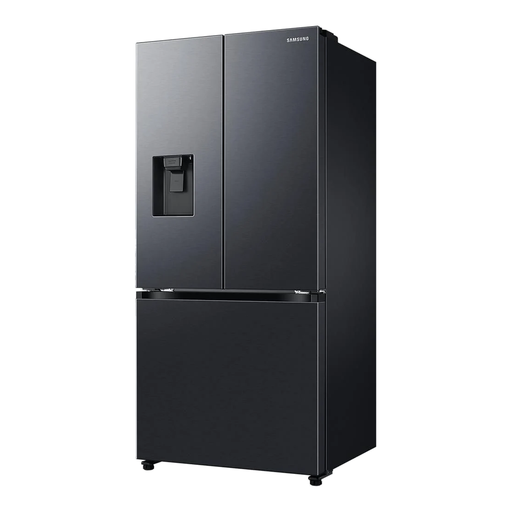 Image unavailable
Samsung RF50C530EB1, multi-door fridge-freezer, 495 L
If you’re looking for a large appliance for fresh and frozen food, compare its stated 495 L capacity with the space you actually need in each compartment.
The model name indicates an energy class E rating. Check the kWh/year, dimensions and clearance needed for installation. Only choose extra features if you’ll use them.
View on Joybuy
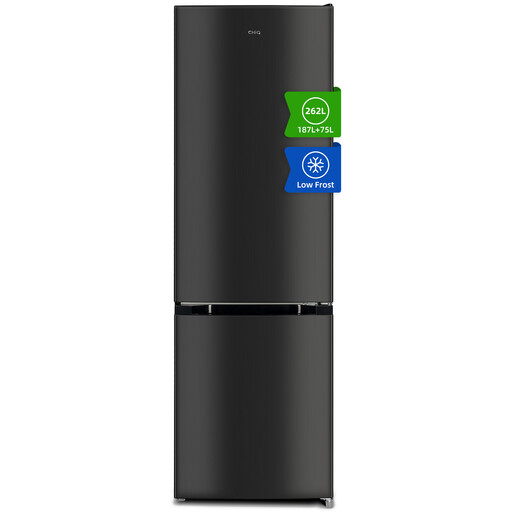 Image unavailable
CHiQ JR263LGE, Low Frost fridge-freezer, 262 L
Its stated width of 54 cm is worth considering if space is limited. Also check the depth and make sure the doors can open fully in your kitchen.
The model name indicates a height of 176 cm and a 70/30 split. Low Frost doesn’t mean you’ll never need to defrost manually, so check what this involves and look at the kWh/year on the energy label.
View on Joybuy
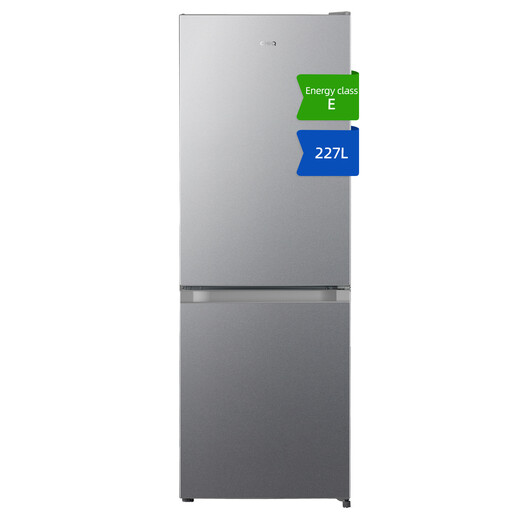 Image unavailable
CHiQ JR227LSE, Low Frost fridge-freezer, 227 L
The stated capacities of 153 L for the fridge and 74 L for the freezer make it easy to check how much space you’ll have for fresh and frozen food separately.
The model name indicates a width of 54 cm, a reversible door and an energy class E rating. Low Frost reduces frost build-up but may not eliminate the need for manual defrosting. Check the full dimensions and kWh/year before choosing.
View on Joybuy
Frequently asked questions
How do I compare two fridges or freezers with different capacities?
Start by comparing the usable capacity of the fridge and freezer compartments: two appliances with a similar total capacity may suit different needs. Then look at kWh/year, energy class and noise level, focusing on appliances of the same type and with similar capacities. The French government explains that the stated energy consumption is based on standardised measurements and may differ from actual use.
Is No Frost or a freshness compartment essential?
No. Choose these features based on the food you store and the tasks you’d like to avoid. Check which compartments are covered by No Frost on your chosen model, and compare its kWh/year. A feature on its own doesn’t mean the appliance uses less energy.
How can the energy label help when replacing an appliance?
It helps you consider the stated energy consumption alongside the model’s other specifications, rather than choosing on the basis of one letter alone. EU energy labelling rules cover mains-powered refrigeration appliances with a capacity of more than 10 L and up to 1 500 L. To make your choice, compare the kWh/year with the appliance type and the capacity you need.
What should I do with my old appliance when buying a new one?
In France, the FAQ from the ministries responsible for ecological transition explains that when you buy a new appliance of the same type, the old one can be taken back on a “one-for-one” basis, with no minimum sales-floor area for this category. Arrange the collection with the retailer when you place your order.


