Start by choosing the capacity you need for fresh and frozen food, then compare the kWh/year of appliances with similar sizes and capacities: the energy rating alone isn’t enough. A fridge-freezer suits households that regularly use both compartments. A fridge on its own may be right if you store few frozen foods, while a separate freezer is best for a long-term need for extra capacity, as it also runs continuously.
Who are these options for?
Households replacing an energy-hungry appliance
If continuous energy use is prompting you to replace your appliance, compare the kWh/year alongside the capacity and noise levels of the models you’re considering. Don’t assume this will guarantee savings on your bill. ADEME points out that fridges and freezers run continuously.
Households storing fresh and frozen food
If you use both compartments every week, check how many litres are allocated to each. A large total capacity won’t help if the split doesn’t suit your shopping habits.
Households that store lots of frozen food
If you buy in bulk or regularly freeze meals, check whether a fridge-freezer is enough before adding a separate freezer. It gives you more capacity, but takes up extra space and runs continuously.
Which criteria should you prioritise?
Fridge
Consider this if: you mainly store fresh food and use little or no frozen food.
Bear in mind: it won’t meet a regular need for proper integrated freezer space.
Fridge-freezer
Consider this if: you use one compartment for fresh food and another for frozen food every week.
Bear in mind: the freezer compartment must be big enough for your needs, even if the total capacity seems sufficient.
Separate freezer
Consider this as an extra if: your frozen food regularly exceeds the capacity you’re comfortable with in a fridge-freezer.
Bear in mind: you’ll need space for a second appliance, which will also run continuously, as ADEME points out.
| What matters to you |
What to check |
Who this applies to |
| Continuous energy use |
Compare the kWh/year and energy ratings of appliances with similar capacities and intended uses. |
If my appliance runs day and night, I want to avoid unnecessary capacity without assuming the energy rating predicts my bill. Around 45% of consumers would put this continuous energy use at the top of their concerns. |
| Fresh and frozen food capacity |
Check the capacity in litres of each compartment, then check the appliance’s dimensions and installation requirements. |
For my usual shopping, I need enough room for fresh food without setting aside too much space for frozen food I rarely use. Getting the capacity balance right would be a priority for around 33% of consumers. |
| Frozen food storage |
Assess how much freezer space you use regularly. If you’re considering a separate appliance, also compare its kWh/year and check where it will go. |
If I often freeze meals or buy food in bulk, a fridge-freezer may no longer offer enough capacity. A separate freezer would be the main requirement for around 22% of consumers. |
Mistakes to avoid
-
Choosing based on the energy rating alone
Two appliances with different capacities or different amounts of space for fresh and frozen food won’t meet the same needs. The energy rating alone also can’t predict your bill.
When comparing similar models, look at the energy rating, kWh/year, capacity of each compartment and noise level together. The European Commission explains this information on the energy label.
-
Adding a freezer for occasional storage
A separate freezer can solve an ongoing lack of capacity, but it takes up space and runs continuously. That’s different from simply gaining more space in an appliance you already planned to buy.
Take note of how much space your frozen food actually takes up over several weeks, then compare a suitable fridge-freezer with adding a second appliance.
-
Assuming extra features will save you money
NoFrost and food-preservation features may suit your preferences, but their presence alone doesn’t prove that they’ll reduce your energy use.
First decide whether the feature will be useful to you, then check the capacity and annual energy use of the exact model on its energy label.
Brands to consider
These range examples show which features to look at on a specific model, without making assumptions about every appliance from each brand.
Bosch
The range includes freestanding fridge-freezers with the freezer at the bottom.
- Bosch’s French product page for the KGN39AIAU lists an A energy rating, 260 litres for the fridge, 103 litres for the freezer and a noise level of 29 dB.
- These specifications apply to the KGN39AIAU. They don’t describe every Bosch fridge-freezer or guarantee savings for your household.
Beko
The range includes built-in fridge-freezers. Check that the model suits your unit and the ventilation requirements specified for it.
- Beko states that spare parts for the B7BCNA296HS will be available for 12 years from the date of first purchase.
- Beko’s air circulation and food-preservation features don’t replace checking the kWh/year, capacity and built-in dimensions of the appliance you choose.
Fridge-freezers available on Joybuy
These appliances combine refrigeration and freezing in one unit, with different total capacities. If you only need space for fresh food, or need a separate freezer, decide which format is right for you before looking at the models below.
 Image unavailable
Haier HTW5618ENMG, 3-door fridge-freezer, 360 L, energy rating E
Worth considering if you need space for both fresh and frozen food in one appliance.
The model name mentions Total No Frost, Wi-Fi and My Zone. Check its energy label for the kWh/year and how the capacity is divided between compartments, then make sure you have the space needed to install it.
View on Joybuy
 Image unavailable
Samsung RB33B612EBN, black fridge-freezer, 344 L, energy rating E
Consider this if you regularly use both compartments and this total capacity suits your shopping habits.
Before choosing, check the fridge and freezer capacities separately, along with the kWh/year and the appliance’s dimensions.
View on Joybuy
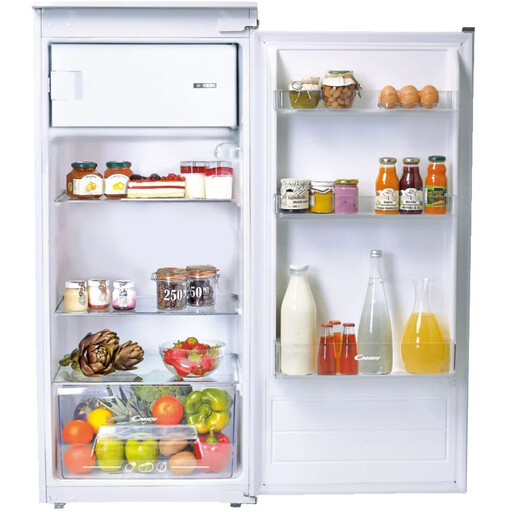 Image unavailable
Candy CIO 225 EE/N, one-door fridge-freezer, 179 L
This format is worth a look if you mainly need space for fresh food but still want a freezer compartment.
Check the capacity of each compartment before buying: the total capacity alone doesn’t tell you how much frozen food you can store. Also compare the kWh/year with appliances of a similar capacity.
View on Joybuy
 Image unavailable
Candy CFQQ5T817EPS, 4-door fridge-freezer, 467 L, energy rating E
Consider this if you have a lasting need for plenty of space for fresh and frozen food, rather than just an occasional need for extra capacity.
This model is listed with Total No Frost. Check the space available, the capacity of each compartment and the kWh/year: this feature doesn’t prove that the appliance will use less electricity.
View on Joybuy
 Image unavailable
Sonlu CC-520WE, fridge-freezer, 444 L, energy rating E
This total capacity is suited to substantial storage needs, but check separately that it offers enough space for both fresh and frozen food.
The product name lists a frost-free function and a noise level of 40 dB. Check the capacity split, dimensions and kWh/year for the exact model before deciding whether it suits your space.
View on Joybuy
Frequently asked questions
How can I compare two appliances beyond their energy ratings?
First compare models that meet the same needs, then look at their kWh/year and the capacity of each compartment. The European Commission says that the energy label for fridges and freezers also shows the energy rating and noise level. One letter on its own doesn’t sum up the differences in capacity.
Does the kWh/year figure on the energy label guarantee a lower bill?
No. It helps you compare appliances, but doesn’t guarantee how much energy you’ll actually use. ADEME points out that fridges and freezers run continuously, and that excessive capacity or features can increase their energy use. So start by choosing a capacity that suits your needs.
Do I need a fridge-freezer if I store very little frozen food?
Not necessarily. A fridge on its own may be a better fit if you mainly store fresh food. If you store frozen food every week, look at the freezer capacity of a fridge-freezer instead. A separate freezer only makes sense if you regularly need extra capacity.


