Who is this choice for?

Households that lose track of leftovers

If opened products or prepared meals get left at the back of the fridge, check how easy it is to reach the shelves and drawers before looking for more litres. ADEME and Anses offer advice on managing supplies and storing food.

Households that prepare meals in advance

If you regularly freeze portions or leave longer between shops, compare freezer capacity and drawer layout, not just the total capacity. Anses and Que Choisir Ensemble highlight the importance of storage practices and how often you shop.

Households with installation constraints

If you’re replacing a built-in appliance or putting the fridge near a living area, check the dimensions, installation requirements and noise level before choosing a larger capacity. These criteria are covered in information from the European Commission, Que Choisir Ensemble and the manufacturers concerned.

Which criteria should you compare?

Fridge-freezer

Worth considering: if you regularly store fresh food and frozen portions, and have space for just one appliance.

Bear in mind: the split between the two compartments varies by model. Check the dimensions and how much usable space it actually offers.

Fridge with a freezer compartment

Worth considering: if you mainly store fresh food and only freeze things occasionally.

Bear in mind: a small compartment leaves less room for frozen portions. For a built-in model, check the housing dimensions and installation instructions too.

Separate freezer

Worth considering: if the meals and shopping you need to freeze regularly exceed the available capacity.

Bear in mind: you’ll need extra space. Compare the kWh/an for both appliances with those of a fridge-freezer that meets the same needs.

A better-organised approach

Worth considering: if the main problem is forgetting what you have rather than running out of fridge space, make your supplies easier to see and plan when to use them.

Bear in mind: good organisation doesn’t replace appropriate refrigeration or freezing for the food in question.

What matters to you What to check Who it matters to
Finding fresh food Check how easy it is to reach the shelves and drawers, and whether the usable fridge capacity suits your shopping habits. When leftovers and opened products get lost in the fridge, around 33% of the priorities described here are from consumers who want to find them more easily.
Freezing portions Estimate the largest amount you’ll need to store at once, then compare freezer capacity in litres and the drawer layout. If you prepare meals in advance or regularly buy frozen food, around 27% of the priorities described here are from consumers who put freezer space first.
Electricity consumption Compare the energy class and kWh/an. If you’re buying two appliances, add together their stated annual consumption. “I want to limit the energy use of an appliance that runs continuously without choosing unnecessary capacity”: around 20% of the priorities described here are from consumers who put electricity use first.
Installation and noise Measure the space and access routes. Check the housing dimensions, ventilation, door clearance and stated noise level. When a housing unit or proximity to a living area limits the choice, around 20% of the priorities described here are from consumers who prioritise fitting in and noise.

Mistakes to avoid

  • Choosing based on total capacity alone

    Fridge and freezer capacity serve different purposes. A large total capacity doesn’t guarantee enough room for your portions in the freezer.

    List what you keep in each compartment at the same time, then compare the stated capacities in litres separately.

  • Buying a bigger appliance to stop things being forgotten

    ADEME recommends keeping track of your supplies. It also points out that fridges and freezers run continuously, and that choosing a larger or unnecessarily well-equipped model can affect energy consumption.

    Start by making leftovers easy to see and planning your shopping. Only increase capacity if you’ve confirmed you need more space.

  • Comparing a separate freezer with a fridge-freezer by energy class alone

    Two separate appliances run continuously and won’t necessarily offer the same capacity as a fridge-freezer.

    Compare options that meet the same needs, and add together the stated kWh/an for the separate fridge and freezer.

  • Assuming ‘No Frost’ means less food waste

    This term refers to frost; it doesn’t prove that less food will be thrown away. Temperature, organisation and storage practices matter too.

    Check the model’s specifications and food-storage instructions. Don’t assume a marketing term means there will be a measured reduction in waste.

Brands to consider for your setup

Bosch

The models listed cover a freestanding fridge-freezer and an integrated fridge with a freezer compartment.

  • Bosch Electroménager France lists 279 L of fridge capacity and 89 L of freezer capacity for the KGN39VLEB.
  • The KIL32NSE0 is a different integrated configuration. Check the dimensions and housing for the exact model.

Liebherr

The models reviewed let you compare a separate freezer with a large-capacity fridge-freezer.

  • Liebherr France lists a capacity of 238 L for the FNd 5026 freezer and 485 L in total for the CNsfd 7723 fridge-freezer.
  • The manufacturer’s claims about its food-preservation features aren’t independent evidence of reduced food waste. Check that the capacity suits the amount you actually store.

Electrolux

The KNT6ME18S4 offers a point of comparison for a built-in fridge-freezer when the housing determines your choice.

  • Electrolux France lists 186 L of fridge capacity, 62 L of freezer capacity and a housing size of 1780 × 560 × 550 mm for this model.
  • Presenting TwinTech as beneficial for food hydration is a brand claim, not proof that it reduces waste in a particular household.

Beko

Beko’s French range includes fridge-freezers with different layouts.

  • Beko lists models with a capacity of over 500 L, among others. This capacity applies to the model shown, not the whole range.
  • Check features and food-preservation benefits model by model. A brand claim isn’t proof of a measured reduction in food waste.

Fridge-freezers on Joybuy

These fridge-freezers combine a fresh-food compartment with a freezer. Compare the capacity split, stated energy consumption and dimensions to make sure each model suits your space.

Haier HTW5618ENMG fridge-freezer

Haier HTW5618ENMG, 360 L fridge-freezer

If you want to store fresh food and frozen portions in one appliance, compare the two compartments and their layout.

The Joybuy product listing gives capacities of 235 L for the fridge and 125 L for the freezer, with 271 kWh/an and 35 dB(A). The title also mentions class E, Total No Frost, Wi-Fi and My Zone.

View on Joybuy
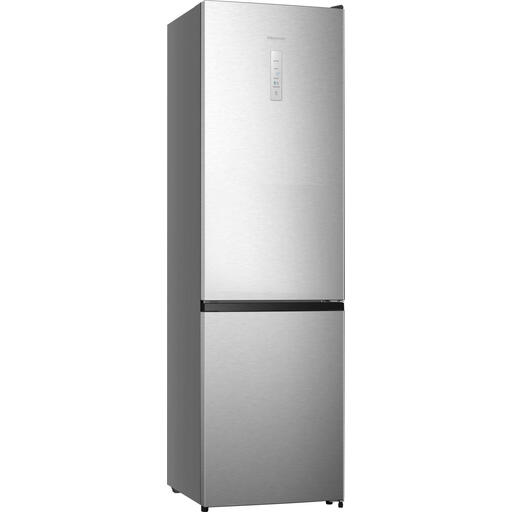
Hisense RB440N4CCB fridge-freezer

Hisense RB440N4CCB, 336 L fridge-freezer

This fridge-freezer lets you compare fresh and frozen food capacity with its stated annual energy consumption.

The Joybuy product listing gives capacities of 238 L for the fridge and 98 L for the freezer, with 135 kWh/an and 35 dB(A). It also lists class B, five shelves and three freezer drawers.

View on Joybuy
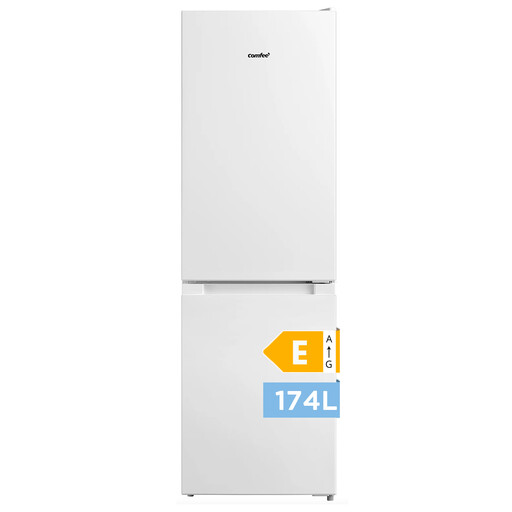
Comfee' RCB169WH2(E) fridge-freezer

Comfee' RCB169WH2(E), 174 L fridge-freezer

Its compact size may be worth considering if you have limited fridge and freezer needs.

The Joybuy product listing gives capacities of 115 L for the fridge and 59 L for the freezer, with a noise level of 39 dB. It lists three freezer drawers and Low Frost technology; this doesn’t mean you’ll never need to defrost it manually.

View on Joybuy
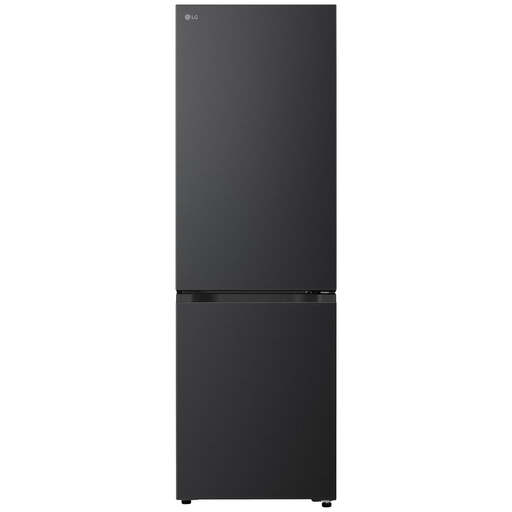
LG GBBS312CEV fridge-freezer

LG GBBS312CEV, 333 L fridge-freezer, class C

If you’re splitting your shopping between fresh and frozen food, check whether the capacities and compartments suit the way you usually organise your food.

The Joybuy product listing gives a fridge capacity of 183 L, a freezer capacity of 113 L and a 37 L compartment, along with 169 kWh/an and 34 dB. It also mentions a Fresh Converter drawer.

View on Joybuy

CHiQ JR227LSE fridge-freezer

CHiQ JR227LSE, 227 L fridge-freezer

Worth considering if you need to work around limited width while still having separate compartments for fresh and frozen food.

The title gives a fridge capacity of 153 L, a freezer capacity of 74 L and a width of 54 cm. It also mentions Low Frost and class E. Low Frost technology doesn’t mean you’ll never need to defrost it manually.

View on Joybuy

Frequently asked questions

How do you choose the right capacity without relying only on the number of people in your household?

Start with what you buy and store between shops, then consider fridge and freezer capacity separately. Que Choisir Ensemble gives an average guide of 100 to 150 L for one person and 50 L for each additional person. How often you shop and how much frozen food you buy also matter, so this isn’t a universal threshold.

How can you store leftovers without assuming a large fridge is all you need?

A large capacity doesn’t replace proper food storage. Anses recommends checking the temperature in the coldest part of the fridge, covering partially eaten food and avoiding overfilling it. For the preparations concerned, it recommends refrigerating them within two hours; guidance may vary depending on the food.

What should you check before installing a built-in appliance?

Check the housing dimensions, door fixing type and manual against the exact model reference. For the KNT6ME18S4, Electrolux France gives a housing size of 1780 × 560 × 550 mm. This measurement doesn’t apply to other models.

What rights should you check when replacing an old appliance in France?

For goods sold to a private individual by a business, the statutory legal guarantee of conformity applies under the conditions set out by law, as the French Ministry of the Economy explains. When selling a new appliance, the DGCCRF reminds retailers of the obligation to take back a similar used appliance free of charge on a “one-for-one” basis. Ask the retailer how this works in practice, and distinguish this take-back service from any installation or disconnection services that may be available.

Does the energy label apply to fridges and freezers sold in France?

Yes. Domestic appliances covered by EU regulations must carry an energy label. The European Commission says the label shows information including the A to G class, kWh/an, capacity and noise level. Check the label for the specific model you’re considering.