Households that prepare meals for several days
Make sure there’s enough room for prepared meals and perishable food without overfilling the fridge. Anses recommends keeping the coldest area at 4 °C and allowing air to circulate.


If you regularly store fresh and frozen food in one kitchen, compare the fridge and freezer capacities of a fridge-freezer. A separate freezer is more suitable if you have a long-term shortage of space for frozen food and already have enough room for fresh food. Before adding another appliance, check where it will go, its installation requirements and its annual energy consumption: ADEME notes that fridges and freezers run continuously.
How much room you need for chilled and frozen food depends mainly on what you actually store between shopping trips.
Make sure there’s enough room for prepared meals and perishable food without overfilling the fridge. Anses recommends keeping the coldest area at 4 °C and allowing air to circulate.
Compare the freezer capacity of a fridge-freezer with the space taken up by your portions and bulk purchases. If the freezer compartment regularly fills up while the fridge still meets your needs, consider a separate freezer and its energy consumption.
A fridge-freezer combines both uses in one spot. If you plan to put a freezer in an unheated garage or cellar, check the permitted ambient temperature range for the exact model: not every model is suitable for these conditions.
First decide whether your food needs more chilled space, freezer space or both. Then compare appliances that are suitable for the space you have in mind.
Worth considering: if you mainly store fresh food and already have a solution for frozen food, if needed.
Limitation: check whether it has a freezer compartment. Without one, the appliance won’t meet your frozen food storage needs.
Worth considering: if you need to store fresh and frozen food in one place.
Trade-off: the capacity is split between two compartments. A large total capacity doesn’t guarantee enough space in the compartment you use most.
Worth considering: if your fridge already meets your fresh food needs, but you regularly run short of space for frozen food.
Bear in mind: an upright freezer takes up vertical space, while a chest freezer needs floor space and access from above.
Worth considering: if your long-term chilled and frozen food storage needs can’t be met by a suitable split of capacity.
Downside: each appliance takes up space and runs continuously, so compare its annual energy consumption separately.
| Criteria | What to check | My needs |
|---|---|---|
| Keeping food chilled | Check the temperature in the coldest area and make sure there’s enough room without overfilling the appliance. Anses recommends 4 °C in this area and good air circulation. | I prepare meals or store perishable food for several days, so I need enough fridge space to store everything properly. |
| Capacity split | Check the fridge and freezer capacities separately on the label, and see whether there’s a freezer compartment. The European Commission says this information is shown on the energy label. | Most of my shopping goes in one compartment, so I don’t want to choose a fridge-freezer based on its total capacity alone. |
| Energy consumption | Compare the kWh/year figures on the labels of appliances with a suitable type and capacity. If you add a freezer, check its annual energy consumption too. | An extra appliance would run constantly in my home, so I want to factor that in before gaining more storage space. |
| Installation and noise | Measure the space and access to the room, then check the appliance dimensions, noise level and permitted ambient temperature range for the model. | My kitchen is compact, or I’m considering a cellar or garage, so the appliance needs to suit the place where I plan to put it. |
| Maintenance | Check the appliance’s frost management technology and defrosting instructions. Low Frost and No Frost are not the same feature. | If I store a lot of frozen food, I want to know what maintenance the compartment will need day to day. |
The stated capacity is split between the fridge and freezer compartments. The split may leave too little room for the food you store most.
Compare the capacity in litres for each compartment on the label, then check it against the space taken up by your fresh and frozen food.
Whether an appliance can be used in an unheated room depends on the model. Liebherr and Beko state that some models can operate at low ambient temperatures, but this doesn’t apply to all their freezers.
Check the permitted ambient temperature range and installation instructions for the exact model before choosing this location.
According to ADEME, fridges and freezers run continuously. A second appliance therefore adds to the energy consumption of the one you already use.
Compare the annual energy consumption shown on the labels of the models you’re considering, taking their type, capacity and features into account.
Anses notes that poor storage or a break in the cold chain can encourage bacteria to grow. Having more freezer capacity doesn’t replace proper storage of fresh food.
Keep the coldest area of the fridge at 4 °C and avoid overfilling it, in line with Anses recommendations.
The features below apply to the models or ranges described by their manufacturers. Always check the exact model you’re considering.
The freestanding KGN36VXCT fridge-freezer is an example of how capacity can be split between chilled and frozen food.
The CFe 2500 chest freezer highlights what to check when installing a large-capacity appliance outside the kitchen.
The upright freezer range includes models with different frost management features and installation requirements.
This selection includes fridge-freezers for keeping fresh and frozen food in one appliance, as well as separate freezers to consider if you already have enough fridge space. Compare the capacity and layout of each style with your habits.
 Image unavailable
Worth considering if you want to keep fresh and frozen food together in a four-door fridge-freezer. The model name indicates Total No Frost and an energy rating of E. Compare the capacity of the two compartments separately, and check the dimensions and temperature settings to make sure it suits your kitchen.
 Image unavailable
For a kitchen where width matters, this fridge-freezer is listed as 54 cm wide and 176 cm tall, with a 70/30 split between fridge and freezer space. Low Frost shouldn’t be confused with No Frost: check the defrosting instructions and permitted ambient temperature range before deciding where to put it.
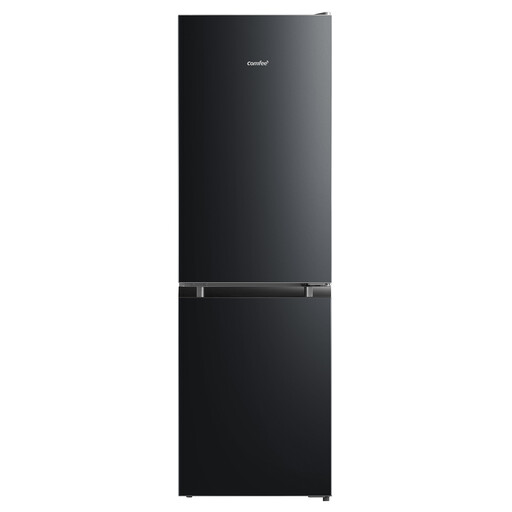 Image unavailable
This fridge-freezer combines chilled and frozen storage in a format worth considering for smaller spaces. The model name indicates Low Frost, an adjustable thermostat and a reversible door. Before choosing it, check the space available in each compartment, energy consumption in kWh/year and permitted ambient temperature range.
 Image unavailable
This chest freezer opens from the top and may be worth considering for extra storage if you have enough floor space. It’s described as convertible between fridge and freezer modes, with five-level digital control, a removable basket and an energy rating of E. Before installing it in a garage or cellar, check the temperatures it reaches in your chosen mode and its permitted ambient temperature range.
 Image unavailable
Worth considering if your fridge already meets your fresh food needs and you’re looking for separate frozen food storage. The product name indicates No Frost, three freezer drawers, an alarm and an energy rating of C. Check its dimensions, energy consumption in kWh/year and the permitted ambient temperature for the room where you plan to put it.
Anses recommends 4 °C in the coldest area of the fridge. Check this area and avoid overfilling the appliance so that air can circulate around the food.
For a fridge, fridge-freezer or freezer, compare the energy rating, annual energy consumption in kWh, the capacity listed for each use and the noise level. The European Commission says the label also specifies whether the appliance has a freezer compartment; check that this configuration meets your needs.
Only if the permitted ambient temperature range for that model is suitable for the garage. Liebherr states that the CFe 2500’s FrostProtect works down to −15 °C, and Beko offers Freezer Guard on some models. Always check the product details and instructions for the model you’re considering.
Yes, when a business sells the appliance to an individual. According to economie.gouv.fr, the legal guarantee of conformity is mandatory in these circumstances. It also applies to second-hand or refurbished goods sold under these conditions.