Start by considering how much space you need for fresh and frozen food, based on what you actually store between shops, rather than relying on the total capacity. A fridge freezer suits regular use of both compartments; a fridge with a small freezer compartment is suitable if you only store a few frozen items, while a separate freezer is worth considering if you regularly keep a larger frozen stock. In each case, check the layout against your habits and compare annual energy consumption for appliances that run continuously.
Who is this guide for?
Households that plan meals and shopping
If you make your shopping list based on planned meals, being able to see food you’ve already opened and ingredients you already have matters just as much as capacity. ADEME recommends checking what you have in stock before you shop to avoid buying duplicates.
People who freeze portions
If you prepare meals in advance or regularly buy food to freeze, consider how much space you really need for frozen items and whether you can organise portions without sacrificing too much of the fresh-food space you need.
Households mindful of appliances that run continuously
If you’re choosing between different capacities, think about what you’ll use day to day. ADEME points out that fridges and freezers run continuously, and that choosing a larger or more highly specified appliance than you need can increase your bills.
What should you look for?
To organise your shopping and meals, first work out what needs to stay chilled and what you regularly freeze. The capacity of each space can then help you decide which configuration is right for you.
Fridge freezer
Consider this if: both fresh and frozen food are part of your regular shop.
The trade-off: both uses share the appliance’s capacity, so check that each compartment has enough space for what you keep in stock.
Fridge with a freezer compartment
Consider this if: you mainly store fresh food, with just a few frozen items or small portions.
The trade-off: the total capacity doesn’t tell you how much space is available for frozen food.
Separate freezer
Consider this if: batch cooking or buying frozen food regularly means you keep a substantial amount in the freezer.
The trade-off: you’ll need to allow space for an additional appliance that runs continuously, while keeping food easy to check and organise.
| What to consider |
What to check |
Who this matters to |
| Keeping fresh food in sight |
Compare the litres available for fresh food and check whether the shelves and drawers fit the containers you usually use. |
I want to see which ingredients I’ve already bought when making my list, without forgetting food I’ve opened. Around 40% of consumers prioritise being able to see what fresh food they have in stock. |
| Space for frozen food |
Check the capacity of the freezer compartments and how the drawers or baskets are arranged for your portions. |
If I prepare several meals in advance, I need to store my portions together and be able to find them easily. Freezer capacity is the top priority for around 30% of consumers. |
| Energy use and capacity |
Compare the kWh per year for appliances with similar capacities that meet your needs, and check how much space they take up. |
I’d rather choose an appliance that suits my usual shop than one sized for an exceptional stock-up. This is the priority for around 20% of consumers, who are mindful of appliances that run continuously. |
| Maintenance and everyday use |
Check the model’s instructions for defrosting and temperature control, and arrange the contents so air can circulate. |
When putting away my shopping, I want to be able to monitor the temperature and maintain the appliance without disrupting my routine. Around 10% of consumers put these everyday considerations at the top of their list. |
The European Commission says the energy label provides information including energy consumption, storage volume and noise levels. Compare these details with the space you have available and what you usually keep in your fridge and freezer.
Mistakes to avoid
-
Choosing based on total capacity alone
The total capacity in litres doesn’t show how the space is divided between fresh and frozen food. That split could affect your choice if you regularly prepare portions to freeze.
Compare the capacity of each compartment shown on the energy label or product page with what you store between shops.
-
Choosing a size for a rare occasion
ADEME points out that cooling appliances run continuously, and that choosing a larger or more highly specified appliance than you need can increase your bills.
Start with your usual shopping routine and compare annual energy consumption in kWh for appliances suited to it.
-
Packing food in tightly to save space
ANSES advises against overfilling the fridge so that air can circulate inside.
Work out how much space you need for your usual shop, and choose a layout that keeps food easy to reach.
-
Assuming easier defrosting means no maintenance
A model’s defrosting system doesn’t remove the need to monitor the temperature or clean the appliance.
Check the instructions for the exact model to find out how to defrost and maintain it.
Brands to consider
There are no brand profiles to show in this section.
Fridge freezers on Joybuy
These models combine fresh-food and freezer space in one appliance. To compare them, check their stated capacity against your usual shop. If you’re considering a fridge with a small freezer compartment or a separate freezer instead, use the criteria above to compare those configurations.
 Image unavailable
Samsung RB33B612EBN, 344 L black fridge freezer
Worth considering if you want fresh and frozen food in one appliance. The model name indicates a total capacity of 344 L and an energy rating of E. Check how the space is divided between compartments and make sure the appliance will fit where you plan to install it.
View on Joybuy
 Image unavailable
Bosch KGN33NLEB, 282 L stainless steel fridge freezer
Compare its capacity with what you usually keep in stock if you’re looking for a fridge freezer with a bottom freezer compartment. Its stated total capacity is 282 L and its energy rating is E. Check the available space and installation clearances.
View on Joybuy
 Image unavailable
Samsung RF50C530EB1, 495 L black multi-door fridge freezer
Consider this if your regular shopping needs justify a 495 L appliance, rather than just for an unusually large shop. This model has an energy rating of E. Check its dimensions and the installation requirements for the water and ice dispenser before choosing.
View on Joybuy
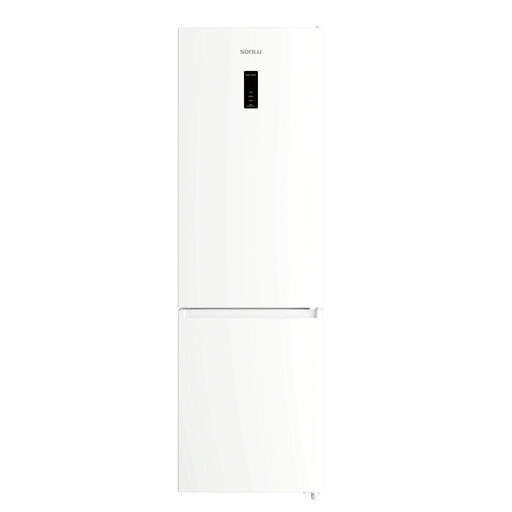 Image unavailable
Sonlu CD‑400RW, 355 L fridge freezer, 60 cm
Worth considering if you need separate spaces for fresh food and frozen portions. The model name indicates 252 L for the fridge and 103 L for the freezer, a width of 60 cm, a reversible door and an energy rating of E. Compare the annual energy consumption and interior layout before deciding.
View on Joybuy
 Image unavailable
CHiQ JR227LSE, 227 L silver fridge freezer, 54 cm
Worth considering if space is limited but you still need room for frozen food. The model name indicates 153 L for the fridge and 74 L for the freezer, a width of 54 cm, a reversible door, Low Frost technology and an energy rating of E. Check the installation clearances, annual energy consumption and the model’s defrosting instructions.
View on Joybuy
Frequently asked questions
How do I choose a fridge capacity without using a figure per person?
Start with the food and containers you have in the fridge at the same time after your usual shop, then compare the litres available for fresh and frozen food separately. If you batch cook, consider the portions you need to keep stored between cooking sessions.
What should I compare on an appliance’s energy label?
Compare annual energy consumption and storage volumes for appliances that meet the same needs. The European Commission says the label also shows the energy efficiency class and noise emissions, so the energy rating alone doesn’t tell you whether the appliance has enough usable capacity.
What temperature should I check in my fridge?
ANSES recommends a temperature of 0 to +4 °C in the coldest part of the fridge to keep food safely. Check the instructions to find this area in your model, and avoid overfilling the appliance so air can circulate.
Does freezing food at −18 °C make it sterile?
No. According to ANSES, freezing food at home at −18 °C stops bacteria from multiplying, but most microorganisms survive. It recommends freezing food as soon as you buy or prepare it, rather than waiting until its use-by date is close, and not refreezing food once it has thawed.


