To go a week or more between shops, start by working out how much room you need for fresh food and how much for frozen food. A fridge-freezer may suit you if your needs are fairly balanced, while a larger freezer or two separate appliances can give you more space for frozen food. A large model is only worth considering if its usable capacity suits your shopping needs, it will fit in your kitchen and can be delivered there, and its noise level and energy consumption work for you.
Who are these options suited to?
Two- to four-person households doing a weekly shop
A fridge-freezer can be a good starting point if you store both fresh and frozen food. Que Choisir suggests 100 to 150 L of usable capacity for one person, plus around 50 L for each additional person. Adjust this guide to suit the amount you actually buy, and check the capacity of each compartment separately.
Households that freeze portions or buy lots of frozen food
Freezer capacity becomes a separate consideration from the appliance’s total volume. Compare its usable capacity and drawer layout with the bags, boxes and portions you plan to store. A large fridge compartment won’t make up for a freezer that’s too small for your needs.
Larger families with a spacious kitchen
A large fridge-freezer or multi-door model is worth considering if your shopping really does need that much space. Measure the delivery route and check that the doors can open fully, too. For example, Samsung France lists the American-style Samsung RS57DG400EB4EF fridge-freezer as 91,2 cm wide.
What should you check before choosing?
Start with your weekly shop, then compare fresh and frozen capacity before looking at the appliance’s overall size. A single-door fridge paired with a separate freezer lets you choose each capacity independently, but you’ll need space for two appliances and have two sets of specifications to consider.
| Priority |
What to check |
Your needs |
| Fresh food capacity |
Compare the fridge’s usable capacity, not just the total volume. Que Choisir suggests 100 to 150 L for one person, plus around 50 L for each additional person. Use this as a guide and adjust it to suit your shopping. |
I need enough room for a week’s worth of fresh food or more, without packing the compartment so tightly that air can’t circulate. |
| Freezer space |
Check the freezer’s usable capacity and drawer layout. If you choose a fridge-freezer with a larger freezer, compare how much space is left for fresh food. |
If I’m freezing prepared portions or buying lots of frozen food, I want compartments that can actually fit my containers. |
| Appliance type |
Compare a fridge-freezer, a large model and a single-door fridge with a separate freezer, based on the capacity you need. If you choose two appliances, check that you have space for both, and compare their energy consumption and noise levels. |
If my needs for fresh and frozen food differ, I’d prefer to choose their capacities separately. Otherwise, one appliance may be a better fit for the space I have. |
| Size and clearance |
Measure the height, width and depth, and check the clearance needed to open the doors, as set out in the model’s manual. Also check that the packaged appliance can fit through doors, corridors and lifts, as Samsung France recommends for its larger models. |
The fridge-freezer needs to reach my kitchen, and I need to be able to open its doors, drawers and bins once it’s installed. |
| Temperature and storage |
Anses recommends keeping the coldest part of the fridge between 0 and +4 °C. Plan to check the temperature after installation and make sure cold air can circulate, including after a large shop. |
I want to store perishable food in the coldest area without having to cram everything in after shopping. |
| Energy and noise |
Compare the energy rating, stated kWh/year and dB for appliances of a similar size and type. Que Choisir ranks models listed at under 40 dBA among the quietest. |
Noise matters to me, especially in an open-plan kitchen. I also want to compare stated energy consumption without overlooking differences in capacity. |
What mistakes should you avoid?
-
Looking only at the total capacity
Two appliances can divide their capacity very differently. According to their respective product specifications, the Bosch KGN492LDF offers 311 L for fresh food and 129 L for frozen food, compared with 286 L and 220 L for the LG GML844PZ6F.
Make a note of what you buy in a typical week, then compare the usable capacity of both compartments separately, as well as the interior layout of the models you’re considering.
-
Choosing a large model without checking the delivery route
An appliance may fit in the space you’ve set aside but still be too large to get through a doorway or corridor on delivery. Samsung France specifically advises checking access for the appliance in its packaging.
Before ordering, measure your kitchen, check the clearance needed to open the appliance and measure the route to its final position.
-
Assuming No Frost guarantees safe food storage
The defrosting system doesn’t replace temperature checks or proper food storage. Anses recommends keeping the coldest part of the fridge between 0 and +4 °C and advises against overfilling it.
After installation and a large shop, check the temperature, allow air to circulate and clean the inside regularly.
-
Comparing only the energy label letter
Capacity and overall size also vary between appliances, so the rating letter alone won’t tell you the stated annual energy consumption or noise level.
Compare the usable capacity for fresh and frozen food, kWh/year, dB and dimensions of models that meet your storage needs.
A few examples from well-known brands
These examples show how capacity can be divided in different ways. The specifications apply to the models listed, not to every appliance from each brand.
Bosch
Bosch Home Appliances France lists the KGN492LDF fridge-freezer as offering 311 L of fridge capacity and 129 L of freezer capacity.
- Its product details list an energy rating of D and a noise level of 35 dB.
- Check that this model’s freezer capacity and dimensions suit your shopping needs and kitchen.
Whirlpool
For the WHK26493X4E fridge-freezer, Whirlpool France lists 340 L of fridge capacity and 150 L of freezer capacity.
- The product details for this model list 297 kWh/year, 38 dB and an energy rating of E.
- Check that its overall size and capacity split suit your available space and the amount of frozen food you buy.
Samsung
Samsung France lists the American-style RS57DG400EB4EF fridge-freezer as having a capacity of 583 L.
- Its product details list dimensions of 912 × 1780 × 654 mm, which can help you check whether it will fit.
- Before choosing this large model, also check the fresh and frozen capacity split, door clearance and whether the packaged appliance can get to its final position.
Fridge-freezers to consider on Joybuy
These four fridge-freezers offer different capacities for storing the food from a larger shop in one appliance. Compare their fresh and frozen capacity with what you buy, then check the dimensions and specifications of the model you choose.
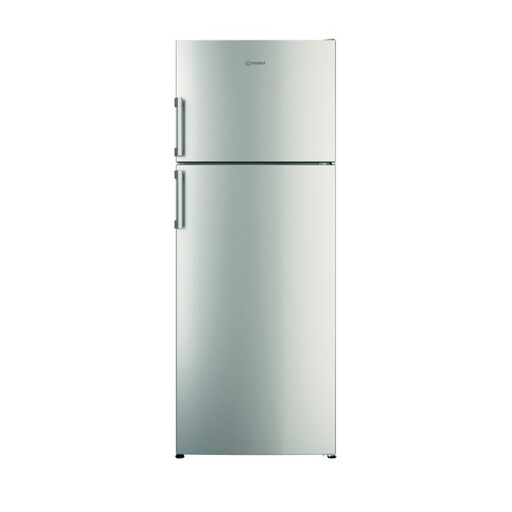 Image unavailable
Indesit IT70 832 S, 437 L fridge-freezer, energy rating E
Its stated total capacity of 437 L may suit a household that stores a lot of shopping in one appliance. Check the usable capacity for fresh and frozen food, along with the dimensions needed for installation.
View on Joybuy
 Image unavailable
CHiQ JR263LGE, 262 L Low Frost fridge-freezer
This fridge-freezer has a stated capacity of 262 L, so compare it with the needs of a household that doesn’t require much storage space. Its name indicates a 70/30 split, a width of 54 cm and a height of 176 cm. Check the exact usable capacities, depth and clearance needed before choosing.
View on Joybuy
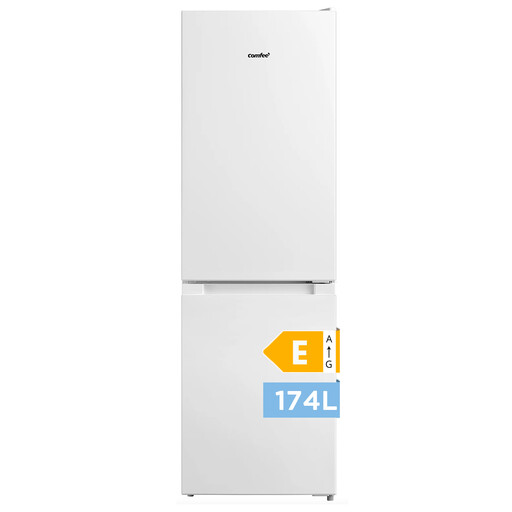 Image unavailable
Comfee' RCB169WH2(E), 174 L Low Frost fridge-freezer
With a stated total capacity of 174 L, this model calls for a careful check of the space available for each shop, especially if you freeze portions. Its name indicates a height of 150 cm, a four-star freezer and an energy rating of E. Check the other dimensions and the energy label, too.
View on Joybuy
 Image unavailable
CHiQ JR227LSE, 227 L Low Frost fridge-freezer
If you need less storage space, compare the stated 153 L fridge capacity and 74 L freezer capacity with what you usually buy. The model is listed as 54 cm wide and has an energy rating of E. Check the other dimensions and the maintenance instructions in its manual.
View on Joybuy
Frequently asked questions
Should I choose the largest total capacity if I shop less often?
No. Choose according to how much fresh and frozen food you need to store between shops. Compare the usable capacity and layout of each compartment. The total capacity can hide a split that doesn’t suit your shopping needs.
What temperature should I aim for after filling the fridge?
Anses recommends keeping the coldest part of the fridge between 0 and +4 °C. Check the temperature after installation, avoid overfilling the appliance so air can circulate, and store perishable food in the coldest area.
How do I compare the noise and energy consumption of two models?
Check the stated kWh/year, energy rating and noise level in dB for the exact model. Compare their capacity and overall size, too: the rating letter alone isn’t enough to distinguish between appliances of different sizes.
Does a No Frost fridge-freezer need no maintenance?
No. Depending on the model, No Frost may eliminate the need for manual defrosting, but it doesn’t replace cleaning or checking how food is stored and what temperature the fridge is at. Anses recommends cleaning the fridge regularly and keeping the cold air circulating freely.


