What should you look for before buying?
Start by choosing the features and capacity you’ll actually use. Then compare the annual energy consumption of appliances that meet those needs.
Fridge only
Consider this if: you mainly store fresh food and rarely freeze anything.
Bear in mind: you’ll need to give up freezing food or have a separate freezer.
Fridge-freezer
Consider this if: you regularly use both the fridge and freezer compartments in one appliance.
Bear in mind: both compartments need to suit your storage needs, not just the advertised total capacity.
Separate freezer
Consider this if: you regularly store frozen food or freeze large quantities of fresh food.
Bear in mind: this appliance will run continuously as well as your fridge.
Smaller capacity or one fewer appliance
Consider this if: an appliance is often mostly empty, or a second freezer is rarely used.
Bear in mind: having less spare capacity means planning your shopping accordingly and avoiding cramming food in.
| What matters |
What to check before buying |
Who this matters to |
| Annual energy consumption |
Compare kWh/year for appliances with the same purpose and a similar usable capacity. If available, check your current appliance’s energy consumption too. |
If I’m replacing my appliance to reduce my electricity use, I want to know whether the new model meets the same needs but has a different stated energy consumption. Around 42% of consumers put this comparison first. |
| Capacity and features |
Check the available fridge and freezer capacity separately, along with how useful the features are to you. |
If a second appliance is usually underfilled, I’d consider getting less capacity rather than more features. Choosing the right size comes before other considerations for around 25% of consumers. |
| Freezing needs |
Check the freezer capacity and, if you freeze fresh food, make sure it has a 4-star compartment. |
I regularly prepare or store frozen food and need a suitable space, not just an ice box. This is the main consideration for around 17% of consumers. |
| Food storage |
Choose an interior layout that avoids overfilling and lets you check the temperature at the coldest point. |
There’s no point getting a smaller fridge if I can’t store my food without cramming it in. For around 16% of consumers, how food is stored comes first. |
Fridges and fridge-freezers on Joybuy
This selection includes fridge-freezers with different capacities and a compact, single-door fridge. To choose between them, start with how much space you need for fresh and frozen food, then check the exact model’s energy label and dimensions against your available space.
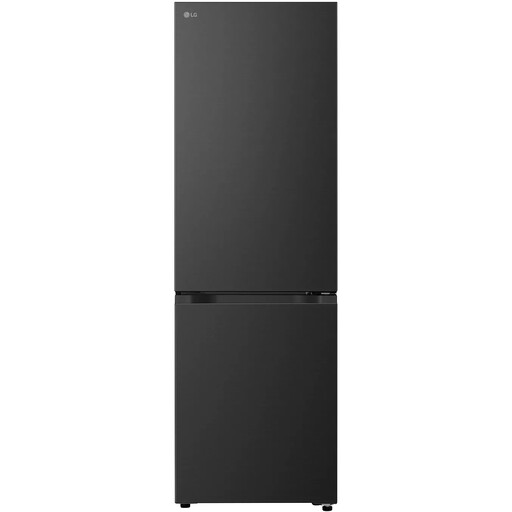 Image unavailable
LG GBBS312AEV, 333 L No Frost fridge-freezer, A rated
Worth considering if you regularly use both fridge and freezer space and have room for a 333 L fridge-freezer.
The product name states that it has No Frost and an A rating. Check the annual energy consumption and dimensions on the energy label and product details for the exact model before comparing it with a replacement.
View on Joybuy
 Image unavailable
Bosch KGN33NLEB, 282 L fridge-freezer, E rated, stainless steel
Consider this model if you want fridge and freezer space in one 282 L appliance, provided each compartment is large enough for your needs.
The product name states that it has an E rating. If you freeze fresh food, also check the star rating of the freezer compartment.
View on Joybuy
 Image unavailable
Samsung RB33B612EBN, 344 L fridge-freezer, E rated, black
This fridge-freezer is suited to households that use both temperature zones and can make good use of its 344 L capacity without buying more storage than they need.
The product name states that it has an E rating. Compare its kWh/year and the capacity of each compartment with models that meet the same needs. Check the star rating if you plan to freeze fresh food.
View on Joybuy
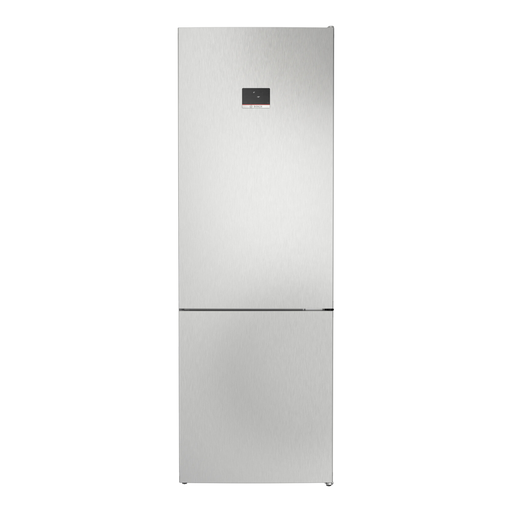 Image unavailable
Bosch KGN497LDF, 440 L fridge-freezer, D rated, grey
Its 440 L total capacity is worth considering if you regularly fill both the fridge and freezer compartments, rather than leaving a large amount of space unused.
The product name states that it has a D rating. Check the capacity of each compartment, annual energy consumption and installation space before choosing this size.
View on Joybuy
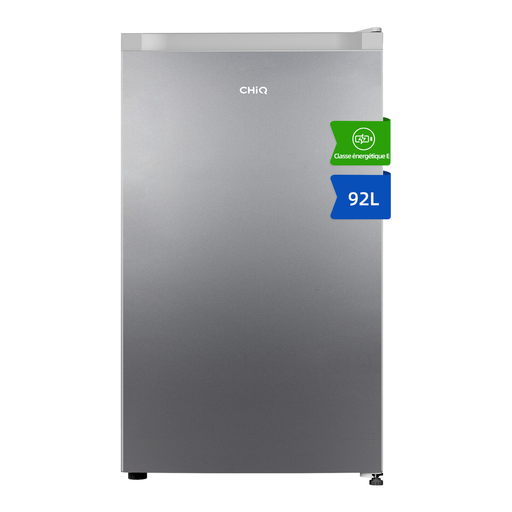 Image unavailable
CHiQ JR92DSE, 92 L single-door fridge, E rated
Worth considering if you want to reduce the space taken up by your refrigeration appliance and 92 L is enough for the food you actually store.
The product name states that it has an E rating. Before choosing this model, check its usable capacity, the features of any freezer compartment, its dimensions and its annual energy consumption on the product details and energy label for the exact model.
View on Joybuy
Frequently asked questions
How do I compare refrigeration appliances with different capacities?
First work out how many litres you need in each compartment, then compare appliances with the same purpose and a similar capacity. The energy label displayed by the European Commission shows the energy rating, kWh/year, capacities and noise level. A better rating doesn’t mean you can ignore the annual energy consumption of a model that suits your household.
Is an ice box enough to freeze homemade meals?
No. To freeze fresh food or prepared meals, look for a compartment designed for freezing rather than a simple ice box. The French Ministry of Agriculture distinguishes this from the limited storage of food that’s already frozen, and says that a 4-star compartment can be used for freezing.
What temperature should I check in a fridge or freezer?
For the fridge, Anses recommends a temperature of between 0 °C and +4 °C at the coldest point. Check it regularly if necessary. For the freezer, the French Ministry of Agriculture recommends setting the temperature to −18 °C.
What should I do with an old fridge when replacing it in France?
Old fridges are covered by the collection system for electrical and electronic equipment. The French Ministry for the Ecological Transition describes the “one-for-one” take-back scheme when you buy an appliance of the same type. Ask the retailer how to return your old appliance when you make your purchase.
Does No Frost guarantee lower energy consumption?
No. No Frost alone doesn’t tell you whether one model uses less energy than another. To decide, compare the kWh/year listed for the exact models, choosing capacities that suit your needs.


