Start by considering the space available and the capacity you need, separately for fresh and frozen food. A fridge freezer combines both in one space, while a larder fridge or dedicated freezer is better suited to a more specific need. Then compare the kWh/year figures for models that meet your requirements. According to ADEME, these appliances run continuously, so adding more than one is a decision worth considering carefully.
Who is this choice for?
Households short on kitchen space
If your appliance needs to fit into a small kitchen or an alcove, measure the space and check the usable capacity, delivery access and door opening direction. For a built-in model, you’ll also need to check the dimensions of the housing unit.
Households that store fresh and frozen food
If you regularly use both compartments, check their capacities separately. With a fridge freezer, the total capacity doesn’t tell you how much space is available for each type of food.
Households that store lots of frozen food
If a freezer is your main requirement, compare its dedicated capacity with the space you already have. An additional appliance also runs continuously, so whether it’s worthwhile depends on how much storage you really need.
Which criteria should you consider first?
First decide whether you need chilled storage, a freezer or both. Then compare the capacities and installation options with the annual energy consumption shown. ADEME points out that fridges and freezers run continuously.
Larder fridge
Worth considering: if you mainly store fresh food and rarely freeze food, or already have a freezer.
Bear in mind: don’t assume a small freezer compartment will be big enough for your frozen food.
Fridge freezer
Worth considering: if you regularly store both fresh and frozen food and only have space for one appliance.
Bear in mind: the capacity of each compartment depends on the model you choose, and they can’t be resized independently.
Dedicated freezer
Worth considering: if your fridge still has enough room for fresh food, but not for your frozen food.
Bear in mind: alongside your fridge, it takes up a second space and runs continuously.
Multiple cooling appliances
Worth considering: if separate, ongoing storage needs make it worthwhile to have different capacities.
Bear in mind: you’ll need space for each appliance and should consider their annual energy consumption together.
| What matters |
What to check |
Who is it for? |
| Continuous running |
The kWh/year figures for models with the same purpose, considered alongside their usable capacities; don’t look at the energy rating alone. |
When an appliance needs to run day and night, I want to avoid unnecessary capacity without running out of space for food. Around 36% of consumers prioritise annual energy consumption. |
| Space and usable capacity |
The appliance’s dimensions and usable capacity; for a built-in model, check the required housing unit dimensions. |
In a compact kitchen, I need an appliance that fits its space and holds my usual groceries. Available space and usable capacity come first for around 29% of consumers. |
| Fresh and frozen food capacity |
The usable capacity in litres of each compartment, rather than just the total capacity. |
If I regularly store fresh and frozen food, I don’t want either compartment to be short on space. Around 21% of consumers put this balance first. |
| Noise and maintenance |
The published noise level in dB(A) and which compartments are covered by the No Frost function, if stated. |
If an appliance is close to my living space, noise and maintenance matter more to me. These are the top priorities for around 14% of consumers. |
Which mistakes should you avoid?
-
Relying on the energy rating alone
A fridge, fridge freezer and freezer don’t do the same job. ADEME distinguishes between their energy consumption and points out that they run continuously.
Once you’ve settled on the type and capacity that suit your needs, compare the kWh/year figures for the models you’re considering.
-
Looking only at a fridge freezer’s total capacity
The total can hide a compartment that’s too small for your frozen food or fresh food.
Make a note of how much space you need for each, then check the stated usable capacity in litres for both compartments.
-
Measuring the appliance without checking how it will fit
External dimensions alone won’t tell you whether a built-in model will fit its housing unit or whether an appliance can be brought through to its intended space.
Check the delivery route, door opening and required clearances. For a built-in model, compare the housing unit dimensions with the model’s instructions.
-
Leaving arrangements for your old appliance until delivery
A fridge or freezer is bulky, so you’ll need to plan for its removal when your new one arrives.
Ask the retailer about taking away an equivalent appliance and check the access requirements before delivery.
Brands to explore
Bosch
The range includes freestanding and built-in fridge freezers, each with different installation requirements.
- For the freestanding KGN33NWDA fridge freezer, Bosch lists 189 L of fridge capacity, 90 L of freezer capacity and a noise level of 40 dB(A): compare these figures with your needs for each compartment.
- These specifications apply to the KGN33NWDA, not to all Bosch fridge freezers.
Whirlpool
The range includes both larder fridges and fridge freezers with No Frost.
- Whirlpool offers this function across several formats, so you can look into it whatever type of appliance you’re considering.
- Check which compartments are covered on the specific model, then look at its capacity, noise level and kWh/year figures.
Electrolux
The built-in fridge freezers in the range are worth considering for kitchens where housing unit dimensions determine the choice.
- For the LNN3CE18S, Electrolux lists 175 L of fridge capacity, 78 L of freezer capacity and 235 kWh/year.
- These figures apply specifically to the LNN3CE18S; check the housing unit dimensions for the model you’re considering.
Fridge freezers to explore on Joybuy
These models combine a fridge and freezer in one appliance. Compare their format and stated capacity with your needs. To choose between models that fit the bill, also check the capacity of each compartment and the kWh/year figures.
 Image unavailable
Candy CFQQ5T817EPS four-door fridge freezer, 467 L
Worth considering if you want to keep fresh and frozen food together in a large, four-door fridge freezer. The model name lists a capacity of 467 L, an E energy rating and Total No Frost. Check it will fit in your kitchen and look at how the capacity is divided before choosing.
View on Joybuy
 Image unavailable
LG GBBSJ1CCSW, 333 L
Worth comparing if you’re looking for a fridge freezer that keeps fresh and frozen food in one appliance. The model name lists a capacity of 333 L and a C energy rating. Check the capacity of each compartment separately and allow for the clearances needed for installation.
View on Joybuy
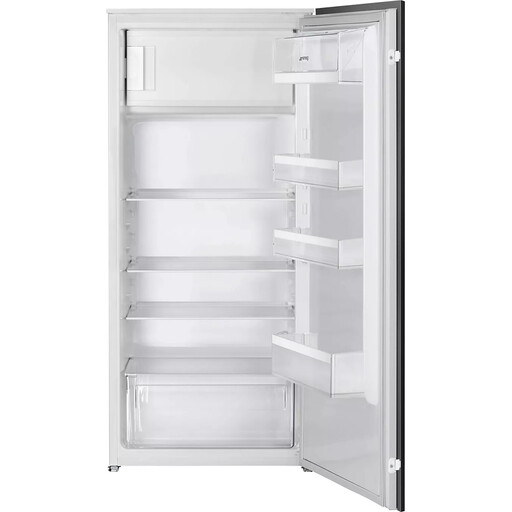 Image unavailable
SMEG S4C122E built-in fridge freezer, 188 L
Worth considering for a fitted kitchen if a freezer compartment at the top suits your habits. This one-door model is listed at 188 L and has an E energy rating. Check the housing unit dimensions, installation system and capacity available for frozen food.
View on Joybuy
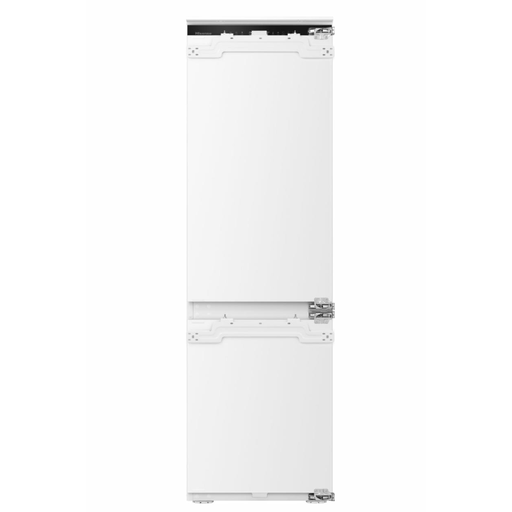 Image unavailable
Hisense RB3B250SAWC built-in fridge freezer, 252 L
Worth considering if your kitchen is designed for a built-in fridge freezer for fresh and frozen food. The model name lists a capacity of 252 L, No Frost and a C energy rating. Check the required housing unit dimensions before deciding on this format.
View on Joybuy
 Image unavailable
Bosch KGN33NLEB, 282 L
Worth comparing if you prefer a fridge freezer with the freezer compartment at the bottom. The model name lists a capacity of 282 L and an E energy rating. Compare the capacity of each compartment with your needs and check the noise level if the appliance will be close to your living space.
View on Joybuy
Frequently asked questions
Is the energy rating enough to make a choice?
No. Start by comparing appliances that meet the same storage needs, then look at their usable capacities and kWh/year figures. ADEME distinguishes between the energy consumption of fridges, fridge freezers and freezers. An energy rating alone won’t help you choose between appliances of different types and sizes.
How can I tell if a fridge freezer has a large enough freezer compartment?
Check its usable capacity separately from the fridge compartment, then compare it with the amount of frozen food you usually store. The product specifications for the Bosch and Electrolux fridge freezers mentioned above show these capacities separately: the total doesn’t replace this check.
What should I check before choosing a No Frost model?
Check which compartments are covered and what maintenance instructions apply to the model. Whirlpool describes No Frost as a frost management technology, but this feature doesn’t replace comparing capacity, dimensions and annual energy consumption.
How should I arrange for my old appliance to be taken away?
Ask the retailer before ordering your new fridge or freezer. ecosystem describes free ‘one-for-one’ collection when you buy an equivalent appliance. Confirm the arrangements for delivery, access to your home and removal of the old appliance.


