Buying priorities
Choose a format and capacity that suit the way you use your appliance first, then compare energy data and installation requirements between similar models.
| Priority |
What to check |
Your needs |
| Usable capacity |
Compare the fridge and freezer capacities separately, in litres. Que Choisir gives 100 to 150 L as a guide for one person, followed by around 50 L per additional person, adjusted to your shopping and eating habits. |
I want enough room for my usual shopping without maintaining a large capacity that is rarely used. |
| Comparable energy consumption |
Check the kWh/year, energy rating and storage capacities. The European Commission states that the energy label displays annual consumption and capacities; compare models with similar formats and capacities. |
I want to replace an old appliance without making a snap decision based solely on the energy rating letter. |
| Amount of frozen food |
Check the freezer capacity and number of drawers, as well as the footprint and annual consumption if you are considering a separate freezer. A chest freezer prioritises capacity, while an upright model is easier to organise day to day. |
My frozen food needs to fit in a suitably sized compartment; a second appliance is only worth the space if I regularly store large quantities. |
| Collection of your old appliance |
Confirm the collection arrangements before delivery. If this option is not suitable, find a collection point or recycling centre for your old appliance. |
I want my old fridge to be sent through a suitable collection and decontamination process. The French Ministry for Ecological Transition lists collection points and recycling centres among the possible solutions. |
Options available on Joybuy
These Joybuy options are fridge freezers designed for everyday use with fresh and frozen food. Compare their separate capacities, dimensions and annual consumption where this information is provided.
 Image unavailable
LG GBBSJ1CCSW 333 L fridge freezer, C rating
Suitable for mixed use, with separate capacities for fresh and frozen food.
183 L fridge capacity, 113 L freezer capacity and a 37 L fresh-food zone; stated annual consumption of 169 kWh/year.
Check the dimensions of 597 × 1 860 × 674 mm, the 110° door opening and the installation clearance of at least 5 cm.
Joybuy
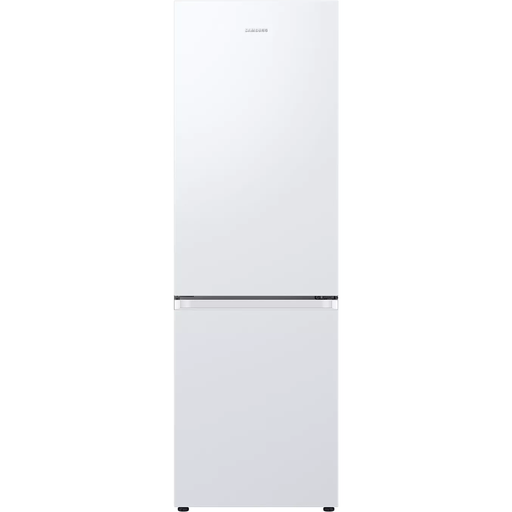 Image unavailable
Samsung RB38C600EWW 390 L fridge freezer, E rating
This model is aimed at households needing plenty of space for fresh and frozen food.
276 L fridge capacity, 114 L freezer capacity and stated annual consumption of 264 kWh/year.
Before installation, check the height of 203 cm, ventilation requirements and access to the room.
Joybuy
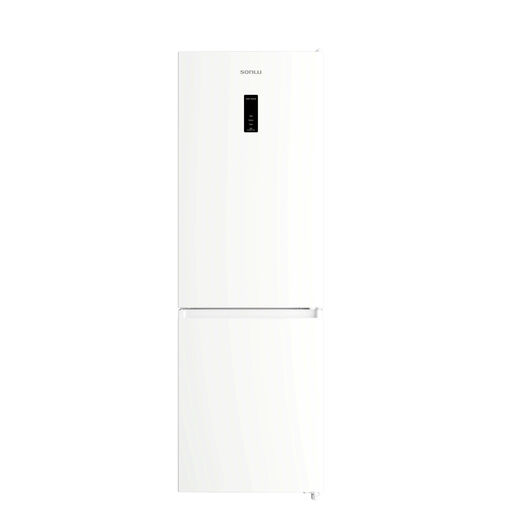 Image unavailable
Sonlu CD-350RW 310 L fridge freezer, E rating
Its 60 cm width and reversible doors may suit a kitchen with limited space or a challenging layout.
211 L fridge capacity and 99 L freezer capacity, with electronic controls and a fast-freezing function.
Check the kWh/year on the energy label before comparing its consumption with that of other fridge freezers.
Joybuy
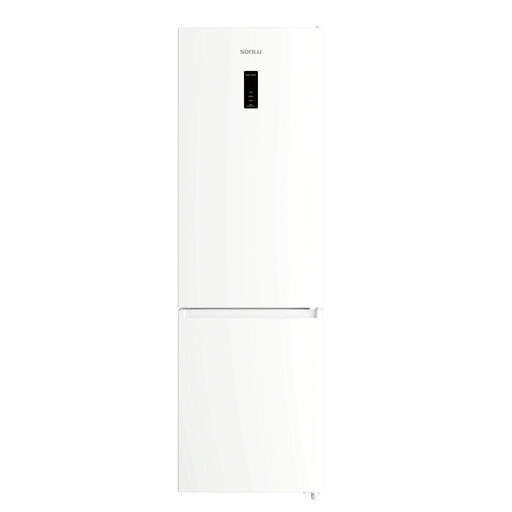 Image unavailable
Sonlu CD-400RW 355 L fridge freezer, E rating
This fridge freezer has separate compartments for households storing both fresh and frozen food.
252 L fridge capacity, 103 L freezer capacity, 60 cm width and reversible doors.
Check that the total capacity suits your habits and consult the full label to compare kWh/year.
Joybuy
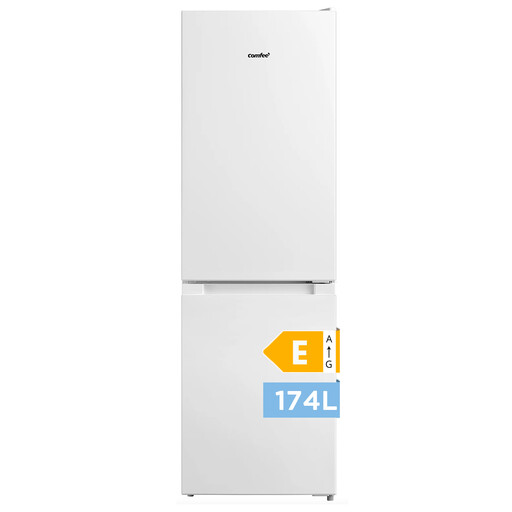 Image unavailable
Comfee RCB169WH2(E) 174 L fridge freezer, E rating
This compact option may suit a small household with modest fresh and frozen food needs.
115 L fridge capacity, 59 L 4-star freezer capacity, dimensions of 50 × 55 × 150 cm and a reversible door.
The 59 L freezer capacity should be checked against the amount of frozen food you usually store; also consult the kWh/year on the label.
Joybuy
Frequently asked questions
What should you compare on a fridge’s energy label?
Compare the energy rating, kWh/year, fridge capacity in litres, freezer capacity in litres and noise level. The European Commission recommends focusing particularly on kWh/year between appliances with similar formats and capacities.
What capacity should you allow for one person or a couple?
Que Choisir suggests 100 to 150 L as a guide for one person, followed by around 50 L per additional person. Increase or reduce this capacity if you do large shops less frequently, batch-cook or keep lots of fresh food.
Does a larger fridge always use more energy?
Size and having more features than you need can increase consumption, but you should compare kWh/year and capacities between similar appliances. ADEME reminds us that fridges and freezers operate continuously.
What should you do with your old appliance if collection is not selected?
You can take it to a collection point, recycling centre or social and solidarity economy organisation. The French Ministry for Ecological Transition states that this equipment must go through a suitable collection and treatment process.


