Households that shop for several days at a time
If your shopping includes fresh and frozen food, look at the capacity of each compartment rather than just the total volume.


For a household that regularly buys fresh and frozen food to last several days, a fridge freezer is a good place to start. Compare the capacity of each compartment separately and check that it will fit in your kitchen. A compact model is a better fit if space and freezer needs are limited; with a multi-door model, make sure you need the extra capacity and carefully measure the access route.
If your shopping includes fresh and frozen food, look at the capacity of each compartment rather than just the total volume.
Choosing between an under-counter fridge, a single-door model and a fridge freezer also depends on the space available, how the doors open and the ventilation requirements.
In an open-plan kitchen or one close to a living area, compare the kWh/an and noise emissions stated for the models you are considering.
Start by working out how much room you need for fresh and frozen food. Then rule out any sizes that won’t fit your kitchen before comparing energy labels.
| Criterion | What to check | Think about your needs |
|---|---|---|
| Style | Consider a fridge freezer if you use the freezer regularly, an under-counter fridge if height is the deciding factor, or a single-door model if you mainly store fresh food. With a multi-door model, measure the access route too. | I shop for several days at a time: do I need a separate freezer compartment, or mainly more room for fresh food? |
| Usable capacity | Check the litres available for fresh and frozen food separately. Que Choisir Ensemble suggests starting with 100 to 150 L for one person, then adding 50 L per additional person; adjust this guide to suit your shopping habits. | I want to fit in my usual shopping without choosing a larger capacity than I need, especially for the freezer. |
| Installation | Measure the width, height and depth, as well as doorways, access routes and door clearance. For a built-in model, check the niche dimensions and ventilation requirements in the manual. | Is there enough room in my kitchen to install the appliance and open its doors once the units are in place? |
| Energy use | For the European label described by the European Commission, consider the efficiency rating alongside the kWh/an and capacity. Prioritise comparisons between appliances with similar storage capacities. | I want to keep track of the energy use of an appliance that runs continuously, rather than relying on its rating letter alone. |
| Noise | Check the noise emissions in dB and the noise class for the exact model. According to the European Commission, both details appear on the European label. | Noise matters more to me in an open-plan kitchen than in a separate kitchen. |
| Cooling and location | Check which compartments have No Frost and what maintenance the manual recommends. Also compare the model’s climate class with the temperature of the room where it will be installed. | I want to know whether the freezer’s maintenance requirements suit me and whether the appliance is suitable for my kitchen or utility room. |
Total capacity doesn’t tell you how much room there is for frozen food. The freezer compartment may not suit the way you usually shop.
Make a note of what you usually store in the fridge and freezer, then compare the usable capacity of both compartments in the model specifications.
A large fridge may fit in your kitchen but not through the doors or corridors on the way there. Gifam says multi-door models are usually more than 90 cm wide.
Before choosing a style, measure access routes, the installation space, door clearance and the clearances specified in the manual.
The rating letter doesn’t replace the kWh/an or capacity shown on the European label described by the European Commission. On its own, it isn’t enough to compare appliances with different capacities.
Compare the stated annual energy use of models whose capacity and compartments meet your needs.
A fridge must be installed with the clearances specified for that model. Que Choisir Ensemble recommends leaving at least 10 cm above and behind the appliance.
Check the manual first: always follow the installation instructions for the appliance you choose.
Worth considering if you’re choosing between a freestanding fridge freezer and a built-in model.
Worth considering if you’re looking for a high-capacity fridge freezer and have enough width available.
A brand to look at if the layout of a multi-door fridge suits the way you shop.
Worth considering if you’re looking for a built-in fridge freezer to fit a specific niche.
This selection includes fridge freezers, a built-in model and large four-door or side-by-side designs. Compare them based on the space available and how much fresh and frozen storage you need.
 Image unavailable
Worth considering if you do a large shop and need room for both fresh and frozen food. The model name indicates Total No Frost and an energy efficiency class of E. Before choosing it, check there’s enough room to open all four doors and confirm the installation dimensions.
 Image unavailable
This fridge freezer is worth comparing if you shop for a mix of fresh and frozen food. The model name indicates an energy efficiency class of C. Check how the 333 L is divided between the compartments, as well as the space needed for installation.
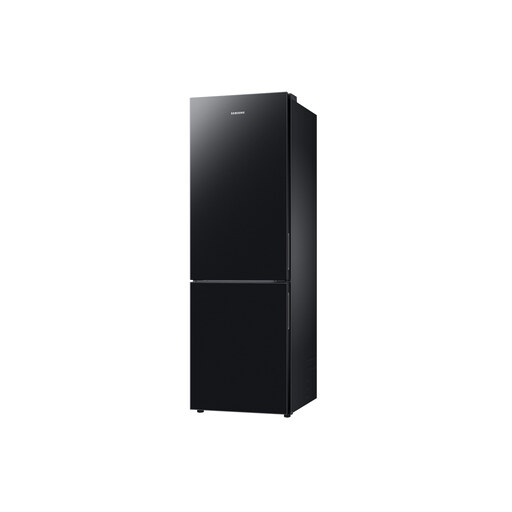 Image unavailable
Another fridge freezer to compare with your fresh and frozen storage needs. The model name indicates an energy efficiency class of E. Check the capacity of each compartment, the kWh/an and the ventilation requirements for your space.
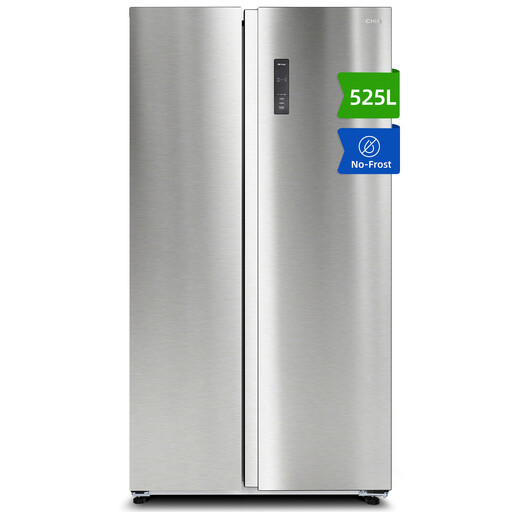 Image unavailable
Worth considering if your shopping needs lots of room in both compartments: the product name lists 333 L of fridge space and 192 L of freezer space, as well as No Frost, 37 dB and an energy efficiency class of E. Measure the access route and installation space, then check the model’s kWh/an and climate class.
 Image unavailable
This built-in model is designed for a fitted kitchen with a compatible niche. The model name indicates TwinTech No Frost and an energy efficiency class of E. Before comparing it with other fridge freezers, confirm the niche dimensions, net capacity of each compartment and kWh/an.
Compare the kWh/an while taking into account the capacity you need, rather than looking only at the efficiency rating. The European Commission says the fridge label also shows storage capacity and noise emissions.
Choose a model whose climate class covers the ambient temperature range of the room where it will be used. Measure or estimate the possible temperatures in that space, then check them against the model specifications.
No Frost is worth considering if you want to reduce the need to defrost the compartment it covers, but it doesn’t replace choosing the right capacity. Check which compartment it applies to, and compare the noise level and kWh/an for the exact model too.
Follow the clearance requirements in the manual for your chosen model. Que Choisir Ensemble recommends leaving at least 10 cm above and behind the appliance for air circulation. Also check that the doors can open in the space you have planned.