Households replacing their fridge freezer
If you store fresh and frozen food every week, work out how much space you need in each compartment before comparing the annual energy consumption and noise levels of similar models.


Start by working out how much space you need for fresh and frozen food. A fridge freezer meets both needs in one appliance, while a separate freezer may be worth considering if you regularly store more frozen food. Then compare appliances of a similar size and capacity for annual energy consumption and noise levels. Finally, check that your chosen model can be delivered, installed and opened in your kitchen.
If you store fresh and frozen food every week, work out how much space you need in each compartment before comparing the annual energy consumption and noise levels of similar models.
Your appliance needs to suit both your shopping habits and your available space. Measure the space where it will go, the delivery route and the clearance needed to open the doors and ventilate your chosen model.
If you buy in bulk or keep large stocks, compare a fridge freezer’s freezer capacity with that of a separate appliance. UFC-Que Choisir highlights the benefits of dedicated freezers for larger families.
Consider this: if you store very little frozen food or already have a separate freezer.
Limitation: a small freezer compartment may not meet your regular freezing needs.
Consider this: if you regularly use both the fridge and freezer compartments and want them in one appliance.
Limitation: the total capacity doesn’t tell you how much space is in the freezer.
Consider this: if your frozen food regularly exceeds the practical capacity of a fridge freezer.
Drawback: you’ll need space for two appliances and should check the energy consumption of each one.
Once you’ve chosen a style, compare the capacity of each compartment with your shopping needs, then check the usage information and installation requirements for the specific model.
| Criterion | What to check | My needs |
|---|---|---|
| Usable capacity | Check the litres available for fresh food and freezing separately. UFC-Que Choisir suggests an average starting point of 100 to 150 L for one person, plus 50 L for each additional person. Adjust this guide to suit your shopping and storage habits. | My shopping needs to fit without wasting space on frozen food I rarely buy. |
| Energy consumption | Compare the kWh/year and energy class of appliances with a similar configuration and capacity. ADEME points out that fridges and freezers run continuously. | I’m looking for a capacity that suits my household, while still being able to compare the stated energy consumption of the models I shortlist. |
| Noise and cooling | Check the stated noise level in dB(A). To assess how well temperatures are maintained, look for tests of the specific model rather than judging by its features alone. UFC-Que Choisir’s testing protocol, for example, examines how evenly the cold is distributed. | In an open-plan kitchen, noise matters just as much to me as having enough room for my shopping. |
| Installation | Measure the packaged appliance and the delivery route. Check the manual for ventilation clearances and the space needed to open the doors and drawers. | The appliance needs to fit through to my kitchen and remain easy to use once installed. |
A fridge freezer may offer enough space overall, but too little in the freezer compartment for the food you usually buy.
Compare the two capacities separately and consider how often you shop and how much frozen food you store.
A door or drawer may hit a cupboard, and ventilation must also meet the model’s requirements.
Measure the space and door clearance, then follow the installation instructions rather than assuming the same clearance works for every appliance.
The energy class alone won’t tell you whether the capacity and compartment layout will suit your household.
For similar-sized models, compare the energy class, kWh/year, usable capacities, noise level and model number together.
Getting the appliance into your home, taking away your old one and setting up the new model may require separate arrangements.
Before ordering, check that the packaged appliance will fit along the delivery route and what services are available for your chosen offer and delivery address.
These models show the details to compare on manufacturers’ product pages. Their features don’t necessarily apply to every model from the same brand.
Bosch’s product page for the freestanding KGN362WDF fridge freezer lists the capacity and dimensions of both compartments.
Samsung France describes the RB38C600CS9/EF as a 390 L fridge freezer that’s 60 cm wide.
LG France describes the GBV22NCCPY as a 387 L fridge freezer with Door Cooling+.
Haier France describes the HTW5620ENMG as a freestanding, three-door fridge freezer.
These Joybuy options are fridge freezers designed to store fresh and frozen food in one appliance. Compare their capacity and size with your kitchen. This selection alone won’t determine whether a fridge freezer or two separate appliances is right for you.
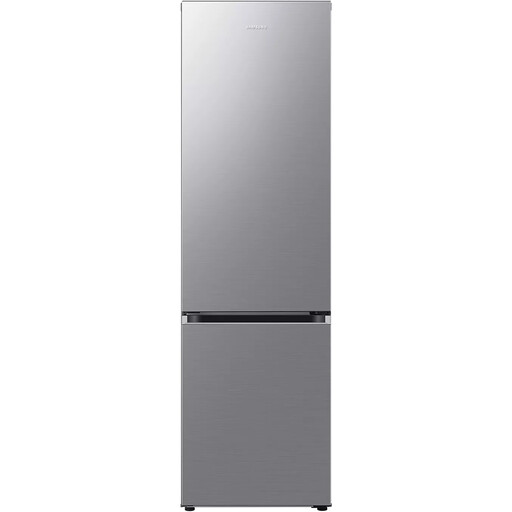 Image unavailable
A 390 L fridge freezer that brings fresh and frozen food together in one appliance. Check how the capacity is divided between compartments, the dimensions needed for delivery and the installation requirements for this model.
 Image unavailable
This 360 L, three-door design is worth considering if compartment layout matters for your shopping. Compare the capacity of each compartment, and check the delivery route and the space needed to open the doors.
 Image unavailable
Its stated width of 54 cm is worth considering for a narrow kitchen. The model is 176 cm high, and its designation indicates a 70/30 split. Low Frost doesn’t mean you’ll never need to defrost it, so check the care and installation instructions.
 Image unavailable
This 467 L multi-door model is designed for households that need plenty of storage, provided the balance of fridge and freezer space suits your needs. Also measure the delivery route and the space needed to open all four doors.
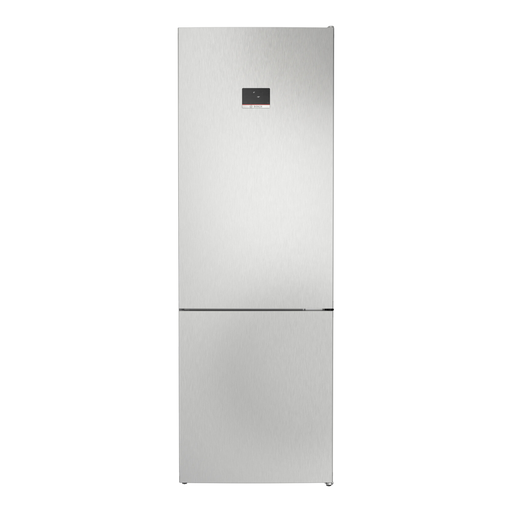 Image unavailable
This 440 L fridge freezer is worth comparing if you need space for both fresh and frozen food. Check the capacity of each compartment, the dimensions for delivery and the clearances specified in its manual.
Start with the number of people in your household, then adjust for how often you shop and how much frozen food you store. UFC-Que Choisir recommends an average of 100 to 150 L for one person, plus 50 L for each additional person. Then check how much space is allocated to each compartment.
Yes. According to the French authorities, an energy label is required for products including fridges, whether they’re sold in a shop or online. When choosing a model, consider the label information alongside the capacity and configuration you need.
Compare the kWh/year and stated noise level in dB(A) of appliances with a similar configuration and capacity, and don’t forget to check the separate usable capacities. These figures can’t guarantee your actual energy consumption: ADEME points out that cooling appliances run continuously, and your usage habits should help you choose the right capacity.
Follow the instructions for your chosen model, as there’s no single clearance that suits every installation. For example, LG recommends leaving at least 10 cm around the fridge in its installation instructions. Also check that there’s enough room to open the doors and drawers.
Measure doorways, corridors, lifts and the space where the appliance will go, taking the packaged dimensions into account. Samsung France recommends checking that the packaged appliance will fit along the delivery route. Separately check which installation and old-appliance collection services are included with your chosen offer.