Households that mainly eat fresh food
Match the fridge capacity to your shopping habits and consider whether you really need a freezer compartment. Que Choisir Ensemble recommends choosing fridge capacity to suit your household’s needs.


Choose a format based on the food you actually store: a fridge without a freezer is suitable if you don’t need to freeze food, a fridge-freezer combines both functions, and a separate freezer is the answer when you need more storage than a fridge-freezer compartment can provide. To compare appliances suited to the same needs, check their kWh/year, the capacity of each compartment and their dimensions. ADEME reminds us that fridges and freezers run continuously.
Match the fridge capacity to your shopping habits and consider whether you really need a freezer compartment. Que Choisir Ensemble recommends choosing fridge capacity to suit your household’s needs.
A fridge-freezer combines both functions. Compare the capacity in litres of each compartment and the model’s annual energy consumption.
If a fridge-freezer compartment isn’t big enough for your frozen-food supplies, consider the capacity, how easy it is to access the food and where you would put a separate freezer, as well as its annual energy consumption.
Choose this if: you mainly need to store fresh food and don’t need a freezer compartment.
Bear in mind: it won’t meet your needs if you regularly store frozen food.
Choose this if: you need to store both fresh food and a set amount of frozen food.
Bear in mind: the total capacity doesn’t tell you how much space each compartment has.
Choose this if: you already have a fridge and your frozen-food supplies regularly exceed the freezer capacity of a fridge-freezer.
Bear in mind: this extra appliance needs a suitable space and has its own annual energy consumption.
ADEME reminds us that fridges and freezers run continuously. The EU energy label shows, among other things, annual energy consumption in kWh and the capacity of each compartment. Compare these figures for appliances that meet the same needs.
| What matters to you | What to check | Who should consider this? |
|---|---|---|
| Usable capacity | Fridge and freezer capacity in litres, separately; how often you shop and how much space you need. | I want enough capacity for my shopping, without paying for space I won’t use. Around 28% of consumers prioritise getting the capacity right. |
| Annual energy consumption | kWh/year and energy rating from A to G; compare appliances with similar capacities and features. | I compare appliances that meet the same storage needs and check their annual energy consumption. Around 28% of consumers make this their priority. |
| Frozen-food storage | Freezer capacity, drawers or top access, and the annual energy consumption of any additional appliance. | I want my frozen-food supplies to fit and be easy to reach. Around 22% of consumers prioritise freezer capacity. |
| Location and noise | Dimensions, clearances specified in the manual, climate class and noise level in dB(A). | I need the appliance to fit in a kitchen or utility room, sometimes close to a living area. Around 11% of consumers prioritise where it will go or how quiet it is. |
| Second-hand or refurbished | Exact model number, condition, available energy label, stated tests, seller’s identity and applicable guarantee. | I’m considering an appliance that’s already been used and want to assess its condition and the terms of sale. Around 11% of consumers put these checks first. |
Fridge and freezer capacity serve different purposes. The total capacity doesn’t show whether each compartment will suit your habits.
Work out how much space you need for fresh and frozen food separately, then compare the capacity listed for each compartment.
An energy rating doesn’t replace annual energy consumption or usable capacity. The old A+, A++ and A+++ ratings don’t correspond to the current A to G scale.
The European Commission says the energy label displays kWh/year and capacity. Compare these figures across appliances suited to the same needs.
The permitted ambient temperature range depends on the appliance. A feature advertised for one model won’t necessarily apply to others.
Check the climate class and guidance in the manual for the exact model. For example, FrostProtect is available on the Liebherr models equipped with it.
The DGCCRF explains that operational tests carried out as part of refurbishment don’t replace checking the model details or its energy label.
Ask for the exact model number, details of its condition and the tests carried out, as well as the guarantee terms. Also check whether the seller is a business or a private individual.
Bosch freestanding fridge-freezers are worth considering if you want to combine refrigeration and freezing. The KGN39VLCT is one example with published specifications.
The B1RCNA344W is an example of a freestanding fridge-freezer with detailed capacity figures for both compartments.
An integrated fridge without a freezer is worth considering if you mainly need to store fresh food and have a suitable housing unit. The KRF6DD18S1 is one example.
A chest freezer is worth considering if you genuinely need separate frozen-food storage. The CFe 1870 Pure is one example.
This selection features fridge-freezers, bringing fresh and frozen food storage together in one appliance.
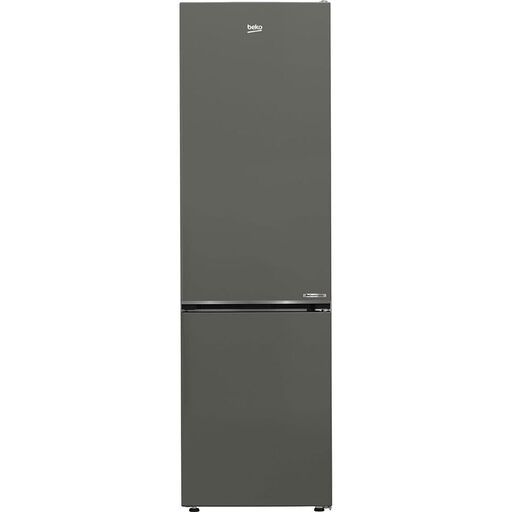 Image unavailable
Worth considering if you want a freestanding appliance that combines refrigeration and freezing.
Class C; 165 kWh/year; 210 l for the fridge and 106 l for the freezer; Total No Frost.
Listed dimensions: 210.2 × 76.2 × 66.1 cm. Check the available space.
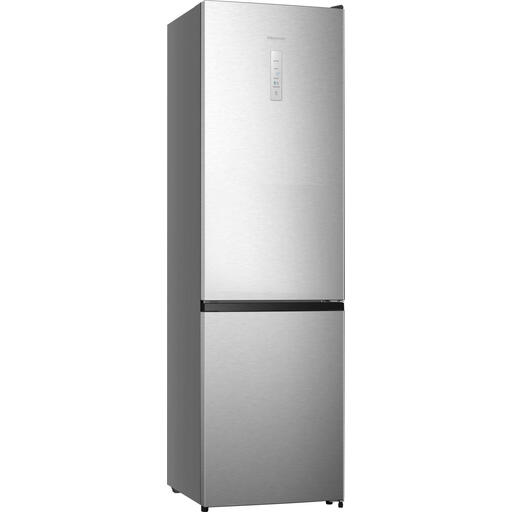 Image unavailable
Worth considering if you’re looking for a freestanding fridge-freezer with separate capacities for fresh and frozen food.
336 l total: 238 l of fridge capacity and 98 l of freezer capacity; class B; 135 kWh/year; 35 dB; Total No Frost.
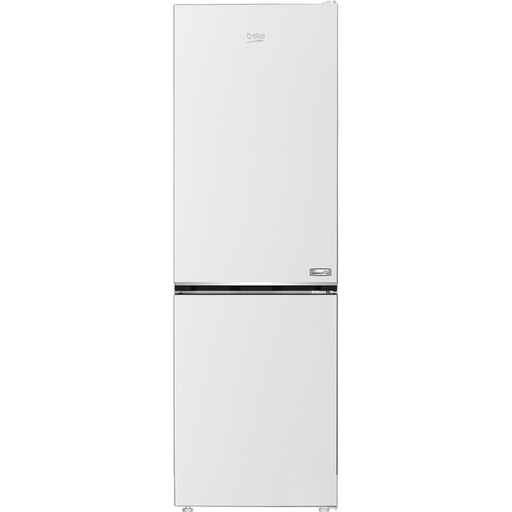 Image unavailable
Worth considering if you want a freestanding fridge-freezer with a dedicated freezer compartment.
210 l for the fridge and 106 l for the freezer; class C; 165 kWh/year; No Frost.
Listed dimensions: 595 × 1,865 × 663 mm. Check the available space and installation clearances.
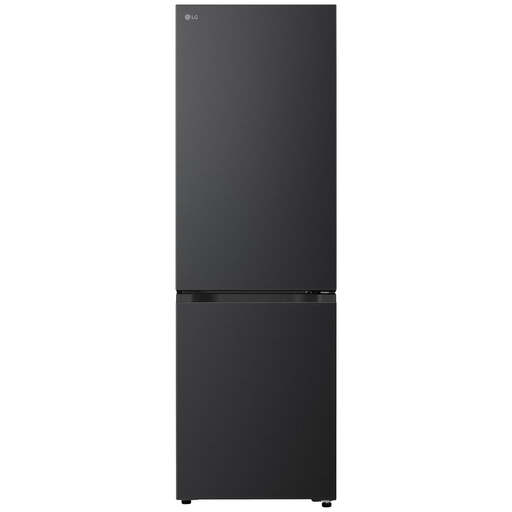 Image unavailable
Worth considering if you’re looking for a fridge-freezer with several compartments for chilled and frozen food.
183 l for the fridge, 113 l for the freezer and 37 l for the chiller compartment; class C; 169 kWh/year; Total No Frost.
The manual specifies a clearance of at least 5 cm at the back, above and on the sides.
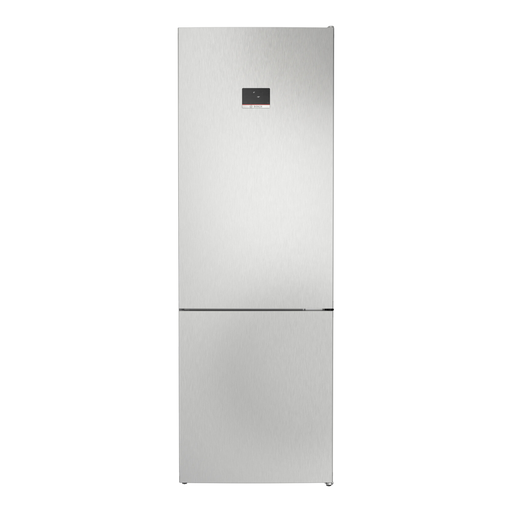 Image unavailable
Worth considering if you’re looking for a freestanding fridge-freezer with a separate freezer compartment.
440 l total: 311 l of fridge capacity and 129 l of freezer capacity; class D; 223 kWh/year.
Listed dimensions: 70 × 203 × 66.7 cm. The product information also specifies ventilation clearances for installation.
First decide whether you need a freezer, then compare the kWh/year and the capacity in litres of each compartment across appliances suited to the same needs. As the EU energy label shows, capacity and annual energy consumption help you compare appliances. A lower figure for a fridge without a freezer doesn’t represent the energy consumption of a set-up that also includes a separate freezer.
Check the climate class and the specifications for the exact model. Liebherr says its CFe 1870 Pure, equipped with FrostProtect, can operate at low temperatures. This feature shouldn’t be assumed to apply to another model.
Anses recommends checking the temperature regularly: the coldest part of the fridge should be between 0 and +4 °C. Don’t overfill it. Also check the condition of the door seals and follow your appliance’s care and defrosting instructions.
When a private individual buys from a professional seller, they can claim the legal guarantee of conformity for two years for a second-hand or refurbished product. For a second-hand product, the presumption that the fault existed at the time of delivery lasts for one year; this doesn’t mean the guarantee itself is limited to one year. This legal guarantee doesn’t apply in the same way to a sale between private individuals.
Ask the seller about taking back your old appliance on a ‘like-for-like’ basis when you buy a new one. A used refrigeration appliance falls under the waste electrical and electronic equipment scheme, which provides for these appliances to be handled appropriately.