Households that buy few frozen foods
If you mainly store fresh food, a fridge or an appliance with a small freezer compartment may be enough for your shopping needs. Check how much space you really need for frozen food before choosing.


First, choose fridge and freezer capacities to suit your shopping habits, then compare the annual kWh figures on the energy label for appliances of a similar size and capacity. A fridge-freezer is a good fit if you regularly store fresh and frozen food; a separate freezer only makes sense if you’ll use the extra space, as it runs continuously too. Choose convenience features for a specific purpose, rather than assuming they’ll reduce energy use.
If you mainly store fresh food, a fridge or an appliance with a small freezer compartment may be enough for your shopping needs. Check how much space you really need for frozen food before choosing.
If your shopping regularly includes fresh and frozen food, look at the capacity of each compartment in a fridge-freezer separately, rather than just its total capacity.
A separate freezer may suit you if you buy or prepare food in larger quantities for storage. You’ll need to use its capacity regularly, and its climate class must be suitable for the room where you plan to install it.
First, work out how much space you need for fresh and frozen food. Then use the energy label to compare the annual energy consumption and noise levels of appliances with a similar purpose, as the European Commission recommends.
Worth considering: if you store few or no frozen foods.
Limit: any small freezer compartment won’t replace a space designed for storing frozen food regularly.
Worth considering: if you regularly buy fresh and frozen food but don’t need a second appliance.
Limit: both compartments take up space, so check that the split suits what you store.
Worth considering: if your frozen food stocks mean you’ll consistently need extra capacity.
Limit: this second appliance runs continuously and must be suitable for the temperature of the room where it’s installed.
| Criterion | What to check | What matters to shoppers |
|---|---|---|
| Type and capacity | Check the litres available for fresh and frozen food separately, and compare them with what you usually buy. | If I store few frozen foods, I don’t want to give up space for a large compartment I won’t use. Around 36% of shoppers would prioritise choosing a type and capacity to suit their shopping habits. |
| Energy consumption | Compare annual kWh figures and energy classes for appliances of a similar size and capacity. | For an appliance that stays plugged in all the time, I want to be able to assess its energy use without relying on the class letter alone. Around 29% of shoppers would prioritise energy comparisons. |
| Installation and maintenance | Check the climate class and ventilation clearances, and find out whether manual defrosting is needed. | If the appliance needs to go in a room without temperature control, or requires maintenance I might struggle to carry out, these factors will guide my choice. Around 21% of shoppers would put them first. |
| Convenience features | Think about how you’ll use each feature and compare the annual energy consumption of the models you’re considering. | A feature I won’t use shouldn’t influence my purchase more than the storage space I need. Around 14% of shoppers would prioritise avoiding unnecessary features. |
The class letter alone doesn’t tell you how much energy an appliance uses over a year or how much it can store.
As well as the class, check the annual kWh figure, compartment capacities and noise level on the label described by the European Commission. Then compare appliances with a similar purpose and capacity.
Space you rarely use means another appliance that stays switched on. ADEME gives 300 kWh per year as an average guide for a freezer, not as a predicted figure for a specific model.
Before choosing extra capacity, consider how much frozen food you usually store.
A room that’s too hot or too cold for the model’s climate class, or restricted ventilation, can affect how well it works.
Check the ambient temperature range specified for the model you’ve chosen and follow the manufacturer’s installation clearance requirements.
No Frost helps limit ice build-up, but you still need to follow the appliance’s installation and maintenance requirements.
Choose this feature if it’s useful to you, then compare the model’s annual energy consumption and follow the instructions.
A brand to consider if you want to compare the separate capacities and energy label details of a freestanding fridge-freezer.
A brand to consider if you’re looking for a fridge or a fridge-freezer with No Frost, depending on the model.
A brand to consider if you plan to install a freezer in a room without temperature control.
These appliances suit a range of storage needs: fridge-freezers for fresh and frozen food, more compact models and a chest freezer for extra frozen storage. Compare their size and advertised specifications with your shopping habits and available space. Don’t assume that a larger or smaller size alone will save energy.
 Image unavailable
Worth considering if you need plenty of space for fresh and frozen food. Make sure the capacity suits the amount you usually store.
Four-door format, Total No Frost and energy class E are stated in the product name.
 Image unavailable
Worth considering if you regularly buy fresh and frozen food. Check that the split between compartments suits your needs.
Three-door format, Total No Frost, energy class E, Wi-Fi and My Zone are stated in the product name. The convenience features are only useful if they suit the way you use the appliance.
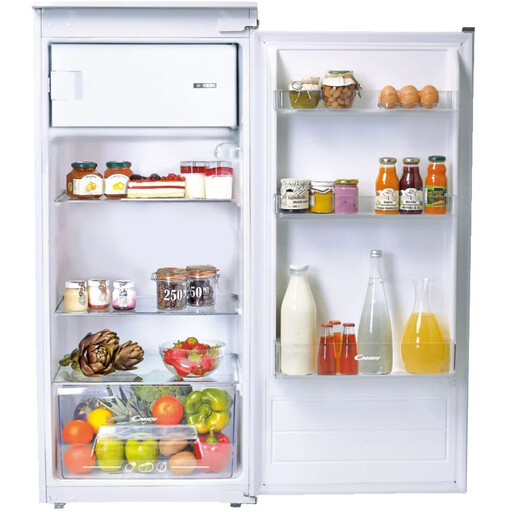 Image unavailable
Worth considering if you mainly store fresh food and only a small amount of frozen food. Check that the freezer compartment is big enough for your needs.
One-door format and 179 L total capacity are stated in the product name.
 Image unavailable
Worth considering if you regularly use a large amount of dedicated storage space. An extra appliance that runs continuously should meet a genuine need.
Convertible chest format and energy class E are stated in the product name. If you plan to put it in a garage or cellar, check the climate class and permitted temperature range for this model.
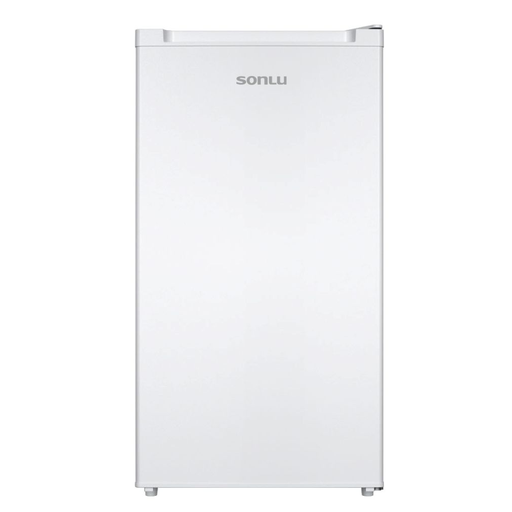 Image unavailable
Worth considering for a small amount of fresh food if you don’t need to store frozen food. Check the dimensions against the space available.
82 L capacity and energy class E are stated in the product name.
First compare appliances with the same purpose and similar capacities. The European Commission says the label includes information such as energy class, annual energy consumption in kWh, storage capacities and noise level. The class letter doesn’t replace checking the annual kWh figure.
No. It adds an appliance that runs continuously and is most worthwhile if you regularly use the extra capacity. ADEME gives 300 kWh per year as an average guide for a freezer. When choosing, check the model’s stated energy consumption and think about your storage habits.
Yes, if the room temperature stays within the range specified for the climate class of the model you’ve chosen, and you follow its installation instructions. Beko explains that the climate class defines the ambient temperature range an appliance is designed to operate in. Also check the manufacturer’s ventilation requirements.
In France, an appliance sold by a business to an individual is covered by the legal guarantee of conformity if it doesn’t match the seller’s description. The Ministry of the Economy explains that this guarantee is compulsory. Report the issue to the seller and keep a copy of the appliance description and your proof of purchase.