What to compare before you choose
Fridge
Worth considering: if you mainly store fresh food and already have enough freezer space, or don’t need any.
Bear in mind: a fridge won’t replace a freezer. If you add one, add together the energy consumption of both appliances.
Fridge-freezer
Worth considering: if you need both fridge and freezer space in one appliance.
Bear in mind: the balance of space between the compartments may not suit you if you need to store a lot of frozen food.
Separate freezer
Worth considering: if your fridge or fridge-freezer doesn’t have enough freezer capacity for your needs.
Bear in mind: it will add to the energy consumption of the fridge you’re keeping and will need extra space.
Start by working out how much space you really need for fresh and frozen food. Then compare appliances designed for the same purpose, using the stated kWh/year and capacity in litres for each compartment.
| Criterion |
What to check |
Who is it for? |
| Energy consumption |
For the exact model, check the kWh/year and energy rating. If you’re running several appliances, add together their stated energy consumption. |
If you’re replacing an appliance that runs all the time, you want to reduce its running costs without comparing models with different capacities. Around 36% of consumers prioritise electricity costs. |
| Usable capacity |
Compare fridge and freezer capacity separately with your usual storage needs and the space available. |
If your current appliance is too small or larger than you need, you’re looking for a capacity that suits your household’s shopping and storage habits. Around 29% of consumers prioritise getting the right capacity. |
| Freezer capacity |
Compare the capacity of an integrated compartment with that of a chest or upright freezer. Also check how much space it needs and, if it’s going in an unheated room, the permitted ambient temperature. |
If you store lots of frozen food, you’ll need more capacity than your current solution offers. Around 21% of consumers prioritise extra freezer space. |
| Installation and maintenance |
Check the appliance dimensions and, for an integrated model, the niche dimensions. If noise or defrosting matters to you, check the information on the energy label and the technology listed for the exact model. |
If your kitchen requires a particular format or you want to keep maintenance to a minimum, check the installation requirements and useful features before you buy. Around 14% of consumers prioritise installation and maintenance. |
For the household fridges and freezers covered by the rules, the European Commission says the energy label uses a scale from A to G and includes information such as annual energy consumption, capacity and noise levels. Check that the label matches the product category and exact model. To estimate your annual running costs, multiply the stated kWh/year by the price per kWh in your tariff. This is an estimate, not a guaranteed bill.
Appliances available on Joybuy
This selection includes fridges, fridge-freezers and household freezers, so you can compare their stated capacities and energy consumption to find the right option for your needs.
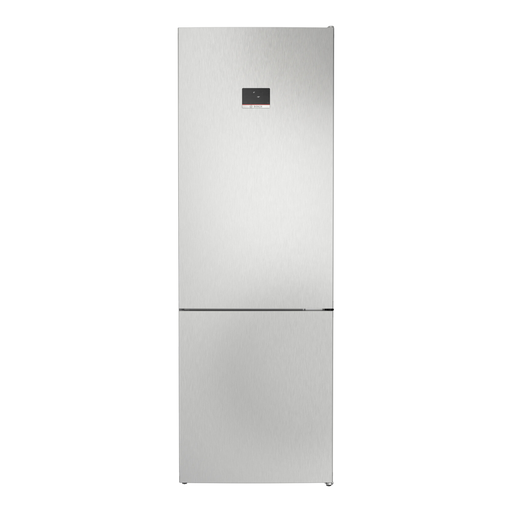 Image unavailable
Bosch KGN497LDF, 440 L fridge-freezer, D rating
Worth considering if you want fridge and freezer space in one freestanding appliance.
The product description lists 311 L for the fridge, 129 L for the freezer and energy consumption of 223 kWh/year. It also mentions a reversible door.
View product
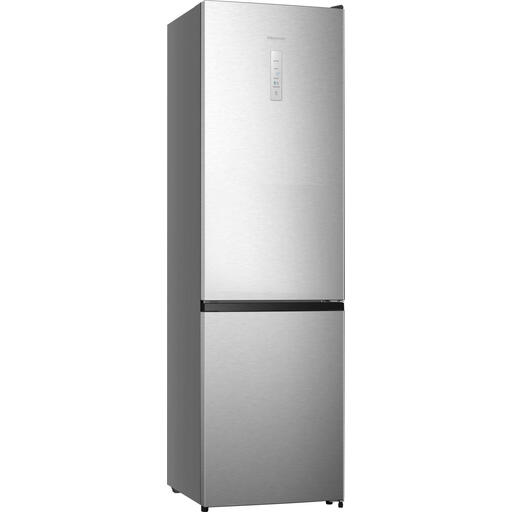 Image unavailable
Hisense RB440N4CCB, 336 L fridge-freezer
Worth considering if you want fridge and freezer space in one freestanding appliance.
The product description lists 238 L for the fridge, 98 L for the freezer, energy consumption of 135 kWh/year and a B rating. The model name mentions Total No Frost and a noise level of 35 dB.
View product
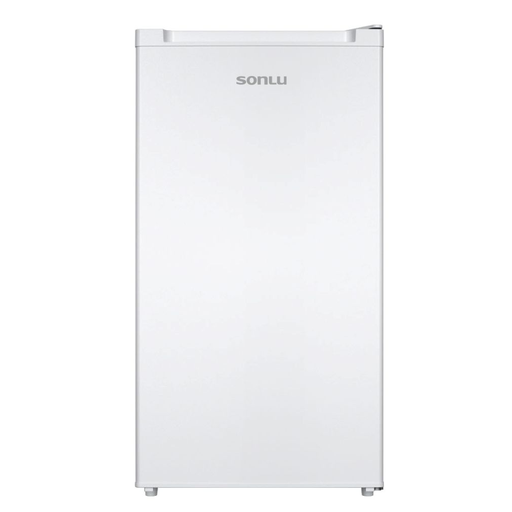 Image unavailable
Sonlu CS-100L, 82 L single-door fridge, E rating
Worth considering if you only need a small amount of fridge space and don’t need a freezer compartment.
The product description lists a capacity of 82 L and energy consumption of 84 kWh/year. It also mentions adjustable shelves.
View product
 Image unavailable
AUCMA, 291 L convertible chest freezer, E rating
Worth considering if you’re looking for a separate appliance with a stated capacity of 291 L.
The product description lists energy consumption of 226 kWh/year and a convertible mode: fridge and freezer functions are alternatives, not available at the same time. It needs at least 10 cm of ventilation clearance.
View product
 Image unavailable
COMFEE RCU60WH2(E), 60 L upright freezer, E rating
Worth considering if you need a compact, separate freezer.
The product description lists a capacity of 60 L, three compartments and a freezing capacity of 6 kg/24 h. Its stated dimensions are 44,5 × 47,5 × 84,5 cm.
View product
Frequently asked questions
What should I look for on a fridge or freezer energy label in France?
Check the A to G rating, annual energy consumption in kWh, compartment capacities and noise level. Make sure the label matches the exact model and product category. The European Commission lists this information for the household fridges and freezers covered by the rules; the QR code may link to the model’s entry in EPREL.
Can I put a chest freezer in an unheated garage?
It depends on the model and the temperature in the room, so check its climate class and the manufacturer’s guidance. Liebherr states that the CFe 2500 has FrostProtect, which allows it to operate at ambient temperatures down to −15 °C. This doesn’t automatically apply to other freezers.
How can I estimate the annual running cost?
Multiply the kWh/year on the model’s energy label by the price per kWh in your tariff. If you’re keeping a fridge and adding a freezer, add together their stated energy consumption. This is an estimate, not a guaranteed bill.
What’s the difference between the warranty and having your old appliance taken away?
When you buy from a professional seller, the legal guarantee of conformity applies under the conditions set out by the French Ministry of the Economy, regardless of any commercial extended warranty. The DGCCRF points out that when you buy a new appliance, free like-for-like take-back applies to an equivalent used appliance. Ask the seller how collection works in practice.


