To choose a refrigeration appliance without using more energy than you need, first work out how much fridge and freezer space you’ll actually use, then compare the kWh/year of models that meet the same needs. A fridge may be enough if you don’t store many frozen foods; a fridge-freezer combines both uses in one appliance, while a separate freezer adds continuous energy use that’s most worthwhile if you regularly use the extra storage.
Who is this choice for?
Households keeping an eye on their electricity bills
If you’re replacing an appliance that runs continuously, compare its annual energy use with that of models offering the capacity you need. ADEME recommends using the energy label to compare appliances; the European Commission’s EPREL database also sets out details such as each model’s kWh/year and capacity.
Households weighing up fresh and frozen food storage
A small freezer compartment may be enough for some needs, while regular bulk storage calls for a closer look at freezer capacity on its own. The capacity guide from UFC-Que Choisir is a useful starting point, which you can adapt to your household’s habits.
Households with space or maintenance constraints
If defrosting, noise or the temperature of the room matters to you, check these features without losing sight of the kWh/year. Electrolux says No Frost limits frost build-up; you should also make sure the climate class suits the appliance’s location.
What should you check before buying?
First, choose a configuration that meets your needs for fresh and frozen food. Then compare the annual energy use of models with similar capacities and uses.
Fridge
Worth considering: if you mainly store fresh food and don’t need much space for frozen food.
Trade-off: check the freezer capacity, if any, if you want to build up a stock of frozen food.
Fridge-freezer
Worth considering: if you want dedicated fridge and freezer space in a single appliance.
Trade-off: the balance between the two compartments should suit your habits, not just the total capacity.
Separate freezer
Worth considering: if you regularly use frozen food storage that your current appliances can’t accommodate.
Trade-off: this appliance takes up extra space and also runs continuously.
| Criteria |
What to check before buying |
Who it matters to |
| Annual energy use |
Compare the kWh/year shown on the energy label or in EPREL for appliances with the same purpose, taking the capacity of each compartment into account. |
I want to limit the electricity used throughout the year without giving up the capacity I need. Around 42% of shoppers would make this comparison a priority. |
| Fridge and freezer capacity |
Check the litres in each compartment rather than just the total capacity. UFC-Que Choisir suggests 100 to 150 litres for one person, then 50 litres for each additional person, adjusted to suit your needs. |
If I mainly store fresh food, I don’t want to give up fridge space for a large freezer compartment. Around 33% of shoppers would prioritise this balance. |
| Frozen food storage |
Consider how much freezer capacity you’ll actually use. If you choose a separate freezer, factor in its kWh/year as well as those of your fridge, and check its climate class. |
My shopping or batch cooking means I need freezer space that I’ll use regularly. Around 25% of shoppers would put this storage need first. |
Mistakes to avoid
-
Relying on the energy rating alone
The letter on its own doesn’t tell you how much energy an appliance uses over a year, especially if you’re comparing different formats and capacities.
Once you’ve worked out how much storage you need, compare the kWh/year and compartment capacities of the models you’re considering, using their energy labels and EPREL product information.
-
Choosing a large capacity “just in case”
A high total capacity can hide an unsuitable balance between fridge and freezer space, while taking up more room.
Start with your shopping and storage habits, then compare them with the separate capacities listed for each model.
-
Overlooking the room temperature
A cold garage or a very warm room may fall outside the ambient temperature range the appliance is designed for.
Check the model’s climate class and operating temperatures before deciding where to put it.
Brands to know
Bosch
Bosch offers a range of freestanding and built-in fridge-freezers, with dedicated spaces for fresh and frozen food.
- Bosch’s range of configurations and capacities makes it easier to look for a layout that suits your household.
- To assess energy use, compare the kWh/year and capacity of the specific model rather than claimed savings for an entire range.
Electrolux
The range includes fridge-freezers and freezers, including built-in and No Frost models.
- Some Electrolux product information includes the energy rating, kWh/year, capacities, noise level and climate class.
- The food-preservation benefits the brand attributes to its technologies don’t replace checking the capacity, installation requirements and energy use of the model you choose.
Beko
Beko offers built-in fridge-freezers, some with Semi No Frost and a range of convenience features, depending on the model.
- The brand’s product information lets you check a specific model’s cooling system and installation requirements.
- Check its kWh/year, capacity and dimensions separately; the features highlighted by Beko don’t, on their own, prove that it uses less energy.
Fridge-freezers available on Joybuy
These models combine refrigeration and freezing in one appliance. To choose between them, start with how much space you need in each compartment and the space available at home, then compare the kWh/year for the exact models.
 Image unavailable
Samsung RB33B612EBN, 344 L, E-rated, black
Worth considering if you want to store fresh and frozen food in one appliance without immediately opting for a very large capacity.
Claimed total capacity: 344 L; energy rating E. Check the compartment balance and kWh/year to see if it suits your needs.
View on Joybuy
 Image unavailable
Candy CFQQ5T817EPS, four-door, 467 L, energy rating E
Worth considering if you need plenty of space for fresh and frozen food in a single appliance.
Claimed total capacity: 467 L; Total No Frost; energy rating E. Check the capacity of each compartment and the dimensions before choosing this format.
View on Joybuy
 Image unavailable
Samsung RF50C530EB1, multi-door, 495 L, energy rating E
Worth considering if you regularly need plenty of capacity for both fresh and frozen food.
Claimed total capacity: 495 L; energy rating E. Check the space required, the separate compartment capacities and the model’s kWh/year.
View on Joybuy
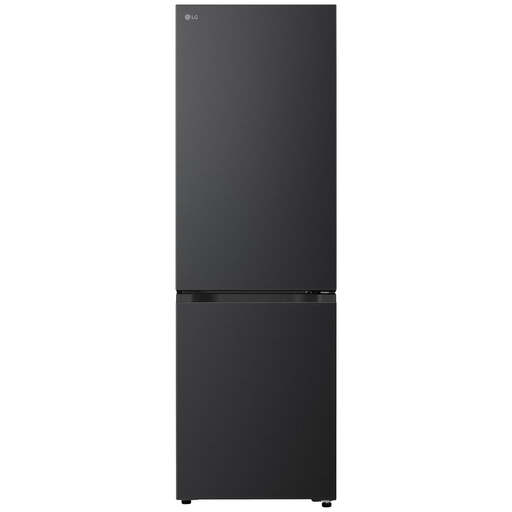 Image unavailable
LG GBBS312CEV, 333 L, C-rated, black
Compare it with other fridge-freezers if this capacity suits your needs for fresh and frozen food.
Claimed total capacity: 333 L; energy rating C. The rating letter doesn’t replace comparing the kWh/year and compartment capacities.
View on Joybuy
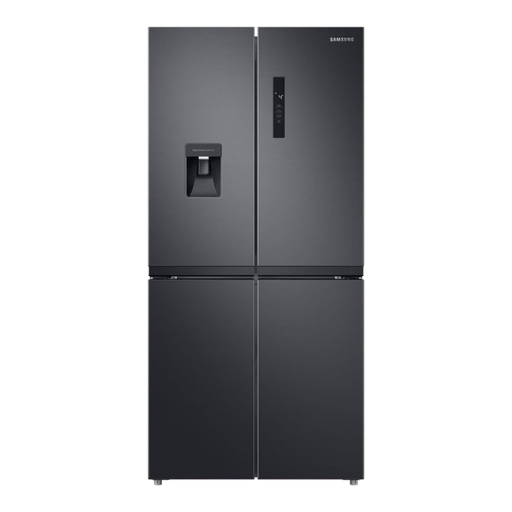 Image unavailable
Samsung RF48A401EB4, multi-door, 488 L, energy rating E
Worth considering if you’re looking for generous fridge and freezer space in one appliance.
Claimed total capacity: 488 L; energy rating E. Check that you’ll use each compartment and that the dimensions suit the space available.
View on Joybuy
Frequently asked questions
How do you compare the energy use of two refrigeration appliances?
Compare their kWh/year once you’ve chosen appliances that meet the same storage needs. The energy label and the European Commission’s EPREL database provide details for the specific model. Check the fridge and freezer capacities too, as the same energy rating letter isn’t enough to compare different formats.
How much capacity should you allow for a fridge?
UFC-Que Choisir suggests 100 to 150 litres for one person, then 50 litres for each additional person as a starting point. Adjust this guide to how often you shop, and check separately how much room you need for frozen food.
Does No Frost mean lower electricity use?
No. This feature alone doesn’t mean one model uses less energy than another. Electrolux says No Frost limits frost build-up; to compare electricity use, check the kWh/year of models with similar capacities and purposes.
What should you do with your old appliance when replacing it?
Arrange for it to be taken away before your new appliance is delivered. Ask the retailer about its collection service and check access to your home, as well as the collection arrangements for your fridge or freezer.


