Buying priorities
First choose the most useful balance between fresh and frozen food, then check energy consumption, installation requirements and everyday ease of access.
| Priority |
What to check |
Your needs |
| Separate capacities |
Allow 100 to 150 L of fridge space for one person, then around 50 L for each additional person, according to UFC-Que Choisir. Compare the freezer capacity and external dimensions separately. |
I want to keep fresh food without running out of room for prepared portions or frozen food. My weekly shops and bulk purchases may justify extra capacity. |
| Continuous energy use |
Compare kWh/year between appliances with similar capacities and configurations. The European Union energy label also shows compartment capacities and noise levels. |
I want a capacity that suits how I use the appliance, without relying solely on the energy class letter. ADEME reminds us that fridges and freezers run continuously. |
| Installation |
Check the climate class, niche or freestanding dimensions, ventilation and door opening. For a freestanding appliance, UFC-Que Choisir recommends at least 5 cm at the sides and behind, as well as 10 cm above. |
My appliance must operate properly in the actual temperature of my kitchen, cellar or garage, while leaving enough room for the doors and drawers. |
| Access to stored food |
Compare drawers, shelves, access to the back of the freezer and defrosting requirements. A chest freezer can offer considerable capacity, while an upright model generally makes it easier to organise food in drawers. |
I want to find stored food easily and use up my reserves without leaving products forgotten at the back of the freezer. |
Joybuy products
Joybuy options for fridge freezers designed to organise fresh food, frozen food and prepared portions in a single appliance.
 Image unavailable
LG GBBSJ1CCSW 333 L white fridge freezer
For a household that regularly uses both the fridge and freezer compartments.
183 L of fridge space, a 37 L fresh food zone, 113 L of freezer space, 169 kWh/year, 34 dB and Total No Frost.
Check that the T climate class is suitable for your room, along with the dimensions of 597 × 1 860 × 674 mm and the advertised 5 cm clearance.
Joybuy
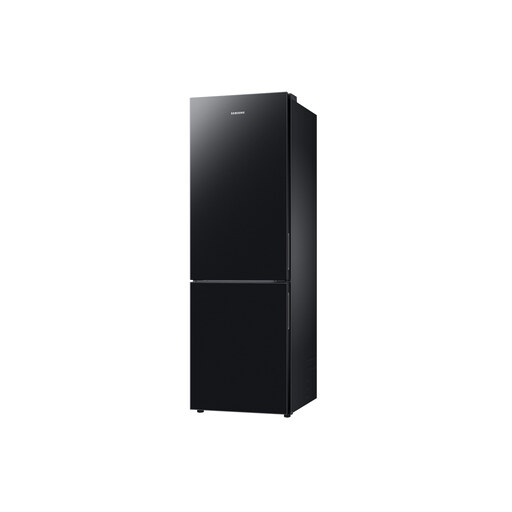 Image unavailable
Samsung RB33B612EBN 344 L black fridge freezer
For fresh and frozen food stocks when doing larger shops.
230 L of fridge space, 114 L of freezer space, 254 kWh/year, No Frost, three freezer drawers and a reversible door.
Compare its 254 kWh/year with similar-capacity fridge freezers and consult the manual for ventilation clearances.
Joybuy
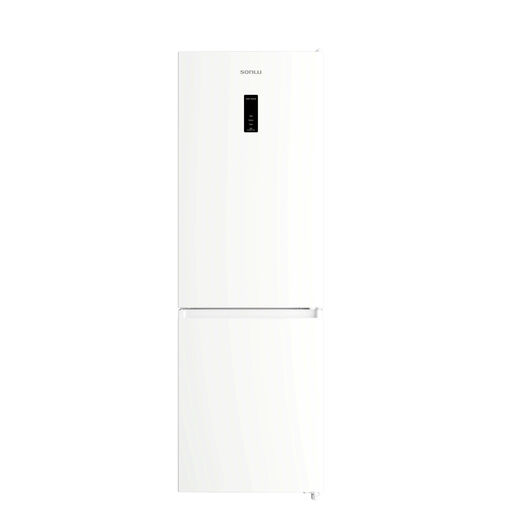 Image unavailable
Sonlu CD-350RW 310 L fridge freezer
For separating fresh and frozen shopping in a 60 cm-wide fridge freezer.
211 L of fridge space, 99 L of freezer space, Frost-Free system, electronic controls and reversible doors.
Check the annual energy consumption, climate class, height, depth and ventilation clearances in the technical specifications.
Joybuy
 Image unavailable
AEG NSC6M18FES 249 L integrated fridge freezer
For a kitchen designed for an integrated fridge freezer and moderate mixed storage needs.
186 L of fridge space, 62 L of freezer space, TwinTech Total No Frost, MultiFlow, separate controls and three drawers.
Confirm the niche dimensions, sliding-door system, ventilation, annual energy consumption and climate class before buying.
Joybuy
 Image unavailable
CHiQ JR263LGE 262 L black fridge freezer
For a small or medium-sized household doing weekly shops in a compact kitchen.
187 L of fridge space, 75 L of freezer space, 215 kWh/year, 39 dB, 54 cm width, three drawers and a reversible door.
The N-ST climate class covers 16 to 38 °C. The Low Frost system requires manual defrosting; also check the ventilation clearances.
Joybuy
Frequently asked questions
How can I estimate the fridge capacity I need?
As a starting point, UFC-Que Choisir recommends an average of 100 to 150 L for one person, followed by around 50 L for each additional person. Increase this baseline for weekly shops, batch cooking or a large amount of fresh food, and check the freezer capacity separately.
Should I choose a fridge freezer or two separate appliances?
Choose a fridge freezer if you need a fridge and freezer in the same place every day. Two separate appliances may be suitable if your freezing needs are very different from the layout offered by a fridge freezer and you have enough space, sockets and ventilation, with an acceptable total energy consumption.
Is the energy class enough to compare two models?
No. The European Union energy label also shows kWh/year, net fridge and freezer capacities, and noise levels. Above all, compare kWh/year between appliances with similar capacities and configurations, as recommended by ADEME.
Can I install a fridge in a garage or cellar?
Yes, but only if the actual room temperature remains within the model’s climate class range. Bosch states, for example, that an N class covers 16 to 32 °C, while an SN-T class covers 10 to 43 °C; check the rating plate and manual for the model you choose.
What ventilation should I allow for a freestanding or integrated appliance?
For a freestanding appliance, UFC-Que Choisir recommends at least 5 cm at the sides and behind, as well as 10 cm above. For an integrated appliance, the niche measurements and ventilation specified in the manufacturer’s manual take priority over any general rule.


