Households that cook and freeze food every week
If you store both fresh ingredients and frozen meals or food, check how much space each compartment offers. A large total capacity doesn’t guarantee the right balance between the two.


If you cook and freeze food regularly, start by considering how much space you need for fresh and frozen food, rather than focusing on total capacity or door configuration. A fridge freezer is a good choice if each compartment suits the way you usually shop and cook. A larger model is only worthwhile if its extra capacity justifies the space it takes up in your kitchen.
If you store both fresh ingredients and frozen meals or food, check how much space each compartment offers. A large total capacity doesn’t guarantee the right balance between the two.
If ingredients and prepared meals regularly fill your fridge, check its capacity and interior layout, while keeping in mind how much room you need for frozen food.
An alcove, nearby wall or narrow passage can limit your options. Make sure you account for the appliance dimensions, door clearance and the ventilation space specified in the manual.
Start by comparing the capacity in litres for fresh and frozen food, then rule out any models that can’t be installed properly. Whether the freezer is at the top or bottom, its position doesn’t tell you how much space it offers. For a larger model, also weigh up its footprint against the capacity you’ll actually use.
| What to consider | What to check | Who it matters to |
|---|---|---|
| Balance of fresh and frozen storage | Compare the usable capacity in litres of each compartment with what you usually store. If you regularly keep frozen food, make sure you choose a proper freezer rather than a simple ice box. | If I cook and freeze food every week, I want enough room in both compartments, without finding out after the weekly shop that one is too small. Around 33% of consumers prioritise this balance. |
| Fresh food storage space | Check the fridge capacity and the arrangement of shelves and drawers for the food and meals you store. | When I prepare several meals, I want to store ingredients and dishes in the fridge without cramming it full. Fresh food storage is the top concern for around 27% of consumers. |
| Where it will go | Measure the height, width, depth and delivery access route. Also check the door swing and the clearances specified in the manual. | If there’s an alcove or a nearby wall, I need to be able to install the appliance and open its doors without difficulty. Around 20% of consumers put this constraint first. |
| Everyday use | On the energy label, compare the energy rating, kWh per year and noise level of models with similar capacities. Also check the cooling system and the maintenance required. | If the appliance is near a living area or I want to avoid defrosting it often, its noise level and maintenance matter just as much as its capacity. These aspects come first for around 20% of consumers. |
Two appliances with a similar total capacity can offer different amounts of space for fresh and frozen food. The freezer may still be too small for the way you shop and cook.
Check the capacity in litres of each compartment separately and compare it with what you store after your usual shop.
An appliance may fit into its space but still lack room for the doors to open or heat to escape. UFC-Que Choisir recommends allowing air to circulate around cooling appliances.
Measure the space around nearby walls and allow for the door swing, then follow the clearance and installation instructions for your chosen model.
Installing an appliance near a heat source or without sufficient ventilation can increase electricity consumption.
The energy rating alone won’t tell you whether the compartments are the right size or whether the noise level suits the location. The European Commission says the label also shows energy consumption, compartment volumes and noise emissions.
Compare these details together, ideally across models with capacities that meet your needs.
A commercial warranty doesn’t replace the legal guarantee of conformity. In France, the DGCCRF says you can claim under this legal guarantee for two years on new and second-hand goods bought from a trader.
Before choosing a commercial warranty, check how long it lasts, what it excludes and what extra services it offers beyond your legal rights.
These ranges show some of the different configurations available. The features mentioned apply to the named models, not every appliance from that brand.
The range includes freestanding fridge freezers with the freezer at the bottom.
The range includes large-capacity fridge freezers for households that need more storage space.
The range’s built-in fridge freezers are worth considering if your kitchen units require a specific-sized alcove.
This selection includes a large multi-door model and fridge freezers that keep fresh and frozen food in one appliance. Compare the space in each compartment and the room needed for installation before choosing.
 Image unavailable
Worth considering if you’re looking for a large appliance to store both fresh and frozen food. Compare the capacity of each compartment with what you usually keep at home.
Advertised total capacity of 495 L, multi-door design and energy rating E. Check the dimensions, door clearance and annual energy consumption before deciding where to put it.
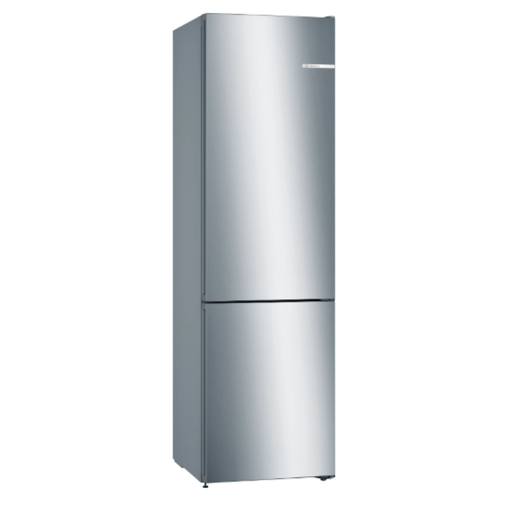 Image unavailable
If you want fresh and frozen food storage in one appliance, check how much of the total capacity is allocated to the freezer before choosing this model.
Advertised total capacity of 368 L and energy rating E. Check the available height and the installation clearances specified for the KGN39VLEB.
 Image unavailable
If you’re considering a model with the freezer at the bottom, check its capacity against the amount of frozen food you regularly store.
Advertised total capacity of 282 L and energy rating E. Follow the model’s safety and installation instructions, particularly those relating to handling the appliance.
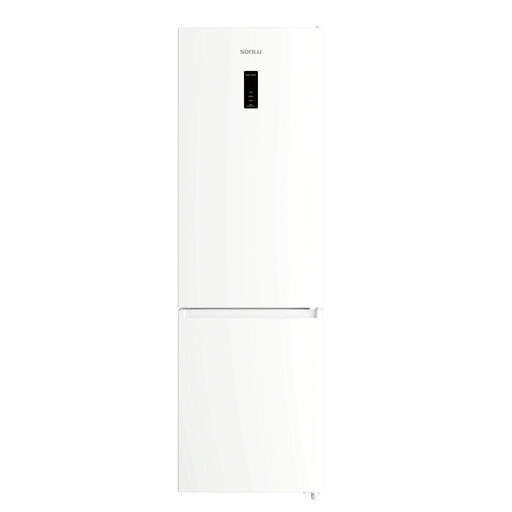 Image unavailable
If you regularly store both fresh and frozen food, the advertised capacities will help you check whether each compartment suits your needs.
The model name indicates 252 L for the fridge, 103 L for the freezer and a width of 60 cm. It also mentions a reversible door and energy rating E. Check the height, depth and clearances required in your kitchen.
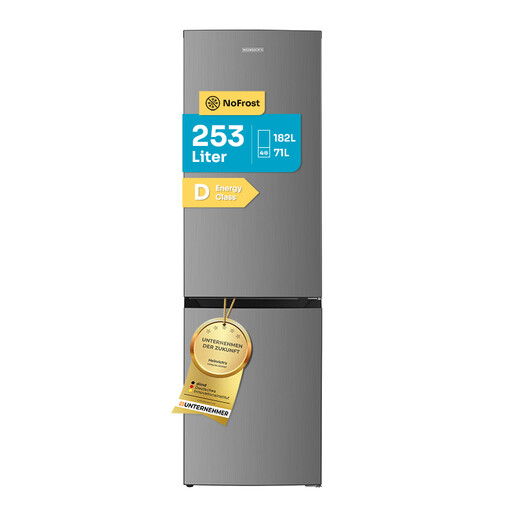 Image unavailable
Worth comparing if you’re looking for a more compact fridge freezer. In particular, check that its freezer capacity suits the amount of frozen food you keep.
The product name lists 182 L of fridge space, 71 L of freezer space, a noise level of 39 dB and No Frost technology. Measure the space available and check the full dimensions and annual energy consumption in the model information.
Compare the fridge and freezer capacities in litres separately against what you usually store. UFC-Que Choisir suggests a general guide of 100 to 150 L for one person, plus 50 L for each additional person. This guide doesn’t replace checking how much space you need for frozen food.
Always follow the clearances specified in the manual for your chosen model, and make sure the doors can open fully. UFC-Que Choisir recommends leaving at least 10 cm above and behind cooling appliances to help air circulate. Electrolux also highlights the need for good ventilation around the appliance.
For relevant household appliances sold in the European Union, compare the energy rating, annual energy consumption, compartment volumes and noise level. The European Commission says this information is shown on the label. The kWh per year figure is particularly useful when comparing models with capacities that suit the same needs.
No. A commercial warranty is in addition to the legal guarantee of conformity and doesn’t replace it. According to the DGCCRF, you can claim under this legal guarantee for two years on new or second-hand goods bought from a trader. Check separately what the commercial warranty covers and the conditions that apply.
Ask the retailer about collection options when replacing your appliance. The French Ministry for Ecological Transition describes a ‘one-for-one’ take-back scheme, where a used product is collected when you buy a new product of the same type. Check the practical arrangements, particularly for collecting a bulky appliance.