What should you check before buying?
Choose a format based on what you need to store between shops. Then compare the capacity of each compartment with the space you actually have available.
Under-counter
Consider it: for a studio flat, if you buy modest amounts and space is very limited.
Limitation: storage is limited; if there is a freezer compartment, check its capacity.
Single-door
Consider it: if fresh food is your priority and you freeze very little, or have a separate freezer.
Limitation: depending on the model, freezer space may be limited to a small integrated compartment.
Fridge-freezer
Consider it: if your regular shopping includes both fresh and frozen food.
Limitation: the split between the two compartments varies, so total capacity alone isn’t enough to make your choice.
Multi-door
Consider it: if you need lots of storage and have room for the appliance in your kitchen.
Limitation: check the specific model’s dimensions, delivery access and energy consumption.
| Consideration |
What to check |
Relevant consumers |
| Fridge capacity |
Compare the usable fridge capacity in litres with the number of people in your household and how often you shop. UFC-Que Choisir suggests 100 to 150 litres for one person, then around 50 litres for each additional person as a starting point. |
If I keep lots of fresh food between shops, I want enough room to put it away without choosing an unnecessarily large appliance. Around 36% of consumers may prioritise this need. |
| Freezer capacity |
Check the freezer’s usable capacity in litres separately and make sure it has compartments suited to the frozen food you buy. |
If frozen food is a regular part of my shopping, the space for it matters more than the total capacity shown. Around 29% of consumers may prioritise this. |
| Size and access |
Measure the appliance’s height, width and depth, as well as the access route and the clearance needed to open the doors. |
In a narrow kitchen or where access is difficult, I need to be able to install and use the appliance before looking for more capacity. Around 21% of consumers may make this their priority. |
| Noise and energy consumption |
When comparing models of similar size and format, check the annual energy consumption in kWh and the noise emissions in dB(A) shown on the energy label. |
In a studio flat or open-plan kitchen, I pay attention to the noise and energy consumption of an appliance that runs continuously. For around 14% of consumers, this may be the top priority. |
Fridges for different storage needs
These fridge-freezer and multi-door models offer a range of capacities for fresh and frozen food. Choose based on your shopping and the space available in your kitchen, rather than looking at total capacity alone.
 Image unavailable
Candy CFQQ5T817EPS, 467 l multi-door fridge-freezer
Worth considering if you buy large amounts of food and frozen goods, once you’ve checked the available space and delivery access.
The model name lists four doors, Total No Frost and an energy rating of E. Check the usable capacity of each compartment and the dimensions on its product page before choosing.
View on Joybuy
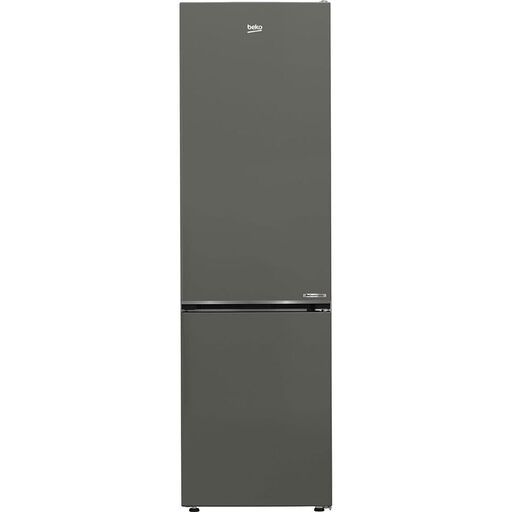 Image unavailable
Beko B5RCNE406HG, 355 l fridge-freezer
This freestanding fridge-freezer is worth considering if your regular shopping includes both fresh and frozen food.
The model name lists Total No Frost and an energy rating of C. Before buying, check how the 355 l is split between the fridge and freezer, and make sure you have enough height.
View on Joybuy
 Image unavailable
Samsung RF50C530EB1, 495 l multi-door fridge
Worth considering if you need plenty of room for your shopping, provided the appliance can be delivered and installed.
The model name lists an energy rating of E. Compare the usable capacity of each compartment and check the depth and the clearance needed to open the doors.
View on Joybuy
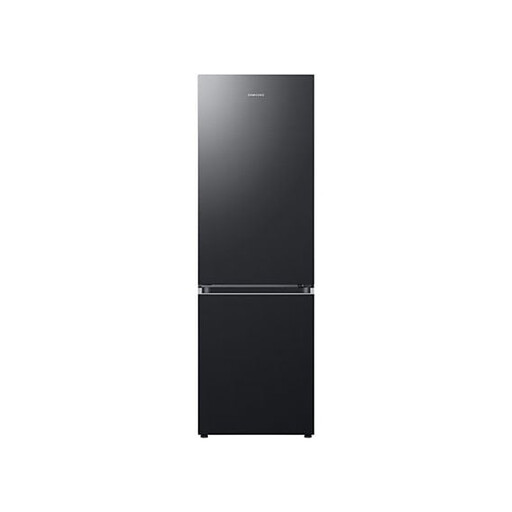 Image unavailable
Samsung RB34C704DB1, 344 l fridge-freezer
This fridge-freezer is worth considering for a household that wants to keep fresh and frozen food in separate compartments.
The model name lists an energy rating of D. Before choosing this 344 l model, check the capacity of each compartment, the depth, installation clearances, annual energy consumption and noise level.
View on Joybuy
 Image unavailable
CHiQ JR227LSE, 227 l fridge-freezer
This fridge-freezer is worth considering if kitchen width is limited but you still need a separate freezer compartment.
The model name lists 153 l of fridge capacity, 74 l of freezer capacity, a width of 54 cm, Low Frost, a reversible door and an energy rating of E. Low Frost doesn’t mean you’ll never need to defrost it manually; also check the height, depth and required clearances.
View on Joybuy
Frequently asked questions
How much fridge space should you allow for each person?
UFC-Que Choisir suggests 100 to 150 litres of usable capacity for one person as a starting point, then around 50 litres for each additional person. Adjust this guide to how often you shop and how much fresh food you keep between shops.
Why compare fridge and freezer capacity separately?
Two appliances with a similar total capacity can offer very different amounts of space for frozen food. The European Commission says that energy labels show storage capacities, so compare each compartment with your usual shopping before choosing a format.
What should you look for on a fridge’s energy label?
Check the energy rating, annual energy consumption, storage capacities and noise emissions shown on the label described by the European Commission. To compare energy consumption, look at models with similar capacities and formats.
Does a commercial warranty replace your statutory rights?
No. In France, the Ministry of the Economy explains that the statutory guarantee of conformity applies to new, second-hand and refurbished goods sold by a business to an individual. A commercial warranty has its own terms, so check what it adds before taking one out.
Is a multi-door fridge always suitable for a family?
No. Its suitability depends on how much storage the household really needs and how much space is available. Before ordering, check the model’s dimensions and weight, the delivery route, how the doors open and its energy consumption.


