What to compare
First decide what you need to store, then compare the storage layout, energy use, maintenance requirements and where each model can be installed.
| What matters to you |
What to check |
Who it matters most to |
| Fresh and frozen food capacity |
Compare the usable capacity of each compartment separately with the amount of food you store. |
If I’m replacing my appliance, I want to divide the space to suit my shopping rather than simply choosing a large total capacity. Around 28% of consumers prioritise having the right capacity. |
| Access and storage |
Check that your containers will fit and look at the layout of baskets, drawers and shelves. |
When I store prepared meals or boxes, I want to put them away and find them easily. A large advertised capacity is no use if the layout isn’t practical. Around 22% of consumers prioritise access and storage. |
| Energy use |
Compare the kWh/year, capacity and features of models designed for similar use. |
If I want to keep track of my appliance’s energy use, I check the kWh/year while taking the compartments I need into account. Around 22% of consumers put energy use first. |
| Maintenance and cooling technology |
Check the technology listed for the exact model and the defrosting instructions in its manual. |
I want to know how often maintenance is needed before choosing an appliance. Around 17% of consumers prioritise reducing the need to defrost. |
| Space and installation |
Measure the space and access routes, check the door clearance and read the installation instructions. |
If my appliance needs to fit in a specific space, I check the dimensions and installation requirements before delivery. Around 11% of consumers prioritise making sure an appliance fits its intended space. |
Joybuy products to suit your needs
This selection includes fridges, fridge-freezers and freezers, so you can compare storage options to suit your needs for fresh and frozen food and the way you like to organise it.
 Image unavailable
AUCMA convertible chest freezer, 291 L
Worth considering if you want a chest appliance that can be switched between fridge and freezer modes.
291 L; switchable fridge and freezer modes; top-opening; energy rating E; removable basket.
View product on Joybuy
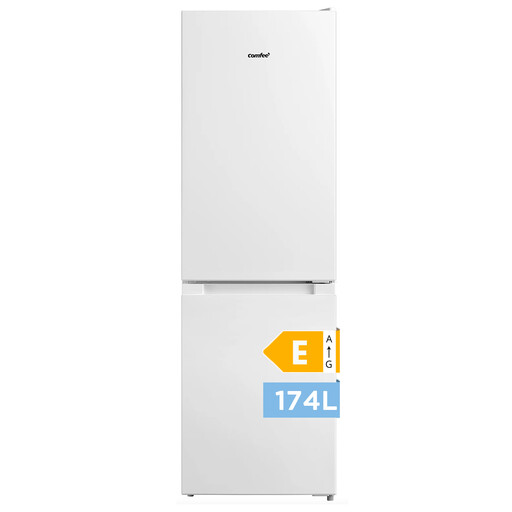 Image unavailable
Comfee’ RCB169WH2(E), 174 L fridge-freezer
Worth considering if you want a freestanding appliance that combines refrigeration and freezing.
174 L total capacity, including 115 L for the fridge and 59 L for the freezer; Low Frost; 4-star freezer; reversible door; energy rating E.
View product on Joybuy
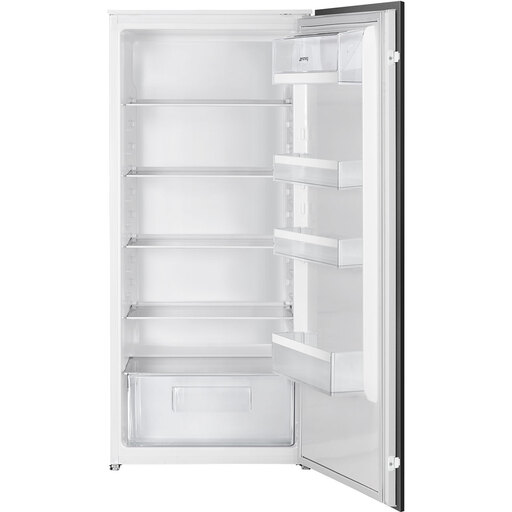 Image unavailable
SMEG S4L120E, 188 L built-in fridge
Worth considering if you only need to store fresh food and your kitchen is designed for a built-in model.
Single-door fridge; 188 L; energy rating E.
Before installation, check that the housing unit matches the appliance dimensions.
View product on Joybuy
 Image unavailable
Samsung RF50C530EB1, 495 L multi-door fridge
Worth considering if you need one appliance with space for both fresh and frozen food.
Multi-door; 495 L; black; energy rating E.
View product on Joybuy
 Image unavailable
CHiQ JR227LSE, 227 L fridge-freezer
Worth considering if you want to store fresh and frozen food in one fridge-freezer with a stated width of 54 cm.
227 L total capacity, including 153 L for the fridge and 74 L for the freezer; Low Frost; 4-star freezer; reversible door; energy rating E.
Low Frost reduces frost build-up, but doesn’t mean you’ll never need to defrost the appliance.
View product on Joybuy
Frequently asked questions
How many litres of capacity should you allow per person?
A per-person guide can’t replace thinking about your own shopping habits. Compare fresh and frozen storage separately, then check that there’s enough room for your containers.
How do you compare the annual energy use of two appliances?
Compare the kWh/year figures for models offering a similar amount of storage, taking the capacity and features of each appliance into account. Energy-label figures are measured under standardised conditions and don’t guarantee how much energy an appliance will use in your home.
Can you install any freezer in an unheated garage?
No. Don’t assume that one model’s suitable conditions apply to another. Check the manual for the ambient temperatures allowed for the model you’re considering.
What should you check before installation?
Read the manual for the exact model and check the access routes, dimensions, door clearance and connection instructions. Bosch recommends reading the warnings before attempting to install an appliance yourself.
Does an appliance that reduces frost still need defrosting?
Reducing frost doesn’t necessarily eliminate the need to defrost. Liebherr describes StopFrost as reducing how often defrosting is needed, while Bosch says that NoFrost on the GSN29EWEV eliminates manual defrosting.
Does the energy label apply to fridges and freezers sold in France?
Yes. The European energy-labelling framework covers the relevant household refrigeration appliances. The European Commission also states that ecodesign requirements apply to these products; check the details for the exact model.


