Start by considering how much fresh and frozen food you store. A fridge on its own prioritises fresh food, a fridge-freezer combines both uses, and a separate freezer gives you extra freezing capacity. Then compare the capacity in litres of each compartment and the model’s kWh/year, making sure it suits the space you have available. ADEME points out that these appliances run continuously, and that choosing one that’s too large or has more features than you need can affect energy use.
Who is this choice for?
Households replacing their everyday fridge or freezer
You want room for fresh food and, if needed, frozen food too, without relying on the total capacity alone. How often you shop and how much space you have in your kitchen will help you choose the right format. Que Choisir offers capacity guidelines that you can adapt to your household’s habits.
Households stocking up on frozen food
You want to know whether a fridge-freezer’s compartment will be enough, or whether a separate freezer would better suit the space you need for frozen food. Que Choisir provides capacity guidelines for different uses.
Households mindful of ongoing energy use
You’re comparing appliances that stay plugged in all the time and want to look at kWh/year alongside capacity and features. ADEME points out that choosing an appliance that’s too large or has more features than you need can affect energy use.
What matters when you’re buying
Que Choisir recommends choosing based on usable capacity and your household’s habits. ADEME also points out that size and extra features matter for an appliance that runs continuously.
Fridge
Choose this if: you mainly store fresh food and already have the freezer capacity you need, if required.
Bear in mind: on its own, it won’t meet a significant need for frozen-food storage.
Fridge-freezer
Choose this if: you regularly use both compartments and want both functions in one appliance.
Bear in mind: the total capacity doesn’t show how much space is available for fresh and frozen food.
Separate freezer
Choose this if: your fridge is big enough, but you need more space for frozen-food supplies or less frequent shopping.
Bear in mind: it takes up extra space and also runs continuously.
| What matters |
What to check |
Who it matters most to |
| Usable capacity and layout |
Compare the capacity in litres of each compartment, how often you shop and the dimensions of the space available. |
When I shop regularly, I want enough fresh-food space without choosing an appliance that’s too big for my kitchen. Around 31% of consumers prioritise capacity and how it is divided. |
| Freezing capacity |
Check the capacity in litres for frozen food and compare a fridge-freezer with a separate freezer to suit your needs. |
If I stock up or shop less often, I want enough room for frozen food without adding an unnecessarily bulky appliance. Around 25% of consumers put freezing capacity first. |
| Ongoing energy use |
Check the kWh/year and the energy label rating for the exact model. Compare models with a suitable capacity for the same use. |
As the appliance stays plugged in all the time, I want to weigh its annual energy use against the food storage I need. Around 25% of consumers prioritise electricity use. |
| Installation and features |
Check the dimensions, required clearance, features of the exact model and any requirements for activation. |
In a kitchen where space and maintenance matter, I want features that genuinely suit my needs and an appliance I can install. Around 19% of consumers prioritise how well it fits and how useful its features are. |
Pitfalls to avoid
-
Choosing a fridge-freezer based on total capacity alone
Total capacity doesn’t tell you how much space is set aside for each compartment. The freezer may be too small for your supplies, while the fridge may offer more space than you need.
Compare the capacity in litres for fresh and frozen food separately, then consider how often you shop and how much space you have available.
-
Assuming an energy rating or feature guarantees savings
ADEME points out that size and extra features can affect energy use. A feature advertised by the manufacturer doesn’t, on its own, guarantee lower energy use in every situation.
Check the kWh/year and capacity for the exact model. For a connected feature or energy management mode, also check the manufacturer’s activation requirements.
-
Confusing old-appliance take-back with installation
The DGCCRF describes free “one-for-one” take-back of an equivalent used appliance when you buy a new one. This doesn’t mean that every service associated with delivery is included.
Ask for the take-back terms in writing and a breakdown of any disconnection or installation services.
Disconnection and installation may be separate services, depending on the offer. Ask for a breakdown before you buy.
-
Assuming No Frost applies to every compartment
Cooling technology can differ between the fridge and freezer. For example, the Electrolux ENT6NE18S product specifications state that the fridge uses static cooling and the freezer uses No Frost.
Check the type of cooling listed for each compartment in the specifications for the exact model.
Brands to consider by format and features
Beko
The B3RCHE305HW is a fridge-freezer worth considering if the balance between fridge and freezer space suits your needs.
- For the B3RCHE305HW, Beko lists 168 L for the fridge, 102 L for the freezer, a reversible door, a D rating and 196,80 kWh/year.
- According to Beko’s specifications, Semi No Frost applies to the freezer only; it doesn’t describe the fridge’s cooling technology.
Bosch
The KGN492LDF is a freestanding fridge-freezer. Check that its compartment layout and dimensions suit your kitchen.
- For this model, Bosch lists 311 L of fridge space, 129 L of freezer space, Total NoFrost, a door alarm and a noise level of 35 dB.
- Its listed dimensions are 2030 × 700 × 667 mm, so measure the space available before choosing this model.
Liebherr
The Rd 5220 Plus and FNd 7026 Plus offer different options: prioritise fresh-food storage or increase your freezing capacity.
- Liebherr lists 399 L for the single-door Rd 5220 Plus fridge and 311 L for the FNd 7026 Plus NoFrost freezer.
- EasyFresh is listed for the Rd 5220 Plus, while NoFrost is listed for the FNd 7026 Plus. These features don’t carry over from one model to the other.
Samsung
The RB38C600CS9/EF is a fridge-freezer to consider if connected energy management is one of your priorities.
- Samsung lists a capacity of 390 L and says AI Energy mode is available on eligible models, with requirements that vary by model.
- Samsung says activation requires compatible Wi-Fi, an account and an app, among other things. The results quoted by the brand vary depending on conditions and usage habits.
LG
The GBBS322APY is a 375 L fridge-freezer with additional features listed by LG for this model.
- LG lists Door Cooling+, an adjustable FRESHConverter compartment and the ThinQ app. The brand also gives a noise level of 29 dB.
- LG’s instructions require at least 4 mm between the sides of this appliance and the wall. This requirement applies to the GBBS322APY model.
Electrolux
Consider the ENT6NE18S built-in fridge-freezer if your housing dimensions match those specified for this model.
- Electrolux lists 195 L for the fridge, 62 L for the freezer, an E rating and 216 kWh/year. The required housing dimensions are 1780 × 560 × 550 mm.
- The specifications state that the fridge uses static cooling and the freezer uses No Frost, so the feature doesn’t apply to both compartments.
Fridge-freezers on Joybuy
The models below are fridge-freezers, combining fresh- and frozen-food storage in one appliance.
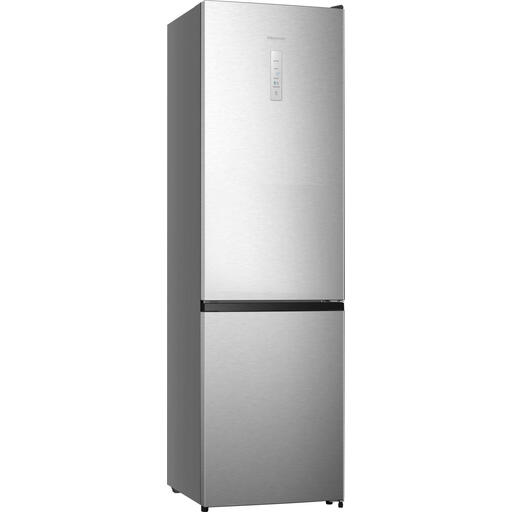 Image unavailable
Hisense RB440N4CCB, 336 L fridge-freezer
Combines fresh- and frozen-food storage in a freestanding appliance.
Total No Frost, Inverter compressor, Multi Air Flow, B rating and 35 dB.
View product on Joybuy
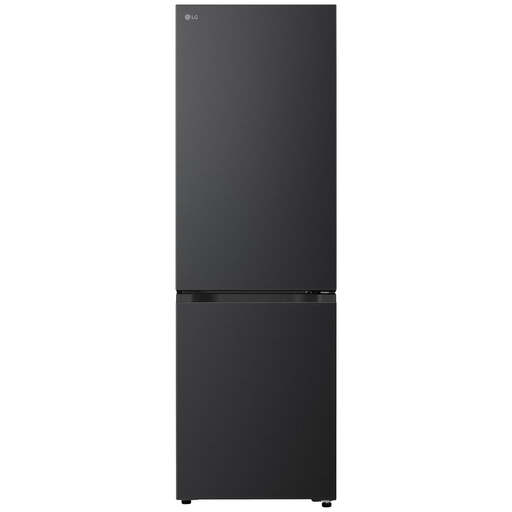 Image unavailable
LG GBBS312CEV, 333 L fridge-freezer
Brings refrigeration and freezing together in one appliance.
C rating; NatureFRESH™, DoorCooling+™ and LinearCooling+™ features listed for this model.
View product on Joybuy
 Image unavailable
Haier HTW5618ENMG, 360 L 3-door fridge-freezer
A three-door fridge-freezer combining fresh- and frozen-food storage.
Total No Frost, E rating, Wi-Fi and My Zone.
View product on Joybuy
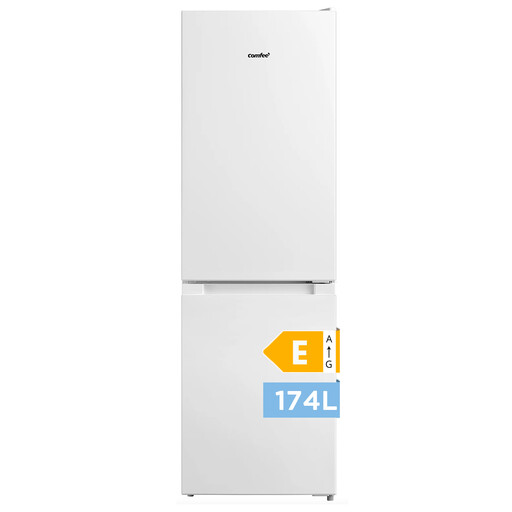 Image unavailable
Comfee' RCB169WH2(E), 174 L fridge-freezer
Combines both functions in a compact 174 L format.
115 L for the fridge and 59 L for the freezer, Low Frost, E rating and 39 dB.
View product on Joybuy
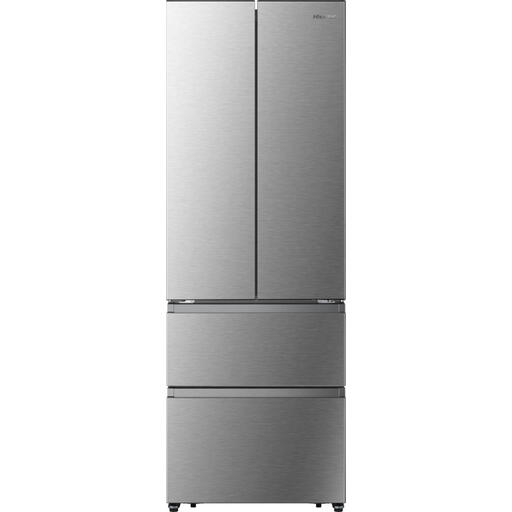 Image unavailable
Hisense RF632N4BCE, 485 L French-door fridge-freezer
For households looking for a high-capacity fridge-freezer with space for both fresh and frozen food.
Total No Frost, Inverter compressor, Multi Air Flow, water dispenser, E rating and 38 dB.
View product on Joybuy
Frequently asked questions
What capacity should I look for if my shopping habits vary?
Work out how much space you need for fresh and frozen food separately, then factor in how often you shop and the space available. Que Choisir gives an average guideline of 100 to 150 L of fridge capacity for one person, then 50 L for each additional person. Adjust this to suit your habits.
How do I read the energy label on a fridge or freezer?
For the household appliances covered, the European label uses a scale from A to G and shows details including annual energy use in kWh and capacity. The European Commission states that this scale has applied since 1 March 2021. Compare the exact model with appliances whose capacity suits your needs.
What should I check before installing an appliance next to a wall or in a housing unit?
Check the appliance dimensions, the space needed for installation and the door opening requirements in the instructions for your chosen model. LG specifies a minimum gap of 4 mm between the sides of the GBBS322APY and the wall; this model-specific guidance doesn’t apply to every fridge. For a built-in model, also check the required housing dimensions.
How do I check my fridge’s temperature after installation?
Anses recommends a temperature between 0 °C and 4 °C at the coldest point. Check your appliance’s temperature, particularly if the room is warm, the door is opened often or the fridge is very full. A feature advertised by the manufacturer doesn’t, on its own, guarantee this result.
Does No Frost always apply to both compartments in a fridge-freezer?
No, cooling technology can differ between the fridge and freezer. For example, the Electrolux ENT6NE18S specifications state that the fridge uses static cooling and the freezer uses No Frost. Check the details for each compartment on the model you’re interested in.


