First, decide how much space you need for fresh and frozen food, then check that the appliance can be installed in your kitchen. For a built-in model, the cabinet dimensions alone aren’t enough: the housing, hinges and ventilation must meet the requirements in the manual. To compare running costs, look at the kWh/year and the capacity of each compartment across appliances with a similar configuration, rather than relying on the energy rating alone.
Who is this guide for?
Households that favour fresh food
If you cook often and regularly store fruit, vegetables or leftovers, start by comparing fridge capacity and shelf layout. Anses recommends a temperature of 0 °C to 4 °C in the coldest part of the fridge, and leaving space between foods so air can circulate.
Regular consumers of frozen food
If you often store frozen meals, portions or ingredients, check the freezer capacity, drawer layout and defrosting method. Don’t judge its capacity by the appliance’s total volume alone.
Households with an existing kitchen to work around
If you’re replacing an appliance in a housing unit or a tight space, measure the area and check the ventilation and door fitting requirements in the model’s manual. The external dimensions alone don’t prove that a built-in model will fit.
Which features should you prioritise?
Work out how much capacity you need in each compartment before comparing styles. Then check the installation requirements, followed by energy and maintenance details for models that fit the space.
| Feature |
What to check |
Who it’s for |
| Fresh food storage |
Compare the fridge capacity in litres separately from the freezer, as well as the layout of the shelves and drawers. |
I cook with fresh ingredients and want to put my shopping away without restricting air circulation; around 27% of consumers would prioritise fresh food storage. |
| Space for frozen food |
Check the freezer capacity in litres, the shape of its drawers and the model’s defrosting method. |
I need room for frozen portions and ingredients, rather than relying on the appliance’s total capacity alone; this would be the top priority for around 20% of consumers. |
| Installation |
Measure the space and check the manual for door opening, housing and ventilation requirements if the appliance is built in. |
In my existing kitchen, I need to be able to install and open the appliance properly before choosing its capacity; around 33% of consumers would make this compatibility their top priority. |
| Everyday use and maintenance |
For models with a similar configuration, compare kWh/year, the stated noise level and the defrosting method, not just the A to G rating. |
I want to consider energy use and maintenance day to day, while choosing an appliance that suits the food I store; around 20% of consumers would prioritise these factors. |
Mistakes to avoid
-
Relying on the total capacity alone
This figure doesn’t tell you how many litres are available for fresh or frozen food. Product specifications from Bosch Home Appliances France and Whirlpool France show different compartment capacities across their models.
Compare the capacity of each compartment with the food you usually store, then check the interior layout.
-
Choosing a built-in model based only on the cabinet size
An unsuitable housing unit, a different door fitting or blocked ventilation can prevent the appliance from being installed correctly. Electrolux France, for example, describes a low-level air intake and a high-level outlet for built-in models.
Before ordering, compare your cabinet measurements and door system with the requirements in the manual for your chosen model.
If the cabinet or its air vents aren’t suitable, additional work may be needed during installation.
-
Comparing only the energy label rating
The rating alone isn’t enough to make a useful comparison between two appliances with different capacities or configurations. The label also shows annual energy consumption in kWh.
Compare kWh/year, the capacity of each compartment and the stated noise level across models that meet the same needs.
-
Leaving the old appliance until delivery day
When replacing a fridge-freezer, plan how to dispose of the old one at the same time as you make room for the delivery. ADEME says that a refrigerating appliance can, for example, be handed over to the retailer or delivery driver.
Check the collection arrangements before delivery and make sure there’s access to the old appliance.
Brands to know
Bosch
Bosch Home Appliances France lists fridge-freezers with a bottom freezer in both freestanding and built-in versions.
- The KGN39AIAU and KIV875SE0 models let you compare fresh and frozen food capacity across different installation types.
- Their features don’t apply across the whole range, so check the product information and manual for the model you’re considering.
Whirlpool
The models featured by Whirlpool France include a top-freezer, double-door fridge and a built-in fridge-freezer.
- These layouts offer useful points of comparison when choosing access to each compartment and how the capacity is divided.
- Features and defrosting methods vary by model; check the product information and manual to confirm the details.
Electrolux
Electrolux France highlights the installation requirements for built-in fridges, including the housing and ventilation.
- Its guidance can help you check the low-level air intake and high-level outlet.
- For exact measurements and fitting instructions, refer to the manual for each model.
Fridge-freezers to consider on Joybuy
These appliances have separate spaces for fresh and frozen food. Their total capacity doesn’t replace the need to check the litres available in each compartment, the layout and the space required for installation.
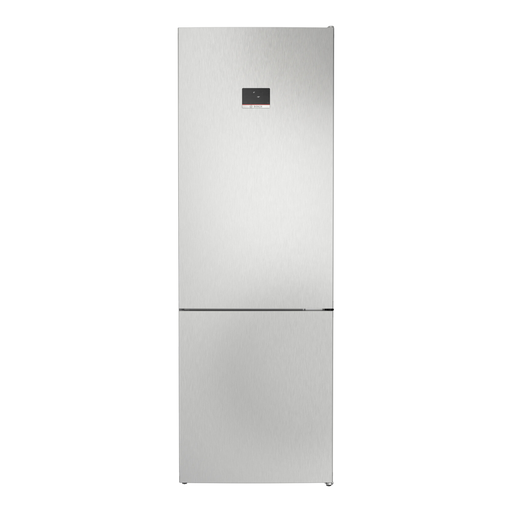 Image unavailable
Bosch KGN497LDF, 440 L, D rating, grey
If you’d like to store fresh and frozen food in the same appliance, check that the split in capacity suits your habits. The stated total capacity is 440 L and the energy rating is D; check the manual for installation clearances.
View on Joybuy
 Image unavailable
Haier HTW5618ENMG, 3 doors, 360 L, E rating
If food organisation matters to you, take a closer look at the layout of the three doors and the capacity of each zone. The product title states a total capacity of 360 L, an E rating and Total No Frost; check the manual for installation clearances.
View on Joybuy
 Image unavailable
Candy CFQQ5T817EPS, 4 doors, 467 L, E rating
If you need space for both types of food, measure the area first, then compare the capacity of each compartment. This silver model has a stated total capacity of 467 L, an E rating and Total No Frost; check the product information and manual to confirm the freezer layout and installation clearances.
View on Joybuy
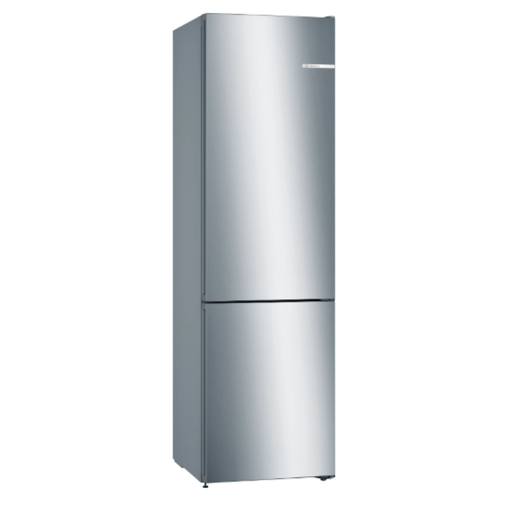 Image unavailable
Bosch KGN39VLEB, 368 L, E rating, stainless steel
For a fridge-freezer designed for everyday meals, compare the space for fresh and frozen food before settling on this style. The stated total capacity is 368 L and the rating is E; if noise matters in your kitchen, check the stated noise level for this model.
View on Joybuy
 Image unavailable
Bosch KGN33NLEB, bottom freezer, 282 L, E rating
If you’d like a bottom-freezer model, check that the capacity of each compartment suits your usual shopping. The stated total capacity is 282 L and the rating is E; also check the clearances specified in the manual.
View on Joybuy
Frequently asked questions
Does the energy label also apply to fridges sold online in France?
Yes. The French Ministry of the Economy says the requirement to display an energy label applies to fridges and also covers online sales. When comparing two models, look at kWh/year and capacity as well as the rating.
What should I measure before buying a built-in fridge-freezer?
Measure the housing and check the door system, then compare them with the requirements in the model’s manual. Electrolux France says a built-in model needs ventilation, with an air intake at the bottom and an outlet at the top. So the cabinet dimensions alone aren’t enough to confirm that it will fit.
What temperature should I aim for when storing fresh food?
Anses recommends a temperature of 0 °C to 4 °C in the coldest part of the fridge. Leave space between foods too, so air can circulate.
How should I arrange collection of my old fridge?
Ask about collection arrangements before your new appliance is delivered. ADEME says that when you replace an appliance, you can hand your old refrigerating appliance over to the retailer or delivery driver; you can also take it to a recycling centre that accepts this type of appliance.


