Before replacing a fridge-freezer that seems to use too much energy, check its upkeep and choose the amount of fridge and freezer space you really need. To compare appliances with similar uses and capacities, check the kWh/year figures on their energy labels, as well as noise levels and installation requirements. A larger appliance or one with more features is only worthwhile if you’ll use the extra capacity or functions.
Who this guide is for
Households keeping an eye on continuous energy use
If you’re thinking of replacing an appliance that runs around the clock, compare the new model’s stated annual energy consumption with your old appliance’s specifications and how you use it. ADEME points out that refrigeration appliances run continuously.
Households unsure how much freezer space they need
Depending on your shopping habits and how much you store, you may need a fridge-freezer, a fridge with a small freezer compartment, or mainly a fridge. Compare the fridge and freezer capacities separately rather than looking only at the total volume.
Households whose old appliance seems to use more energy
Before changing the type of appliance, check for ice build-up, inspect the door seals, clean the rear coils and consider where the appliance is positioned. These basic checks don’t replace a fault diagnosis.
What to compare
First work out how much space you need for fresh and frozen food. A fridge-freezer caters for both, while a fridge or a model with a small freezer compartment may better suit other habits. Then look at energy use and installation requirements for the type you’ve chosen.
| Criteria |
What to check |
Who it’s for |
| Annual energy consumption |
Compare the kWh/year figures on the energy labels of appliances with similar uses and capacities. |
My appliance runs day and night, so I want to choose carefully without confusing low energy use with low capacity; around 36% of consumers would put this continuous energy use at the top of their concerns. |
| Capacity split |
Check the litres available for fresh food and frozen food separately. |
I regularly store frozen food and need to know whether the freezer compartment will hold enough; this split would be the main priority for around 29% of consumers. |
| Size and fit |
Measure the space, then check the appliance dimensions, installation type and required clearances. |
With limited room in my kitchen, I don’t want an appliance that won’t fit or one with unnecessary capacity; around 21% of consumers would put this fit first. |
| Maintenance and convenience |
Check the condition of your old appliance; when choosing a replacement, look at the stated noise level and defrosting method. |
Before buying, I want to rule out a maintenance issue and decide which features I’ll actually use every day; this would be the main concern for around 14% of consumers. |
Mistakes to avoid
-
Relying on the energy rating letter alone
Appliances in different energy classes won’t necessarily offer the same fridge and freezer capacities. The European Commission says the energy label also gives the annual energy consumption, capacities and noise level.
Compare the kWh/year figures for models designed for the same purpose and with similar capacities, checking each compartment.
-
Choosing extra capacity “just in case”
ADEME points out that the size and extra features of an appliance can affect its energy use when it runs continuously. Extra capacity is only worthwhile if it suits your storage habits.
Work out how much fridge and freezer space you need before considering a larger model, extra features or a separate freezer.
-
Directly comparing an old A+++ rating with a current A rating
According to the European Commission, rescaling the energy label can change a product’s rating letter without changing its energy consumption.
To compare an old appliance with a newer model, look at their kWh/year figures and capacities rather than assuming that the old and new rating letters are equivalent.
-
Replacing the appliance without checking its condition
Before blaming high energy use solely on the appliance’s age, check for ice build-up, inspect the seals and consider the installation conditions. The French National Energy Ombudsman recommends defrosting when ice appears and maintaining the seals.
Carry out any accessible maintenance checks. If you suspect a fault with the refrigeration system, ask a professional to diagnose it.
Brands to consider
Bosch
Bosch offers larder fridges, fridge-freezers and other household formats. Its range can help you compare installation types and how the capacity is split.
- Bosch says some models offer features such as storage options or No Frost defrosting.
- Features vary by model, so check the energy label, capacities and noise level rather than assuming they’re the same across the brand.
Liebherr
Liebherr is worth considering if you’re looking for specific food-storage compartments or separate temperature settings for the fridge and freezer.
- Liebherr says its DuoCooling feature on some fridge-freezers lets you set the two compartments separately.
- This feature isn’t available on every model. Check the capacities, dimensions, noise level and energy consumption of the model you’re considering.
Samsung
Samsung offers fridge-freezers, larder fridges and multi-door models. Compare them based on the capacity you actually need.
- Samsung’s range includes several formats and features that vary by model.
- A smart feature or a particular format doesn’t, by itself, mean an appliance uses less energy. Check the energy label for the exact model.
Appliances to consider on Joybuy
These models combine fridge and freezer storage in one appliance, with capacities and formats to compare against your available space and frozen food needs. Before choosing, check the annual energy consumption on the exact model’s energy label.
 Image unavailable
Samsung RB33B612EBN, black 344 L fridge-freezer
Worth considering if you want to keep fresh and frozen food in the same appliance. The title gives a total capacity of 344 L and an E energy rating; check how the capacity is split between compartments, the dimensions and the model’s kWh/year figure on the energy label.
View on Joybuy
 Image unavailable
LG GBBSJ1CCSW, white 333 L fridge-freezer
Consider this if you’re looking for a fridge-freezer and want to compare similar capacities without focusing only on total volume. The title gives a capacity of 333 L and a C energy rating; check the capacity of each compartment and the model’s kWh/year figure on its energy label.
View on Joybuy
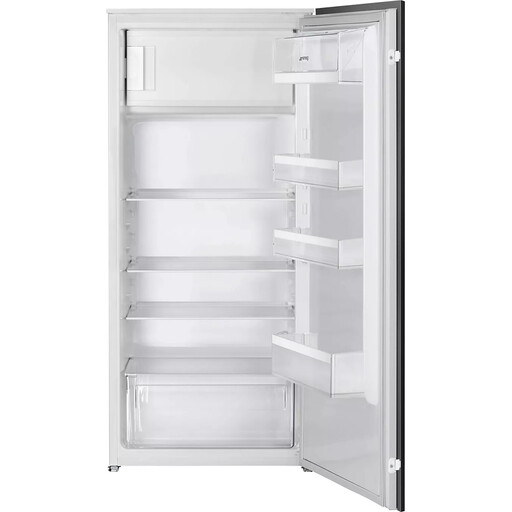 Image unavailable
SMEG S4C122E, 188 L built-in fridge-freezer
Worth considering as a replacement for a built-in appliance if you don’t need much freezer space. The title gives a total capacity of 188 L and an E energy rating; check the freezer capacity, whether it fits your housing unit and sliding-door installation, and the defrosting method.
View on Joybuy
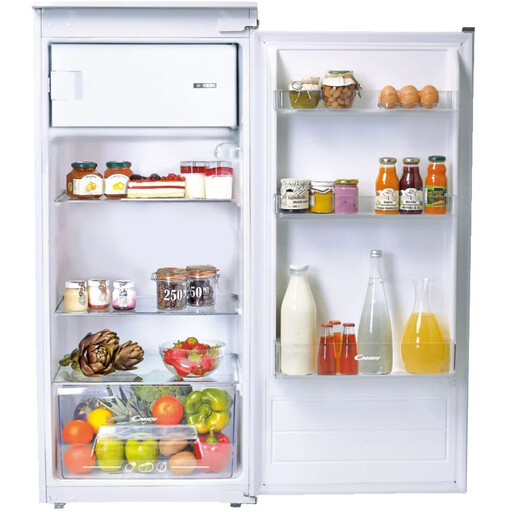 Image unavailable
Candy CIO 225 EE/N, 179 L fridge-freezer
Consider this if you mainly refrigerate fresh food and only freeze food occasionally. The title gives a total capacity of 179 L; check the freezer compartment capacity and confirm the installation type before buying, as the installation details for this model are contradictory.
View on Joybuy
 Image unavailable
AEG NSC6M18FES, 249 L built-in fridge-freezer
Worth considering if your space requires a built-in fridge-freezer. The title gives a capacity of 249 L, an E energy rating and TwinTech No Frost; check that it fits your housing unit and consult the kWh/year figure on the energy label before comparing energy use.
View on Joybuy
Frequently asked questions
What should I compare on a fridge-freezer’s energy label?
First compare the kWh/year figures for appliances with similar uses and capacities. According to the European Commission, the energy label also shows the energy rating, storage capacities and noise level; the model’s product information gives you more detail about these features.
Is an old A+++ rating better than a current C rating?
The letter alone doesn’t tell you. The European Commission explains that rescaling the labels can change the displayed rating without changing the product’s energy consumption. Compare the kWh/year figures and capacities of the appliances instead.
What should I check on my old appliance before replacing it?
Check for ice build-up, inspect the seals, make sure the rear coils are clean and keep the appliance away from heat sources. The French National Energy Ombudsman recommends these maintenance steps; they don’t replace a professional diagnosis if you suspect a refrigeration fault.
How do I compare the stated annual energy consumption of two models?
Check the kWh/year figures on their energy labels, and compare them only if the appliances serve the same purpose and have capacities that suit your needs. The actual energy consumption of your old appliance and its replacement may differ from the label figures depending on installation and use.


