What to compare
When replacing an appliance, start with your storage habits, then compare models suited to similar needs. The European energy label shows details including annual energy consumption, compartment capacities and noise level. ADEME also points out that an appliance’s size and features you don’t need can affect its energy use.
Fridge only
Worth considering: if you mainly store fresh food and don’t need a freezer compartment in this appliance.
Bear in mind: it won’t provide the freezer capacity your household may need.
Fridge-freezer
Worth considering: if you want to store both fresh and frozen food in a single appliance.
Bear in mind: some of the total capacity is set aside for frozen food, so compare the litres in each compartment separately.
Separate freezer
Worth considering: if you regularly buy more frozen food or freeze more meals than a fridge-freezer can accommodate.
Bear in mind: this appliance needs a separate space and runs continuously. Check the permitted ambient temperature for the planned location, too.
| Criteria |
What to check |
Who it matters most to |
| Fresh food capacity |
Compare the fridge compartment’s capacity in litres, shelves and drawers with your containers and how often you shop. |
When I do a big shop, I want to fit in fresh food, leftovers and containers without running out of space. Around 31% of consumers prioritise fresh food capacity. |
| Freezer capacity |
Check the freezer compartment’s capacity in litres, its storage layout and how much food you need to keep or freeze. |
If I freeze food regularly, I want to know whether a fridge-freezer’s drawers will be enough before buying another appliance. Around 25% of consumers prioritise frozen food storage. |
| Energy consumption |
Check the exact model’s energy label for its kWh/year, energy rating and compartment capacities. Compare appliances that meet similar needs. |
I want to keep the storage space I need without overlooking the stated energy consumption. Around 25% of consumers make this a priority. |
| Installation and noise |
Measure the delivery route and the space available, check door clearance and consult the manual for installation and ventilation instructions. Also check the noise level in dB. |
In a kitchen where space or noise matters, I want to know whether the appliance can be delivered and installed as planned. Around 19% of consumers prioritise how well an appliance fits into their kitchen. |
Fridge-freezers on Joybuy
This selection includes freestanding and built-in fridge-freezers, so you can store fresh and frozen food in a single appliance.
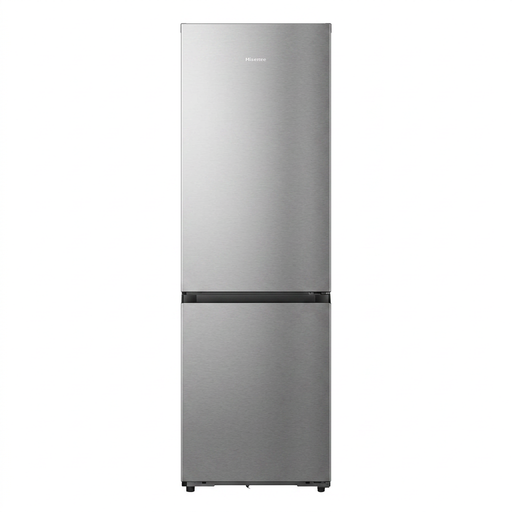 Image unavailable
Hisense RB3K330SAFC, 330 L
A freestanding fridge-freezer with separate compartments for chilled and frozen food.
Fridge: 215 L; freezer: 115 L. Stated energy consumption: 165 kWh/year; noise level: 35 dB. The product page lists a reversible door and a frost-free system.
View on Joybuy
 Image unavailable
AEG NSC6M18FES, 249 L, energy rating E
A built-in fridge-freezer to consider if your kitchen layout is compatible.
Fridge: 186 L; freezer: 62 L. The product page lists a sliding-door installation system, TwinTech Total No Frost technology and an ExtraChill drawer.
View on Joybuy
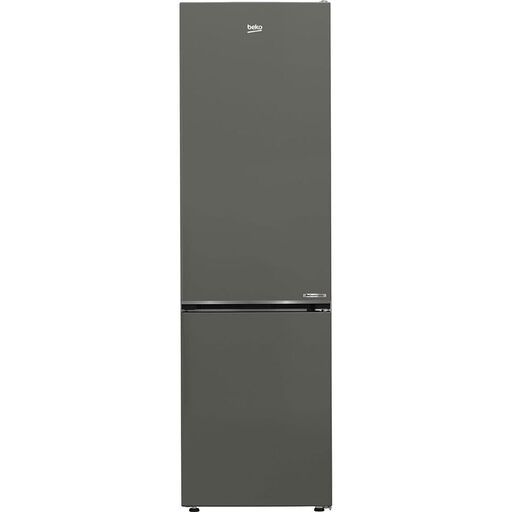 Image unavailable
Beko B5RCNE406HG, 355 L, energy rating C
A freestanding fridge-freezer with the fresh and frozen food capacities listed separately.
Fridge: around 249 L; freezer: 106 L. Stated energy consumption: 240 kWh/year; noise level: 35 dB. The product page lists Total No Frost and a reversible door.
View on Joybuy
 Image unavailable
Hisense RB3B250SAWC, 252 L, energy rating C
A built-in fridge-freezer for storing fresh and frozen food in a compatible unit.
Fridge: 176 L; freezer: 76 L. Stated energy consumption: 150 kWh/year; noise level: 34 dB(A). The product page lists No Frost and a reversible door. Keep ventilation openings clear in line with the installation instructions.
View on Joybuy
 Image unavailable
Haier HTW5618ENMG, 360 L, energy rating E
A freestanding, three-door fridge-freezer with separate storage for fresh and frozen food.
Fridge: 235 L; freezer: 125 L. Stated energy consumption: 271 kWh/year; noise level: 35 dB(A). The product page lists Total No Frost and three freezer drawers.
View on Joybuy
Frequently asked questions
How do I compare the energy consumption of two different types of appliance?
First, work out how much fresh and frozen food you need to store, then compare the kWh/year on the energy labels of models suited to similar needs. The European energy label also shows compartment capacities and noise level. ADEME’s general guidance cannot predict how much energy your household will use.
What should I measure before delivery and installation?
Measure the route to your kitchen, the final location and the space needed to open the doors. Then check the manual for the exact model for ventilation requirements and, for a built-in model, the required housing dimensions. LG’s recommended clearances and Bosch’s instructions apply to their own installation guidance and aren’t universal rules.
What temperature should I check the fridge is at after installation?
Anses recommends keeping the coldest part of the fridge between 0 and +4 °C and checking the temperature regularly. Follow food storage advice too, along with the settings recommended in your appliance’s manual.
Does a commercial warranty replace the statutory warranty?
No. For a private purchase in France from a professional seller, the Ministry of the Economy points out that the statutory warranty of conformity is compulsory and separate from an optional commercial extension. It applies for two years from the date the goods are delivered.
Does the seller have to take away your old appliance when you buy a new one?
The DGCCRF says that under the ‘one-for-one’ take-back scheme, retailers must take back equivalent used equipment free of charge when selling a new appliance, including online. Check with the seller how to hand over your old fridge.


