If you mainly store fresh food, start by considering how much fridge space you need. If you also keep a moderate amount of frozen food, compare the capacity of both compartments in a fridge-freezer. For larger frozen-food stocks, consider a separate freezer: an upright model makes food easy to reach in drawers, while a chest freezer needs more floor space. In every case, check the usable capacity, installation requirements and annual energy consumption of comparable appliances.
Which option is right for you?
Households replacing their main appliance
If one appliance needs to store both fresh food and everyday frozen items, compare the space available in each compartment rather than looking only at the total capacity. How often you shop and the size of your kitchen can affect the capacity that suits you.
Households stocking up on frozen food
A separate freezer is worth considering if a fridge-freezer compartment cannot accommodate bulk buys or meals prepared in advance. According to UFC-Que Choisir, chest freezers can offer generous capacity, while upright models are more compact; also compare how easy it is to reach your food.
Households planning to install an appliance outside the kitchen
For a utility room, cellar or garage, measure the available space and check the ventilation requirements and permitted ambient temperature range for the model you choose. A claim that certain models are suitable for unheated rooms does not apply to every appliance.
What should you check before choosing?
First decide how much space you need for fresh and frozen food, then compare appliances of a similar size against your available space and their energy labels.
| Priority | What to check | Consider your needs |
|---|
| Capacity split |
Compare the usable litres in the fridge and freezer separately. For fridge capacity, UFC-Que Choisir gives an indicative guide of 100 to 150 L for one person, plus 50 L for each additional person; adjust this to suit your habits. |
I mainly store fresh food, or I also need space for frozen food and meals prepared in advance. The total capacity alone does not tell me how that space is divided. |
| Energy consumption |
For appliances with the same function and similar capacities, check the A to G energy rating and the declared annual consumption in kWh. ADEME points out that fridges and freezers run continuously. |
I want to compare energy consumption without choosing a larger appliance than I need just for its energy rating. |
| Installation |
Measure the space, the delivery route and the clearance needed to open the doors or lid. Check the manual for ventilation requirements and the permitted ambient temperature range, especially if the room is unheated. |
In a narrow kitchen, door clearance matters just as much as width. For a garage or cellar, I also need to check that the model can operate at the room temperature. |
| Use and maintenance |
Check how easy it is to reach stored food, adjust the temperature and defrost the model. For fridges, Anses recommends keeping food between 0 and +4 °C at the coldest point. |
If I often take food out of the freezer, drawers can make it easier to organise; if I choose a chest freezer, I need to be able to reach items stored at the bottom. |
What mistakes should you avoid?
-
Looking only at the total capacity
A fridge-freezer may have enough total capacity but too little room for your frozen food. On the other hand, unused capacity does not meet any storage needs.
Think about what you buy during a typical shopping trip, then compare the usable capacity of each compartment. Use capacity guidelines as a starting point, not a hard-and-fast rule.
-
Choosing a chest freezer without checking the room
A chest freezer takes up floor space and needs enough clearance for its lid to open. If you’re putting it in an unheated cellar or garage, you’ll also need to check the model’s permitted ambient temperatures.
Measure the space, delivery route and lid clearance, then check the manual for the climate class and ventilation requirements.
-
Comparing energy ratings alone
Two appliances with different formats or capacities will not necessarily meet the same needs. The letter on the energy label does not replace checking the declared annual consumption.
First compare models that meet the same storage needs, then check their capacity by compartment, energy rating and annual consumption in kWh.
-
Forgetting what to do with your old appliance
In France, used electrical and electronic appliances are covered by a collection and treatment scheme, according to the Ministry for Ecological Transition. Make arrangements for your old appliance to be collected when you replace it.
Ask the retailer how they handle the take-back of an old appliance of the same type, and check that the delivery team will be able to reach it. The ministry explains that “one-for-one” take-back is linked to buying another appliance of the same type.
Which brand ranges should you consider?
These ranges give you different formats to compare; check the installation requirements and features for the specific model you’re considering.
Bosch
Bosch offers freestanding and integrated fridge-freezers to suit different kitchen layouts.
- The Bosch range includes fridge-freezers with the freezer at the bottom.
- Follow the manual for your chosen model’s installation requirements: Bosch’s published ventilation guidance does not apply to every appliance.
Liebherr
Liebherr offers freestanding fridge-freezers and chest freezers: two options to consider if you’re deciding between one all-in-one appliance and a separate freezer.
- The brand describes fridge-freezers fitted with separate cooling circuits.
- Published features, including those related to frost, apply to models with the relevant equipment; check the details of the specific model you choose.
Whirlpool
Whirlpool offers fridge-freezers as well as chest and upright freezers.
- These formats let you compare an appliance that stores both fresh and frozen food with a separate freezer.
- The brand’s recommendation of a chest freezer for larger stocks should be weighed against the capacity and dimensions of the model you choose.
Beko
Beko offers fridge-freezers and chest freezers, which may be worth considering if you’re planning to put your appliance in a cool room.
- Beko says that certain models in these ranges can operate at low ambient temperatures.
- The stated temperature limits depend on the model; check the permitted range in the product details and manual for the appliance you’re considering.
Appliances to compare on Joybuy
This selection includes appliances that combine refrigeration and freezing, as well as two types of separate freezer. Compare their capacity and installation requirements based on how much space you need for fresh and frozen food.
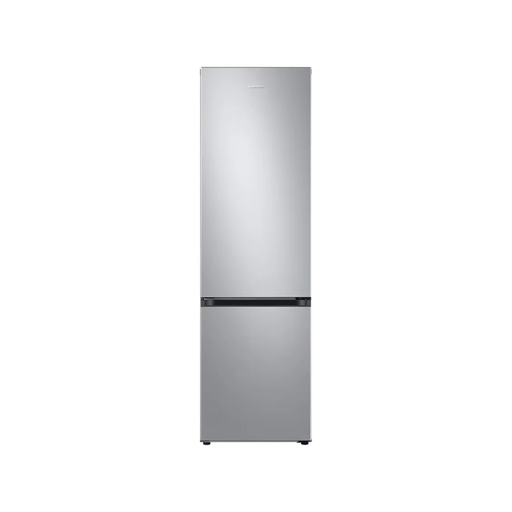 Image unavailable
Samsung RB38C604DSA, 390 L freestanding fridge-freezer, D rated
If you want to store fresh and frozen food in one freestanding appliance, compare how its 390 L capacity is divided with your storage habits. It has a D energy rating; before deciding where to put it, also check the dimensions and ventilation clearances in the manual.
View on Joybuy
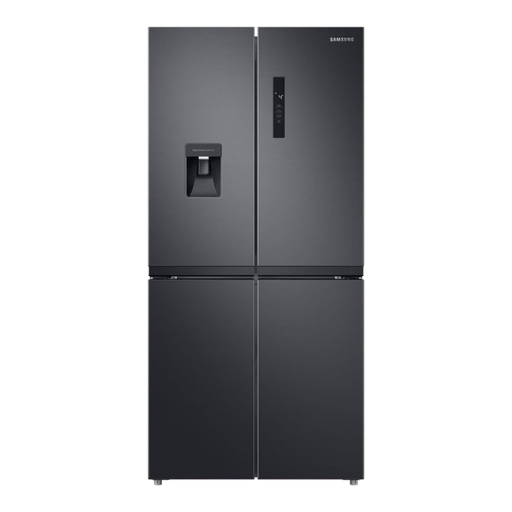 Image unavailable
Samsung RF48A401EB4, 488 L multi-door fridge, E rated, black
Compare its 488 L capacity with the amount of food you actually store, as well as the space available for a multi-door model. It has an E energy rating; check the manual for the permitted ambient temperature and required clearances.
View on Joybuy
 Image unavailable
AUCMA, 95 L convertible chest fridge-freezer, E rated
This 95 L chest model can be set to work as a fridge or freezer to suit your storage needs; it cannot replace two compartments that you can use at the same time. It has a seven-level thermostat and a removable basket. Before installing it in a cellar or garage, check the permitted ambient temperature range.
View on Joybuy
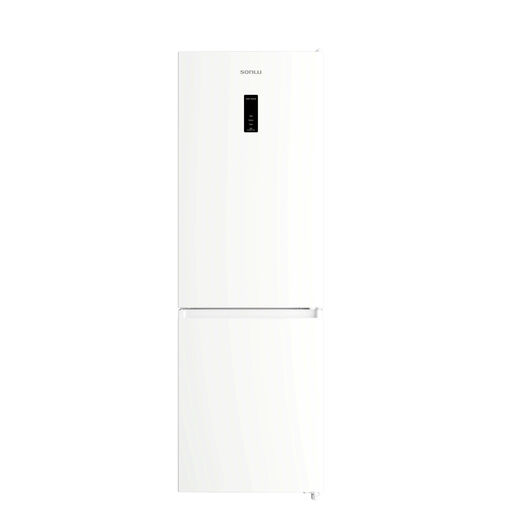 Image unavailable
Sonlu CD‑350RW, 310 L fridge-freezer, E rated
This fridge-freezer divides its 310 L capacity between 211 L of fridge space and 99 L of freezer space. Check that each compartment suits your usual shopping. It is listed as 60 cm wide; also check the height, depth, ventilation requirements and climate class for your chosen location.
View on Joybuy
 Image unavailable
Heinrich´s, 161 L No Frost upright freezer, C rated, stainless steel
This 161 L separate freezer is worth considering if you’d rather organise frozen food in drawers than in a chest freezer. The model name indicates a No Frost system and a C energy rating. Check its dimensions and the permitted ambient temperature, especially if it’s going in an unheated room.
View on Joybuy
Frequently asked questions
How do you compare the energy consumption of two refrigeration appliances?
First compare appliances of the same type with similar usable capacities, then check their A to G energy ratings and declared annual consumption in kWh. ADEME recommends using the energy label as a guide; a rating letter alone is not a reason to choose more capacity than you need.
What temperature should you aim for in your fridge?
Anses recommends keeping food between 0 and +4 °C at the coldest point in the fridge. After installation, check this spot with a thermometer and leave space for cold air to circulate around your food.
Can you put a freezer in an unheated garage?
Only if the model’s permitted ambient temperature range is suitable for the garage; check the product details and manual. Beko says that certain chest freezer models can operate at ambient temperatures down to −15 °C; this does not apply to other models.
How much space should you leave around an appliance for ventilation?
Follow the clearances specified in the manual for your chosen model, especially if it is integrated. Bosch’s installation guidance specifies at least 200 cm² of ventilation space behind and beneath the fridge; this is not a rule that applies to every brand.
What should you do with an old fridge or freezer in France?
Arrange for it to be collected through the electrical and electronic equipment waste scheme described by the Ministry for Ecological Transition, rather than putting it out with your household rubbish. When buying an appliance of the same type, ask the retailer about “one-for-one” take-back and collection from your address.


