
Livraison le jour même ou le lendemain

Qualité garantie

Débloquez vos offres de bienvenue: Livraison GRATUITE | Jusqu'à -80 % | 30 jours d'essai gratuits à JoyPlus
Téléchargez l'application
Buying a fridge freezer is not simply a matter of comparing capacity or price. In France, dimensions, energy consumption, noise levels and interior layout can turn an appealing appliance into a daily inconvenience. A narrow kitchen, a large family, a student studio flat or a garage intended for storing frozen food will all call for different choices.
An appliance advertised with a large capacity may conceal a rather limited freezer compartment, or vice versa. Always check the split between net fridge capacity and net freezer capacity. For a household that cooks regularly, separate drawers and adjustable shelves are often more practical than one large, completely open space.
A frost-free fridge, or one equipped with No Frost technology, limits ice build-up and generally reduces how often you need to defrost it manually. However, you still need to clean the seals, allow air to circulate properly and follow the installation instructions. A Low Frost or static model can also be a sensible choice if you are working with a tighter budget, provided you are happy to carry out periodic maintenance.
The European energy efficiency class should be considered alongside the annual consumption shown in kWh/year. At the same capacity, a large appliance may consume more than a compact model, even if their energy classes appear similar. Noise also deserves attention in a studio flat or open-plan kitchen. A noise level of 35 to 40 dB will generally be more comfortable day to day, but compare the figure shown on the technical specification rather than relying solely on the word ‘quiet’.
Measure the available width, height and depth, taking skirting boards, walls and door opening into account. Also allow the recommended clearance around the appliance to ensure adequate ventilation. American-style, multi-door and four-door models may require a considerable amount of clearance.
Also check whether the appliance will fit through the lift, stairwell and entrance doors. A width of 81.7 cm, common on some large-capacity American-style models, can be problematic in an older property.
A reversible door, adjustable feet or castors can also make installation easier in a small kitchen, office or storage room.
Drawers, door balconies, glass shelves and adjustable-temperature compartments determine how much of the advertised capacity you can really use. For a freezer, check the number of drawers, the freezing capacity expressed in kg/24 h and whether a fast-freeze function is included.
A stated freezing temperature of -18 °C or below is suitable for everyday frozen food storage. However, avoid placing bottled drinks in the freezer: as the liquid expands, it can cause the container to burst.
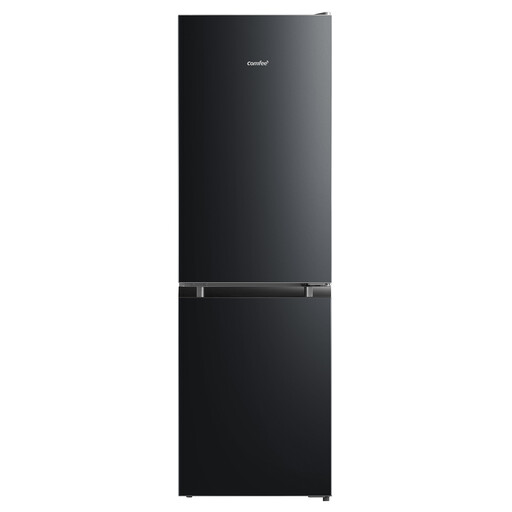
Why this choice suits this type of user : Its 115 l fridge compartment and 59 l freezer compartment cover the needs of a studio flat, office or small household, in a 47 × 51 × 150 cm format.
Low Frost technology limits ice build-up without making you pay for full No Frost functionality when it is not essential.
Three-level adjustable thermostat, LED lighting, reversible door and adjustable feet.

Why this choice suits this type of user : This three-door model provides 235 l of fridge space and 125 l of freezer space, with dedicated zones for organising a family’s varied shopping.
The capacity is broken down by compartment, while the Total No Frost Air Surround system means you do not have to buy a spacious appliance without automatic defrosting.
360 l, 35 dB(A), 271 kWh/year, inverter compressor, My Zone and Humidity Zone compartments, Wi-Fi connectivity.

Why this choice suits this type of user : This chest freezer is suitable for large quantities of stored food in a garage, utility room or professional space, when freezing is a higher priority than refrigeration.
Its storage basket and assisted opening help solve the classic problem with chest freezers, where smaller items can easily get lost.
140 l capacity, removable basket, castors, mechanical thermostat and front water drainage.
We have put together a comprehensive, real-time updated selection of products that meet these strict criteria, as well as European safety requirements.
Before switching it on, leave the appliance standing upright for the period specified by the manufacturer, often several hours after transport. Plug it into an earthed socket, without blocking the ventilation grilles. Wait until the temperature has stabilised before storing food inside.
To maintain its performance:
The energy efficiency of a domestic appliance also depends on where it is placed. Keep it away from a radiator, hot oven or area exposed directly to sunlight.
It depends on your shopping habits, how often you shop and how much space you have available. A couple may prefer a fridge freezer with a moderate capacity. A family that regularly freezes prepared meals or bulky food will generally be better off choosing a large appliance or a separate freezer.
The upright freezer makes organising food easier thanks to its drawers and generally takes up less floor space. The chest freezer offers a large horizontal storage area, making it particularly suitable for bulky supplies, but it requires more organisation to avoid stacking food where it cannot be easily seen.
Check the energy efficiency class and, above all, the annual consumption in kWh. Install the appliance in a properly ventilated room, maintain the recommended clearance, check the condition of the seals and avoid setting the temperature lower than necessary. To compare two models, consider their stated consumption, usable capacity and how frequently you expect to use them.