What should you compare?
First, choose a format that suits the food you store and the space you have. Then compare the compartments and energy label data of models that will fit your kitchen.
Fridge freezer
Worth considering: if you want more room for fresh food and a separate freezer, without immediately opting for a particularly wide appliance.
Check: the usable capacity in each section. The guide figure given by Que Choisir for a standard fridge freezer doesn’t reflect the layout of every model.
Multi-door
Worth considering: if big shops and food you want to store make several separate compartments useful.
Bear in mind: you’ll need to be able to open every door and drawer in your kitchen. Capacity and layout vary from model to model.
Side-by-side
Worth considering: if you regularly need plenty of fridge and freezer space and have a sufficiently large kitchen.
Check: the width, whether the packaged appliance will fit through your access route, and its annual energy consumption. Que Choisir highlights how much space this format takes up.
Single-door or compact
Worth considering: if space is very limited and you don’t store many frozen foods.
Limitation: a small freezer compartment won’t meet the same needs as a separate freezer if you’re increasing your stocks of both fresh and frozen food.
| Criterion | What to check | Who it matters to |
|---|
| Fresh and frozen capacity |
Compare the usable capacity of each compartment on the energy label or in EPREL, rather than looking at the total volume alone. |
I prepare meals to freeze while keeping fresh food for the week, so I need space for both. Around 40% of consumers would prioritise this balance. |
| Capacity and storage |
Check the capacity of each section and the layout of the model’s doors, drawers and shelves. |
When the household shop takes up a lot of room, I want to store food without making everyday items hard to reach. This layout would be the main priority for around 30% of consumers. |
| Installation and noise |
Measure the access route with the packaging on and check the required clearances. Look at the dB rating and noise class on the label. |
In an open-plan kitchen or one that’s difficult to access, I need to be able to install the appliance and live with its noise. Around 20% of consumers would put this compatibility first. |
| Space and energy consumption |
Check the dimensions against the available space, and compare kWh/year with models that offer the usable capacity you need. |
If my kitchen is small, I want extra storage without using up all the available space. This would be the main consideration for around 10% of consumers. |
Fridge freezers on Joybuy
This selection includes fridge freezers, a multi-door model and larger appliances. Compare their compartments and make sure each format will fit the space you actually have at home.
 Image unavailable
Candy CFQQ5T817EPS, 467 L multi-door fridge freezer
Worth considering if you want to spread a big shop across several compartments. This four-door model has a stated capacity of 467 L, Total No Frost and an E energy class. Check the capacity of each section, as well as the access route and door clearance.
View on Joybuy
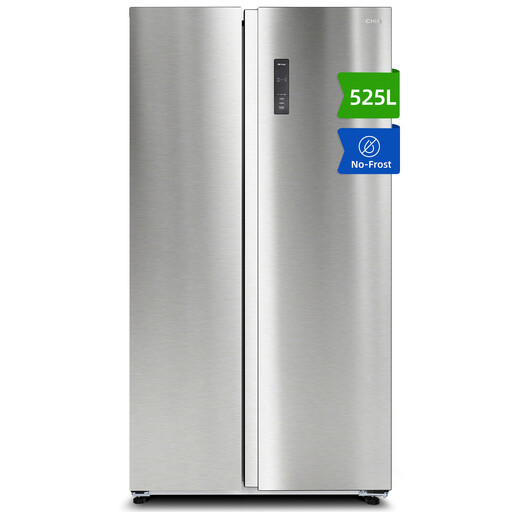 Image unavailable
CHiQ JR525WSE, 525 L side-by-side fridge freezer
Consider this if you need plenty of space for fresh and frozen food and have a suitable place for it. The listing states 333 L for the fridge, 192 L for the freezer, 37 dB, No Frost and an E energy class. Check the model’s dimensions and energy consumption data before choosing.
View on Joybuy
 Image unavailable
Bosch KGN33NLEB, 282 L fridge freezer
This bottom-freezer fridge freezer could suit a household that wants separate spaces for fresh and frozen food without immediately choosing a particularly large format. It has a stated capacity of 282 L and an E energy class. Compare the capacity of each compartment and check the noise data if your kitchen is open-plan.
View on Joybuy
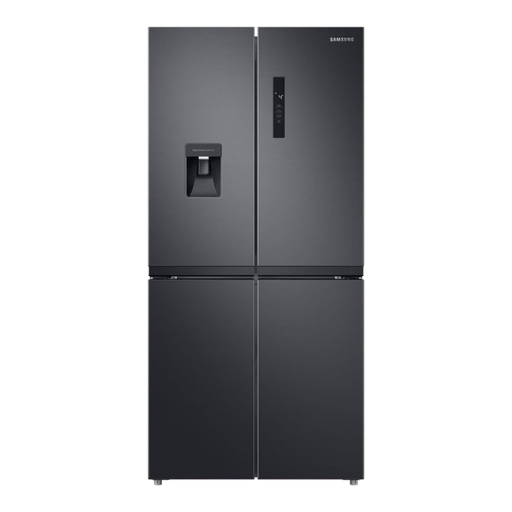 Image unavailable
Samsung RF48A401EB4, 488 L American-style fridge freezer
This format is suited to a household that regularly needs plenty of storage and has room for a wide appliance. The model has a stated capacity of 488 L and an E energy class. Before choosing it, check the fridge and freezer capacities, whether it will fit through the access route with the packaging on, and the installation requirements.
View on Joybuy
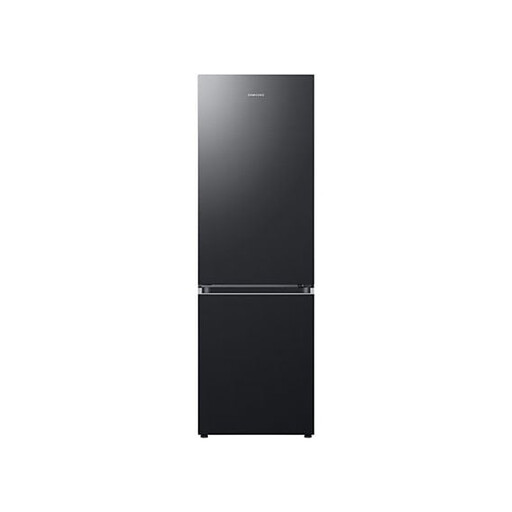 Image unavailable
Samsung RB34C704DB1, 344 L fridge freezer
Worth comparing if you’re looking for a higher-capacity fridge freezer with two separate compartments. The model has a stated capacity of 344 L and a D energy class. Check its depth, the capacity of each section, kWh/year and noise level for your chosen location.
View on Joybuy
Frequently asked questions
What should I compare on a fridge freezer’s energy label?
First compare the fridge and freezer capacities, then look at kWh/year and noise emissions. The European Commission says the label for the appliances concerned also shows their energy efficiency class. You can use EPREL to look up detailed information about a specific model.
Are decibels enough to choose an appliance for an open-plan kitchen?
No. The dB rating and noise class can help you narrow down your options, but they don’t predict on their own how disruptive an appliance will feel. Que Choisir points out that the type of noise matters too. Consider where you plan to put the appliance and, if available, look for independent tests that assess perceived noise.
What should I measure before ordering a large fridge?
Measure the delivery route using the dimensions of the packaged appliance, then check the space where it will go. Also check how much room you’ll need to open the doors and drawers, as well as the ventilation clearances specified in the model’s manual.
What should I know about my old appliance and the warranty in France?
Before delivery, ask the seller how to arrange for your old fridge to be taken away. The French Ministry for Ecological Transition explains that a “one-for-one” take-back scheme applies when you buy an appliance of the same type, subject to the relevant conditions. For a new, second-hand or refurbished product bought by an individual from a professional seller, the Ministry of the Economy points out that the statutory legal guarantee of conformity is compulsory. It is separate from any commercial guarantees offered by the seller.


