What should you check before choosing?
First work out how much space you need for fresh and frozen food. Then compare the labels of appliances that meet those needs.
| Criteria | What to check | My needs |
|---|
| Usable capacity |
Check the fridge and freezer capacities separately, in litres. Compare them with how often you shop and the size of the containers you use. |
I mostly store fresh food, so a fridge on its own may be suitable. If I regularly store frozen food, I need a separate freezer compartment with enough space. |
| Electricity |
According to the European Commission, the label shows the energy efficiency class, annual energy consumption and capacities. Compare the kWh/year of appliances with a similar format and capacity that meet the same needs. |
I want to keep the energy consumption down on an appliance that runs all year, without choosing a model that’s too small for my food. |
| Installation |
Measure the available height, width and depth, as well as the route to the installation space. Check the manual for ventilation requirements and, for built-in models, the fixing instructions. |
I need an appliance that fits in my kitchen and whose doors can still be used once it’s installed. |
| Noise |
Check the noise level shown on the label and compare it with other appliances that suit your capacity needs. |
In an open-plan kitchen, noise matters just as much as the space an appliance takes up. |
| Maintenance and features |
Check the defrosting system and the features you’ll actually use, then look again at the capacity and kWh/year of the model you’ve chosen. |
If manual defrosting would be a hassle, I can consider No Frost. A door alarm or different storage zones are only useful if they suit my habits. |
Which brands and ranges should you consider?
These examples show different configurations to compare model by model; a feature found on one model won’t necessarily apply to the whole brand.
Bosch
The brand offers freestanding fridge freezers, among other options, for households looking for two separate storage compartments.
- Bosch lists 330 L of fridge space, 108 L of freezer space and a noise level of 38 dB for the KGN493WDA.
- These figures apply to the KGN493WDA. Check the label of the model you’re considering.
Whirlpool
Its fridge freezers include models with fan-assisted cooling, which are worth considering based on your storage and maintenance needs.
- Whirlpool lists a total capacity of 355 L, a D energy efficiency class and a noise level of 35 dB for the WHK25404XBR5E.
- The total capacity alone doesn’t tell you how much space is available in each compartment.
Beko
Its built-in models may suit kitchens designed for this type of installation.
- Beko describes separate air circulation between the fridge and freezer in the B3BCNA294HS.
- Before choosing this model, check that its dimensions and fixing system suit your kitchen, then check its energy label.
Which appliances can you compare on Joybuy?
This selection includes four fridge freezers and one separate freezer. The freezer is for households that already have a fridge and need more room for frozen food.
 Image unavailable
Hisense RB3B250SAWC, 252 L built-in fridge freezer
Worth considering if your kitchen is designed for a built-in fridge freezer. The model name indicates No Frost, a C energy efficiency class and an Inverter compressor. Before buying, check the niche dimensions and that the fixing system is compatible.
View on Joybuy
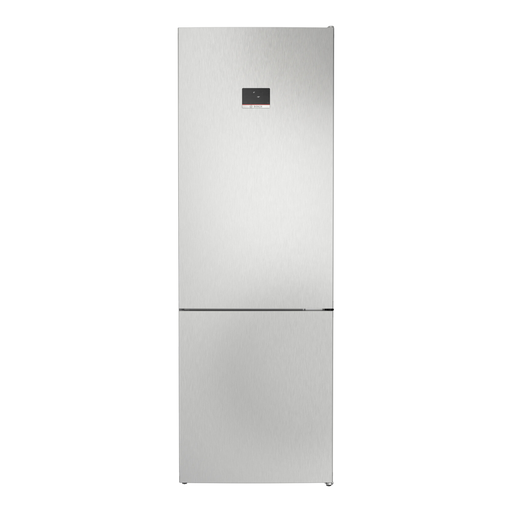 Image unavailable
Bosch KGN497LDF, 440 L fridge freezer, class D
Compare its total capacity of 440 L with the amount of fresh and frozen food you usually keep. Check the capacity of each compartment, annual energy consumption and the space needed for installation.
View on Joybuy
 Image unavailable
Haier HTW5618ENMG, 360 L three-door fridge freezer
Consider whether the three-door design suits the way you store food and the space available. The model name indicates Total No Frost, an E energy efficiency class, Wi-Fi and My Zone. Compare the separate compartment capacities and kWh/year with other fridge freezers suited to your household.
View on Joybuy
 Image unavailable
CHiQ JR263LGE, 262 L Low Frost fridge freezer
Its stated width of 54 cm could be useful if space is tight, provided you allow for the clearances needed for installation. The model is 176 cm tall and is labelled Low Frost; check the defrosting requirements rather than assuming it works like a No Frost model.
View on Joybuy
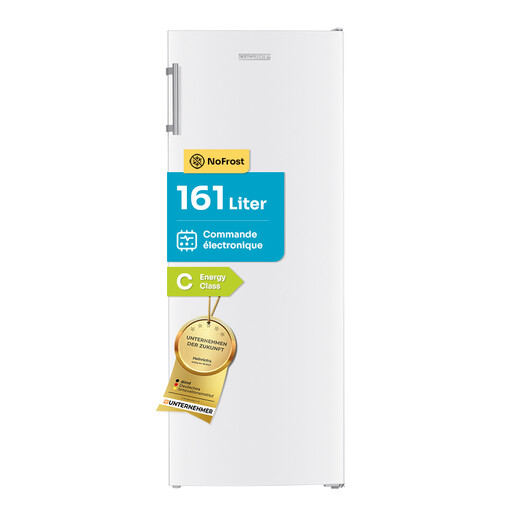 Image unavailable
Heinrich´s, 161 L No Frost upright freezer
This standalone freezer is worth considering if you already have a fridge and need extra storage space over the long term. Its name indicates a C energy efficiency class, drawers, an alarm and a reversible door hinge. Check its dimensions and annual energy consumption before deciding where to put it.
View on Joybuy
Frequently asked questions
How do you compare two fridges with different capacities?
Start by working out how much space you need for fresh and frozen food. Then compare appliances that meet those same needs. According to the European Commission, their labels show the energy efficiency class, annual energy consumption, capacity and noise level. An appliance with a lower total kWh/year that is much smaller may not offer enough storage for your needs.
What capacity does one person need?
UFC-Que Choisir suggests 100 to 150 L for one person, plus 50 L for each additional person. Adjust this according to how often you shop and the containers you use. If you buy frozen food, check the freezer compartment capacity too.
Does No Frost always reduce energy consumption?
No. Choose this feature first and foremost if you want to avoid manual defrosting. To assess energy consumption, check the kWh/year on the label of the No Frost model and compare it with appliances of a similar size and capacity.
How can you keep energy consumption down after installation?
Follow the clearances and settings in the manual, and keep the appliance away from heat sources. UFC-Que Choisir recommends making sure air can circulate around refrigeration appliances. You should also look after the seals and defrost models that need it.
How can you arrange for an old fridge to be taken away?
When you buy an equivalent appliance, ecosystem says the retailer must offer a free “one-for-one” take-back service. Check the practical arrangements when you place your order, especially if your new appliance is being delivered.


