Priorities before buying
Start by working out how much space you need for fresh and frozen food, then compare the energy-label information and installation requirements of appliances with similar capacities.
| Priority |
What to check |
Your needs |
| Separate capacities |
Compare the usable litres of the fridge and freezer. Look at how the space is divided, not just the total capacity; according to UFC-Que Choisir, a standard fridge freezer is often split into roughly two-thirds for fresh food and one-third for frozen food. |
I want to store my fresh shopping until the next shop without running out of space for frozen food. If frozen food makes up a large part of my basket, freezer capacity should guide my choice. |
| Ongoing energy use |
Compare the kWh/year shown on the energy label between appliances that meet the same storage needs. Read the A to G rating alongside this figure, and assess additional features according to how useful they are. |
I want suitable capacity without running an oversized appliance continuously. ADEME points out that excessive size and unnecessary extra features can increase energy consumption. |
| Noise |
Compare airborne noise emissions in dB(A) and the noise class between models with similar capacities. The European energy label displays this information; UFC-Que Choisir uses below 40 dB(A) as a guide for the quietest appliances. |
In an open-plan kitchen or one close to a bedroom, I want to minimise everyday background noise. The stated noise level matters more than design alone. |
| Maintenance and repairs |
Check the reference number and how replacement parts can be ordered. For appliances covered by the relevant regulations, European rules provide in particular for handles, hinges, trays and baskets to be available for at least seven years after the last unit is placed on the market, and door seals for at least ten years. |
I want to be able to replace everyday parts if they wear out. I also check the defrosting system and the maintenance instructions for the model I choose. |
Joybuy fridge options
These Joybuy options mainly cover fridge freezers for shopping that needs to last several days, with a side-by-side option for greater fresh and frozen food storage.
 Image unavailable
CHiQ JR263LGE 262 L Low Frost fridge freezer
A fridge freezer for splitting your weekly shop between fresh and frozen food, provided 75 L of freezer space is sufficient.
187 L fridge capacity, 75 L 4-star freezer capacity, 215 kWh/year, 39 dB(A), 54 cm width and reversible door.
The Low Frost system requires manual defrosting, stated to be needed approximately once or twice a year. The appliance is designed for an ambient temperature of 16 °C to 38 °C.
Joybuy
 Image unavailable
CHiQ JR227LSE 227 L Low Frost fridge freezer
A compact option for weekly shopping with a moderate amount of frozen food.
153 L fridge capacity, 74 L 4-star freezer capacity, stated width of 54 cm, reversible door and adjustable feet.
Check the kWh/year, full dimensions, installation clearances and defrosting requirements before buying.
Joybuy
 Image unavailable
CHiQ JR525WSE 525 L side-by-side
A large format for bulk shopping and substantial frozen food storage, provided the access routes and available space are suitable.
333 L fridge capacity, 192 L freezer capacity, No Frost, stated noise level of 37 dB and touch controls.
Check the dimensions, weight, clearances, access to your home and annual consumption in kWh before choosing this format.
Joybuy
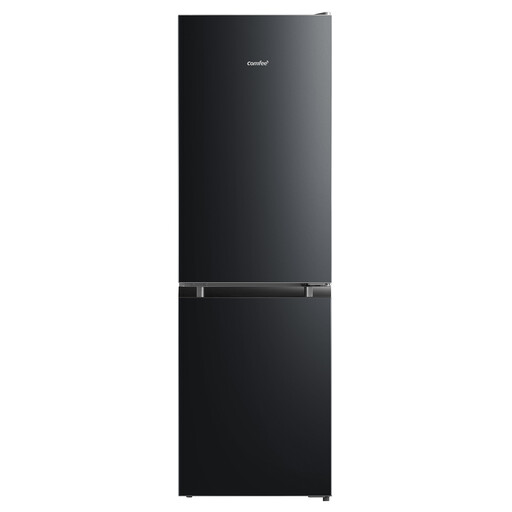 Image unavailable
Comfee by Midea RCB230BL2EU(E) 174 L
A compact format for a small household wanting separate fresh and frozen food compartments.
115 L fridge capacity, 59 L 4-star freezer capacity, stated dimensions of 470 × 511 × 1500 mm and reversible door.
The 59 L freezer capacity may be limited for substantial frozen food storage. Check the kWh/year, stated noise level and defrosting requirements.
Joybuy
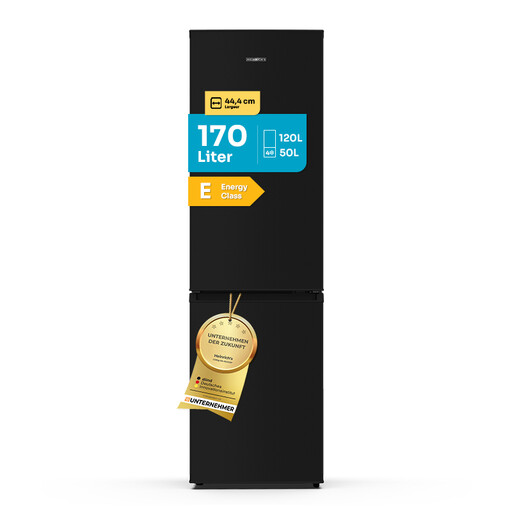 Image unavailable
Heinrichs 170 L fridge freezer
A solution for a small household needing separate compartments for a few days’ shopping.
120 L fridge capacity, 50 L 4-star freezer capacity, three freezer drawers and stated noise level of 40 dB.
The 50 L freezer capacity may not be enough for a large weekly stock of frozen food. Check the kWh/year and installation dimensions before buying.
Joybuy
Frequently asked questions
Which figures on the energy label should you compare?
First compare the separate usable capacities of the fridge and freezer, then the annual consumption in kWh and noise emissions alongside their respective classes. The European Commission states that the energy scale has run from A to G since 1 March 2021; the letter alone is not enough to compare appliances with different capacities.
Is a freezer compartment enough for a week’s frozen food?
Not necessarily. UFC-Que Choisir recommends considering whether you eat a lot of frozen food, as a simple freezer compartment may not be sufficient. Compare the freezer compartment capacity with your usual stock before choosing a table-top model or a fridge-only appliance.
How should you store food after shopping?
Put chilled products away promptly and prioritise the temperature stated on their packaging. The DGCCRF reminds consumers that maintaining the cold chain limits the spread of microbes and that storage temperatures vary according to the food.
Will spare parts remain available for a new fridge?
For appliances covered by European regulations, certain parts must remain available: handles, hinges, trays and baskets for at least seven years after the last unit of the model is placed on the market, and door seals for at least ten years. Check the exact reference number and how the parts can be ordered.
What should you do with your old fridge in France?
Do not put it out with household rubbish. The French ministry responsible for ecology states that an electrical appliance can be taken to a collection point or recycling centre, returned to a retailer or given to a social and solidarity economy organisation; when buying an appliance of the same type, a one-for-one take-back service is available.


