You need to work around an existing kitchen
Before choosing an appliance, check whether the space is suitable for a freestanding model or has a housing unit for a built-in one. Allow for ventilation and enough room to open the doors.


Start by measuring the space, checking how the doors open and allowing for ventilation. A freestanding fridge freezer gives you more flexibility over where to place it, while a built-in model needs a compatible housing unit and cabinet. If you need more freezer space and have room for two appliances, consider buying a fridge and freezer separately. Then compare the capacity of each compartment, the energy label, noise level and cooling system across models that fit your available space.
Before choosing an appliance, check whether the space is suitable for a freestanding model or has a housing unit for a built-in one. Allow for ventilation and enough room to open the doors.
The number of people in your household, how often you shop and how much space you need for frozen food matter more than the total capacity alone. UFC-Que Choisir offers capacity guidelines that you can adapt to your habits.
Food storage, frost build-up, noise and annual energy use are all worth considering together when choosing an appliance you’ll use every day.
First rule out any designs that won’t fit your kitchen. Then compare the capacities and practical features of the models that can actually be installed there.
Worth considering: if you don’t have a suitable housing unit or want more flexibility to change your kitchen layout.
Bear in mind: it will be visible in your kitchen, and you’ll need to leave the ventilation clearances specified for the model.
Worth considering: if your kitchen has a housing unit, door panel and fitting system that are compatible.
Bear in mind: your options are limited to appliances that fit the cabinet and its ventilation at the top and bottom, as described by Electrolux, for example.
Worth considering: if you need more freezer space and have room for two appliances.
Bear in mind: you’ll need space and connections for two appliances, and you’ll have to compare them separately.
| What to consider | What to check | Who is it for? |
|---|---|---|
| Installation and ventilation | Measure the space and access route, then check that the doors can open and that there’s enough clearance as stated in the manual. For a built-in model, also check the housing unit and how the door panel is fitted. | If your kitchen is already fitted, you’ll need to install the appliance without blocking a door or restricting ventilation. Around 36% of consumers put this compatibility first. |
| Storage capacity | Compare the usable capacity of the fridge and freezer separately. UFC-Que Choisir suggests 100 to 150 L as a starting point for one person, plus 50 L for each additional person. Adjust this to suit your shopping habits. | A household that regularly stores frozen food may need more freezer space than a similarly sized household that rarely does. Around 29% of consumers prioritise capacity that suits their shopping habits. |
| Cooling and maintenance | Check the model’s cooling system and defrosting instructions. For food that needs careful handling, Anses recommends a temperature of 0 °C to 4 °C in the coldest part of the fridge. | If food storage and frost management are part of your everyday routine, how the compartments work matters. Around 21% of consumers prioritise food preservation and maintenance. |
| Energy use and noise | For appliances of a similar size and capacity, compare the A to G rating, kWh/year and noise level in dB(A) shown on the European energy label. | Noise can influence your choice if your kitchen is open-plan or close to a living area, as can the energy use of an appliance that runs continuously. Around 14% of consumers put these practical considerations first. |
Height alone won’t tell you whether the housing unit, hinges, door panel and cabinet ventilation are compatible.
Measure all three dimensions of the housing unit, check the door fitting system and compare the cabinet with the instructions for the model you’re considering.
Air must be able to circulate as specified for the appliance. Beko recommends leaving at least 5 cm at the sides and back of its freestanding fridges. This guideline doesn’t automatically apply to other models.
Check the exact clearances specified in the manual before confirming the dimensions of the space.
Two appliances with a similar total capacity may allocate space differently between fresh and frozen food.
Write down how much space you need in each compartment, then adapt UFC-Que Choisir’s capacity guidelines to the size of your household and how often you shop.
The rating alone doesn’t tell you the annual energy use, capacity or noise level. Comparisons are more useful between appliances of a similar size and capacity.
Look at the A to G rating, kWh/year, capacity of each compartment and dB(A) shown on the European energy label.
These ranges give you a starting point for comparing installation options and layouts. Always check compatibility for the specific model you’re considering.
A range of freestanding fridges to explore if dimensions and ventilation will determine where you can install your appliance.
Built-in fridges in different heights, which you can compare with the dimensions of your existing kitchen cabinet.
Built-in models to consider if your kitchen already has a cabinet designed to house the appliance.
Freestanding and built-in fridge freezers that let you compare different kitchen layouts.
This selection includes freestanding fridge freezers for different storage needs, as well as a built-in model for a fitted kitchen. Compare each appliance with the space you have and the capacity you need.
 Image unavailable
This freestanding fridge freezer is worth considering if you want to compare a stated capacity of 235 L for the fridge and 125 L for the freezer separately.
The product details list Total No Frost, an E rating, 271 kWh/year and 35 dB(A). Before choosing a spot for it, check the manual for ventilation clearances and the space needed to open the doors fully.
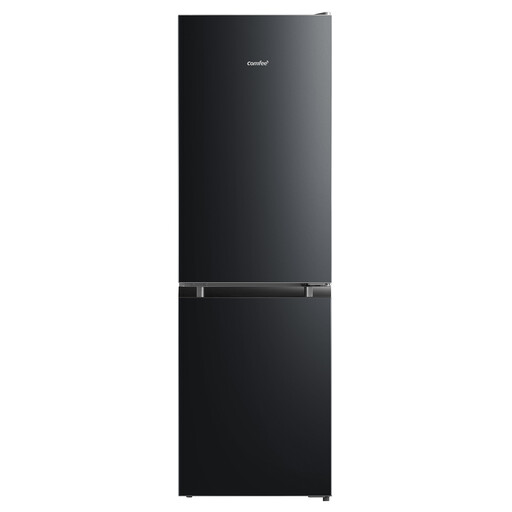 Image unavailable
At 50 × 55 × 150 cm according to its product details, this freestanding fridge freezer could suit a smaller space. Check that its capacity will also meet your shopping needs.
The stated capacities are 115 L for the fridge and 59 L for the freezer. The model is listed with Low Frost and a reversible door. Before comparing it with other appliances, check the ventilation clearances, kWh/year and stated noise level.
 Image unavailable
This freestanding fridge freezer is worth considering if you’re looking for stated capacities of 311 L for fresh food and 156 L for frozen food, provided you have enough space for it.
The product details list Total No Frost, an E rating, 290 kWh/year and 35 dB(A). Measure the access route and installation space, check that the doors can open, then confirm the required clearances in the manual.
 Image unavailable
This freestanding model lets you compare its stated capacity of 193 L for the fridge and 89 L for the freezer with your needs for each compartment.
The product details list an E rating, 228 kWh/year and NoFrost for the freezer. Check the installation clearances in the manual, and follow the manufacturer’s instructions for the flammable R600a refrigerant.
 Image unavailable
This sliding-door fridge freezer is worth considering for a fitted kitchen, but only if the housing unit, cabinet ventilation and door panel fitting are compatible.
The product details state 186 L for the fridge, 62 L for the freezer, an E rating and 37 dB(A). The listed total capacity doesn’t match the capacities shown for each compartment, so confirm the exact capacity before choosing.
Not without checking your kitchen. A built-in model must be compatible with the housing unit, door fitting and cabinet ventilation. Electrolux describes an air inlet at the bottom and an outlet at the top. Compare the model’s requirements with your existing space and door panel.
Anses recommends between 0 °C and 4 °C in the coldest part of the fridge. Check the temperature if the doors are opened frequently or the contents change, rather than relying only on the thermostat setting.
The European energy label for household fridges shows a rating from A to G, annual energy use in kWh, capacity and noise level, among other details. Compare these figures across appliances of a similar size and capacity. According to the European Commission, you can scan the label’s QR code to view the model’s entry in EPREL.
No. If you buy from a professional seller in France, an optional commercial warranty doesn’t replace the statutory guarantee of conformity. The French Ministry of the Economy states that you have two years to claim under it for new and second-hand goods. Keep your receipt and check the terms of any optional extended warranty separately.
Depending on your circumstances, local support may be available. The Caf des Hauts-de-Seine offers, subject to conditions, help with household equipment that may cover a fridge, freezer or fridge freezer. Contact your local Caf to find out what support may be available for your home.