
Livraison le jour même ou le lendemain

Qualité garantie

Débloquez vos offres de bienvenue: Livraison GRATUITE | Jusqu'à -80 % | 30 jours d'essai gratuits à JoyPlus
Téléchargez l'application
Choosing a new freestanding fridge-freezer can quickly become a headache. Between the marketing jargon and the lengthy spec sheets, it's hard to know where to start. As product experts at Joybuy, our mission is to clear the path for you. The goal? Not to steer you towards the most expensive model, but towards the one that will genuinely meet your needs and your budget. For a purchase you won't regret and satisfaction that lasts.
Before we present our top picks, let's scrutinise the three classic mistakes many buyers make.
You don't need to dissect every detail to make the right choice. Focus on these three key criteria; they are enough to determine if a model is right for you.
Capacity is measured in litres (L). Plan for 100 to 150?L for a single person, then add 50?L for each additional person. A couple will often be fine with a small fridge-freezer of 200-250?L, while a family of four should aim for 300?L and up.
Most importantly, get out your tape measure! Check the external dimensions (height, width, depth) and allow for 5 to 10?cm of clearance at the back and on the sides so the appliance can breathe. This is crucial for a freestanding model.
This is a decisive factor for your comfort and the appliance's maintenance.
Flexibility is key, especially in tight spaces.
The "best" product doesn't exist. There is only the product that is right for you. Here is a selection of Comfee fridge-freezer models tailored to specific needs.
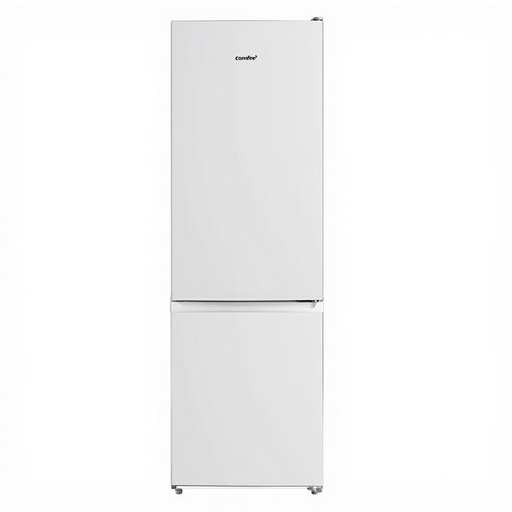
Why it's perfect for you: With its generous 310 L capacity (224 L for the fridge, 86 L for the freezer), it easily covers the needs of a small family or a flatshare juggling fresh and frozen foods.
Thanks to its No Frost technology, the chore of defrosting becomes a distant memory. A real plus for households with busy schedules who have no time to waste.
An XXL capacity and virtually zero maintenance thanks to No Frost. Its E-class rating ensures controlled energy consumption for its size (235 kWh/year).
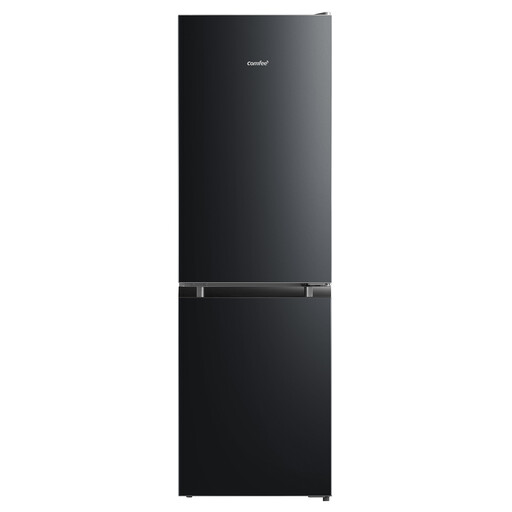
Why it's perfect for you: Perfect for a single person or a couple. Its 174 L capacity is tailored for small spaces, and its black refrigerator finish adds a touch of elegance without breaking the bank.
It offers the smart compromise of Low Frost technology. The result: a more accessible price than a No Frost model, with the chore of defrosting needed far less often.
Its compact, modern design, but especially its installation flexibility thanks to the reversible door and adjustable feet. It fits anywhere, even in the most awkward kitchens.
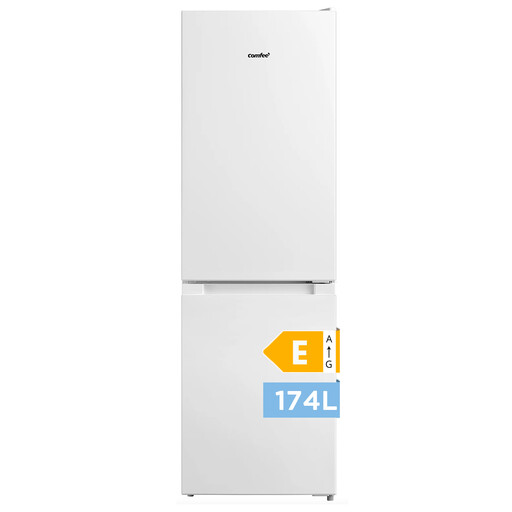
Why it's perfect for you: Its superpower? Silence. If your kitchen opens into your living room or you live in a studio, this is the ideal roommate: it knows how to go unnoticed.
No more marketing ambiguity about "silence." This model sets the record straight with a clear, objective figure: 39 dB. This guarantees a truly silent refrigerator, not just an empty promise.
Nearly silent operation and a high-performance 4-star freezer (down to -24 °C), perfect for long-term storage. The Low Frost technology ensures an excellent performance-to-price ratio.
Explore our full selection of refrigerators that tick all the right boxes: performance, controlled budget, and compliance with European standards.
The average lifespan of a fridge-freezer is 10 to 15 years. Of course, this longevity depends on the quality of the appliance, your usage, and its maintenance (regularly cleaning the rear coils, defrosting if necessary, etc.).
Not necessarily. The E class on the new label (since 2021) often corresponds to the old A+ or A++ classes. For an entry-level or mid-range appliance, this is therefore a very respectable energy performance. The most important thing is to check the annual consumption in kWh on the label to calculate the real running cost. For example, an appliance consuming 235?kWh/year will cost you around ?58 per year (based on a kWh price of ?0.25).
Installation is simple, but a few rules must be followed. Place the appliance on a flat, stable floor. Leave a space of at least 5?cm on the sides and at the back for air to circulate and the motor to breathe. Avoid placing it next to a heat source (oven, radiator). Finally, before plugging it in, wait a few hours (refer to the manual) for the refrigerant fluids to settle, especially if it was transported horizontally.