Households with an ageing or broken fridge
Keeping food fresh is still the priority, but a breakdown alone doesn’t tell you whether to repair or replace your fridge. A diagnosis and quote will help you weigh up your options before buying.


If you mainly store fresh food, consider a single-door fridge. If frozen food is a regular part of your shop, compare the separate capacities of fridge-freezers. A separate freezer is better suited to extra storage, but you’ll need space for another appliance and to factor in its energy use. Before replacing a broken fridge, ask for a diagnosis if a repair seems possible, then compare models that suit your needs by checking their capacities and stated annual energy consumption.
Keeping food fresh is still the priority, but a breakdown alone doesn’t tell you whether to repair or replace your fridge. A diagnosis and quote will help you weigh up your options before buying.
A fridge with plenty of chilled storage, a fridge-freezer or a separate freezer won’t suit everyone in the same way. The usable capacity of each compartment, shown on the EU energy label according to the European Commission, can help you decide.
Fridges and freezers run continuously, the ADEME notes. Compare the stated kWh per year for appliances with similar configurations and capacities, rather than judging energy use by size or energy class alone.
First decide how much space you need for fresh and frozen food. Then check the installation requirements and the information on the chosen model’s energy label.
Best for: Mainly fresh food, particularly if you already have a separate freezer.
Keep in mind: Check whether your chosen model has a freezer compartment. Without one, it won’t meet your needs for frozen food.
Best for: Storing fresh and frozen food in one appliance.
Keep in mind: Two fridge-freezers with the same total capacity may allocate space differently between their compartments.
Best for: A supply of frozen food that consistently exceeds the capacity of the fridge-freezer you’re considering.
Keep in mind: You’ll need room and power for a second appliance, which also runs continuously, according to the ADEME.
| What to consider | What to check | Think about your needs |
|---|---|---|
| Usable capacity | Compare the fridge and freezer capacities in litres separately, as shown on the EU energy label, then check the external dimensions. | I mainly store fresh food, so fridge capacity matters more to me than the total capacity shown. |
| Energy use | The European Commission says the energy label shows the energy class and consumption. Compare the kWh per year for models with similar configurations and capacities. | My appliance will be on all the time, so I want to know the stated consumption of the exact model, not just its energy class letter. |
| Installation and noise | Measure the space, access routes and room needed to open the door; check the manual for clearance requirements. Also check the noise level on the energy label. | If my kitchen is small or open-plan, the appliance’s size and noise level could influence my choice. |
| Food storage | Check the temperature settings and whether you can identify the coldest area. Anses recommends keeping an eye on the temperature there, which should be 4 °C, and avoiding overfilling the fridge. | I need to be able to store perishable food in the coldest area while leaving room for air to circulate. |
| Repair or replace | If a repair seems possible, ask for a diagnosis and quote. Then compare the result with any limitations of your current appliance in terms of capacity, noise or energy use. | Before buying, I want to know whether the fault can be repaired and whether my fridge still meets my needs. |
A fridge-freezer may have a decent overall capacity but too little room in the compartment you use most.
Think about what you store during a typical week, then compare the usable capacity in litres for fresh and frozen food separately.
The energy class alone doesn’t tell you the model’s annual consumption. The European Commission says the label also shows kWh and capacities.
Check the kWh per year on the label and compare models with similar configurations and capacities. You can also look up the model’s details in EPREL.
A breakdown alone won’t tell you whether a repair will provide a lasting solution, or whether your current appliance’s features still meet your needs.
Ask for a diagnosis and quote before comparing this option with a new appliance suited to your needs. Check with a certified repairer whether the proposed repair may qualify for the Repair Bonus promoted by ADEME.
An appliance may fit into the space but still get in the way when you open the doors, or lack the clearance specified in the manual. Once installed, you’ll also need to organise your food without overfilling it.
Measure the space and access routes, check the door opening direction and required clearances, then monitor the temperature in the coldest area as recommended by Anses.
Bosch offers freestanding and integrated fridge-freezers, among other appliances. For the KGV36VLEAS, Bosch Électroménager France lists 214 l of fridge capacity and 94 l of freezer capacity.
Liebherr France offers fridges as well as fridge-freezers with a separate freezer compartment.
Beko France offers fridge-freezers. The brand describes AeroFlow as a system designed to distribute air more evenly inside certain models.
These appliances combine fridge and freezer space. Their capacity splits and formats vary, so first choose one that suits your storage needs and available space, then check its energy label.
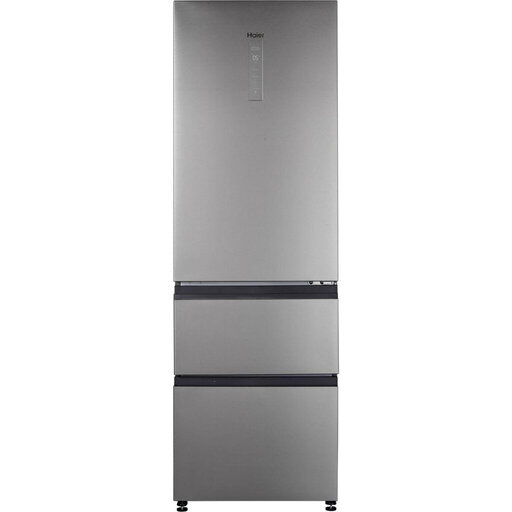 Image unavailable
For keeping fresh food and frozen food separate in one appliance, the product information lists 235 L of fridge capacity and 125 L of freezer capacity. It states 271 kWh/year and energy class E; check these figures on the exact model’s energy label. The listed dimensions are 185 × 59,5 × 66,7 cm; also check the clearance requirements in the manual.
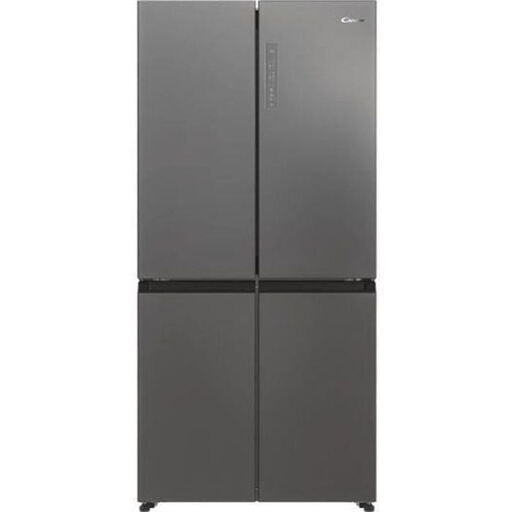 Image unavailable
For storage split between two large compartments, the product information lists 311 L of fridge capacity and 156 L of freezer capacity, along with a Total No Frost system. It states 290 kWh/year and energy class E; check these figures on the exact model’s energy label. The appliance measures 181,5 × 83,3 × 65 cm according to the product information. Check access routes, clearances and door opening space; the doors are listed as non-reversible.
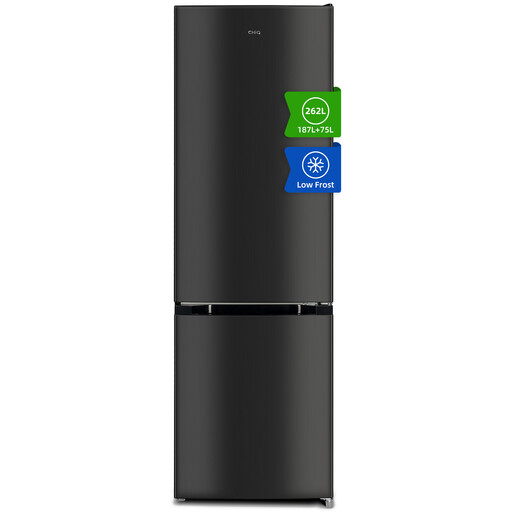 Image unavailable
If space is limited, this model measures 176 × 54 × 55 cm according to its product information. Its capacity is split between 187 L of fridge space and 75 L of freezer space. It states 215 kWh/year and energy class E; check the consumption on the exact model’s energy label. The freezer needs to be defrosted manually. The product information lists a minimum ambient temperature of 16 °C and says the appliance isn’t suitable for a garage or outbuilding.
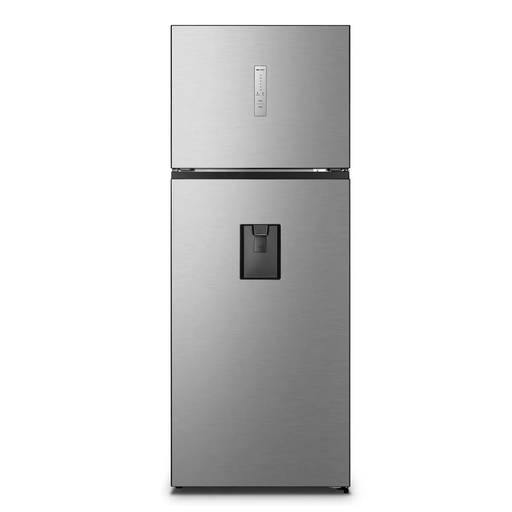 Image unavailable
If you need more space for fresh food, the product information lists 366 L of fridge capacity and 101 L of freezer capacity. It states 254 kWh/year and energy class E; check these figures on the exact model’s energy label. The listed dimensions are 704 × 1850 × 686 mm. Check delivery access, clearance and the required door opening direction; the product information specifies a right-hand hinge.
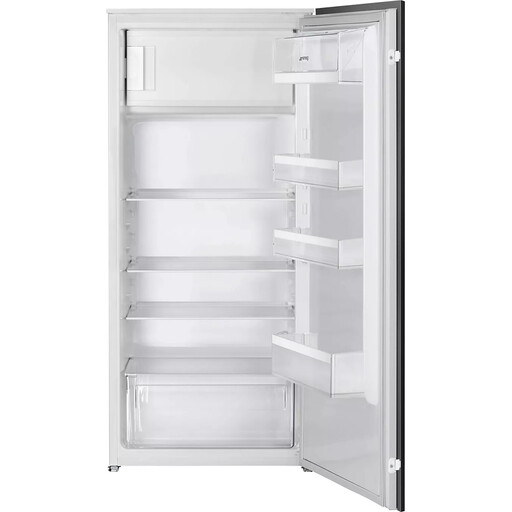 Image unavailable
This format is designed for an integrated installation with storage mainly for fresh food. The product information lists 174 L of fridge capacity and a 14 L freezer compartment that needs to be defrosted manually. It states 146 kWh/year and energy class E; check these figures on the exact model’s energy label. Check the specified 56 × 122,5 × 55 cm housing dimensions and note that the product information says the furniture door isn’t included.
Anses recommends monitoring the temperature in the coldest area, which should be 4 °C. Check the manual to find this area, store perishable food there and avoid overfilling the appliance so air can circulate.
Compare annual consumption in kWh, usable fridge and freezer capacities, and noise level. The European Commission says this information appears on the label alongside the energy class. When choosing between two appliances, consider their configuration and capacity, not just the letter.
Check its energy label and look up its details in EPREL, the European Commission’s database of models. Make sure the reference matches the exact appliance you’re considering before comparing energy use and capacity.
Yes. If a repair seems possible, a diagnosis and quote will help you compare it with replacing the appliance, while also taking into account its capacity and any other limitations. For some repairs to cooling appliances, check the conditions of the Repair Bonus promoted by ADEME with a certified repairer.