Households that store fresh and frozen food
If you use both compartments every day, compare their usable capacities separately. The total capacity of a fridge-freezer doesn’t tell you how much space each compartment has.


When choosing an appliance for your home, start by considering the space available and how much freezer capacity you really need. A fridge-freezer gives you both fresh and frozen storage if you regularly use both; a larder fridge or a model with a small freezer compartment may be enough if you rarely freeze food, though frozen storage will be limited or unavailable. Then compare the usable capacity, stated annual energy consumption, noise level and installation instructions for the specific model.
If you use both compartments every day, compare their usable capacities separately. The total capacity of a fridge-freezer doesn’t tell you how much space each compartment has.
A larder fridge or a model with a small freezer compartment may meet your limited freezing needs, provided you check how much usable space is actually available for frozen food.
If the appliance will be near a living area or in an alcove, check the stated noise level, dimensions and installation instructions for the model before ordering.
First work out how much space you need for fresh and frozen food, then check the energy consumption and where the appliance will go. ADEME points out that refrigeration appliances run continuously, and their size can affect energy consumption.
Worth considering: if you freeze very little or already have a separate freezer.
Keep in mind: check whether the model has a freezer compartment. Without one, you’ll need another appliance to store frozen food.
Worth considering: if you want to keep a few frozen items without setting aside as much freezer space as you would with a fridge-freezer.
Keep in mind: make sure the compartment’s capacity and intended use suit your habits.
Worth considering: if you regularly store fresh and frozen food in the same appliance.
Keep in mind: choose the balance of fridge and freezer space to suit your shopping habits, rather than looking at the total capacity alone.
| Factor | What to check | What matters to shoppers |
|---|---|---|
| Capacity and size | Compare the usable fridge and freezer capacities, then check the dimensions against the space available. | When space is limited, I want to store my usual shopping without taking up more room in the kitchen than necessary; around 31% of consumers would make the right capacity and dimensions their priority. |
| Energy consumption | Check the stated annual energy consumption and energy rating of the exact model, comparing appliances of a similar format and capacity. | For an appliance that runs all the time, I check its energy label before choosing extra features; energy consumption would be the top priority for around 31% of consumers. |
| Noise and installation | Check the stated noise level, along with the clearances and installation requirements in the instructions. | In an open-plan kitchen or an alcove, I want to know whether the appliance is suitable for the space and how much noise it’s rated to make; around 23% of consumers would prioritise these considerations. |
| Freezing and maintenance | Check the freezer’s usable capacity and, if maintenance matters to you, the cooling system used in the relevant compartment. | If I regularly store frozen food, I need enough freezer space without overlooking maintenance; this would be the top concern for around 15% of consumers. |
Two fridge-freezers can divide their capacity differently between the fridge and freezer. A total capacity that looks right may still leave too little room for your frozen food.
Compare the usable capacity of each compartment with the amount you usually store.
ADEME highlights that an oversized or over-equipped refrigeration appliance can use more energy, particularly as it runs continuously.
When comparing models of a similar format and capacity, check the stated annual energy consumption and choose features you’ll actually use.
An appliance that fits the measured space may not meet the model’s installation requirements, particularly when it comes to opening the doors and ventilation.
Before ordering, check the instructions against the planned location and delivery access.
The French range includes larder fridges and fridge-freezers. Some models feature Total NoFrost or VitaFresh zones.
The brand offers freestanding and built-in fridge-freezers; some models combine BioFresh and NoFrost.
The French fridge-freezer range includes models with fan-assisted cooling and, depending on the model, features such as AeroFlow or a 0-3 °C compartment.
The French range includes SpaceMax fridge-freezers, including models listed as 60 cm wide.
These models combine fridge and freezer storage and are available in freestanding or built-in formats. Choose one to suit the space available and the balance of storage you need; check the instructions and energy label for the model you choose.
 Image unavailable
If you want fresh and frozen storage in one freestanding fridge-freezer, check that the split between compartments suits your shopping habits.
The product name lists a capacity of 344 L and an energy rating of E. Check the instructions for the space needed to install it.
 Image unavailable
This multi-door format is worth considering if you need plenty of room for fresh and frozen food, as well as enough space to install the appliance.
The product name lists a capacity of 467 L, Total No Frost and an energy rating of E. Measure the space and access routes before choosing this format.
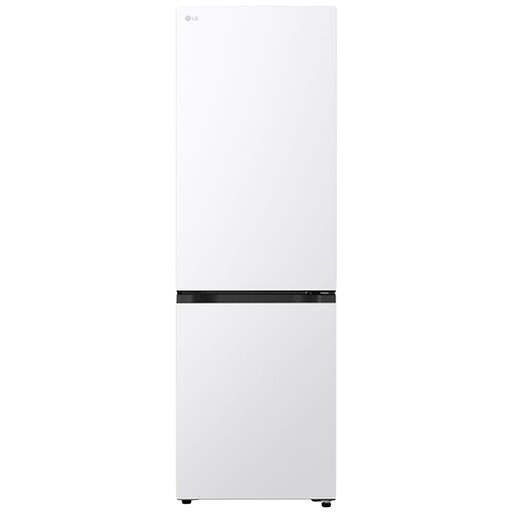 Image unavailable
If you’re looking for a fridge-freezer with separate storage zones, check the capacity of each compartment before judging the total.
The product name lists a capacity of 333 L, an energy rating of C, and NatureFRESH, DoorCooling+ and LinearCooling features. Check the installation requirements in the instructions.
 Image unavailable
To fit both fresh and frozen storage into a fitted kitchen, check that the alcove and door are compatible with this built-in model.
The title lists a capacity of 249 L and an energy rating of E, but the stated total doesn’t match the compartment capacities shown. Confirm the exact capacities before choosing.
 Image unavailable
At 54 cm wide, this model may suit a narrow space, but be sure to check its height, depth and installation requirements too.
The product name lists 153 L for the fridge, 74 L for the freezer, a reversible door and an energy rating of E. Low Frost doesn’t mean you’ll never need to defrost it manually.
Compare the energy rating and annual energy consumption for the exact model, taking its format and capacity into account too. In the European Union, EUR-Lex sets out the energy-labelling rules for refrigeration appliances. The product details and the European Commission’s EPREL public database let you look up information for a specific model.
No. Check the ventilation and door-opening requirements in the instructions for your chosen model too. Measure the alcove and delivery access; Bosch Électroménager France also advises checking the instructions for each appliance before installation.
No. On models with this feature, NoFrost helps manage frost; it doesn’t affect storage capacity. Work out how much room you need for frozen food, then check the usable capacity and the features listed for the specific compartment.
Ask the retailer how to arrange for your old appliance to be taken away when you place your order. Confirm the practical details before delivery so you know when and how to make the old appliance available.