One person living in a studio flat
If your fridge is close to your sofa or bed, its size and noise matter just as much as how much room you have for frequent shops. A smaller model may be worth considering if you don’t store many frozen foods.


For a studio flat or open-plan kitchen, start by choosing a capacity that suits your shopping habits and how much freezer space you need. A table-top fridge is better suited to limited storage, while a fridge-freezer gives you more space to keep fresh and frozen food separate. Then compare the stated noise levels without treating them as a guarantee of quiet operation, and check the dimensions, door opening and ventilation requirements for the model.
If your fridge is close to your sofa or bed, its size and noise matter just as much as how much room you have for frequent shops. A smaller model may be worth considering if you don’t store many frozen foods.
When several people share the fridge, compare the space for fresh and frozen food separately. Also check that the doors can open without getting in the way of people moving around the room.
For a built-in fridge, measure the housing unit and check the door system and ventilation requirements in the manual. Just because an appliance fits in the available space doesn’t mean it’s suitable for installation.
Start with your shopping habits, then compare suitable sizes with the space available and how close the fridge will be to your living area.
| Feature | What to check | How it suits my needs |
|---|---|---|
| Capacity and freezer space | Compare the usable capacity of the fridge and freezer separately, as well as the type of freezer compartment. UFC-Que Choisir’s guide suggests starting with 100 to 150 L for one person, then adding around 50 L for each additional person, adjusting for your shopping habits. | I shop little and often and freeze very little: a table-top fridge may be enough if its compartments suit my needs. If I shop less frequently or regularly buy frozen food, I’ll look at how the capacity is divided in a fridge-freezer. |
| Noise | Compare the stated noise level in dB(A) and the noise class of similar-sized appliances. UFC-Que Choisir points out that how noticeable a fridge is also depends on the type of noise and vibrations; listening to the exact model can help you assess it alongside the label. | My fridge will be near where I sleep or in the room where I work: I don’t want to make my decision based on the decibel figure alone. |
| Installation | Measure the height, width and depth, delivery access and door clearance. For a built-in model, check the housing unit, door fitting and ventilation requirements against the manual; for a freestanding model, check the clearances specified for that model. | My kitchen has a housing unit or a narrow access route: I need to be able to install the appliance and open the door without blocking a cupboard or getting in the way. |
| Energy | On the current energy label, compare the efficiency class and annual consumption in kWh for appliances with similar sizes and features. ADEME describes the energy label as a tool to help you choose, but the class alone doesn’t tell you whether the capacity will meet your needs. | I want to compare the electricity use of models that genuinely meet my storage needs, rather than choosing an appliance based on its energy rating alone. |
According to UFC-Que Choisir, the stated level doesn’t tell the whole story: the type of noise matters too. This is particularly important when the fridge is in the same room where you sleep.
Compare the noise level and class, then, if possible, look for listening tests of the exact model. Make sure it’s installed on a stable floor.
An appliance may fit in its space without leaving enough room to open the door or provide the required ventilation. Requirements vary between freestanding and built-in models.
Measure the height and depth too, as well as the delivery access. Then check the housing unit, door clearance and required gaps against the manual for the model you’ve chosen.
Two appliances with a similar total capacity may divide the space differently between the fridge and freezer. This matters if you batch-cook or regularly buy frozen food.
Compare the capacity of both compartments and the type of freezer space before choosing a size.
Bosch offers compact fridges for smaller spaces, as well as built-in and under-counter models.
The KFD6DE18S1 is an example of a built-in model to consider if you already have a compatible housing unit.
Whirlpool provides installation guidance for freestanding fridges and also offers built-in fridge-freezers.
This selection includes fridge-freezers in different capacities, a built-in model and a drinks fridge. The drinks fridge is designed for a different purpose, so check that it’s suitable for the food you want to store.
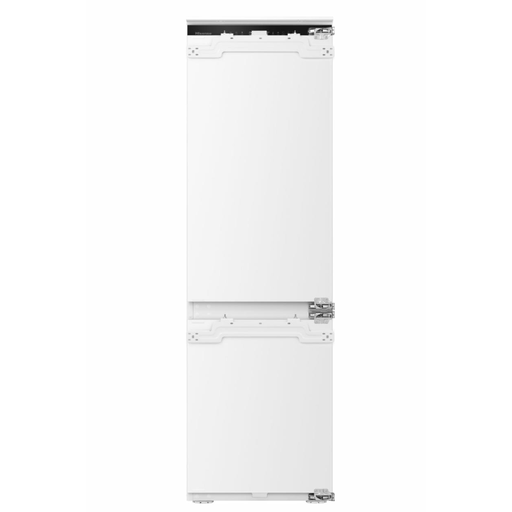 Image unavailable
Worth considering if your kitchen has space for a built-in fridge-freezer and you want to keep fresh and frozen food separate. The product name lists No Frost and energy class C; check the housing unit dimensions, door fitting and ventilation requirements against the model’s manual.
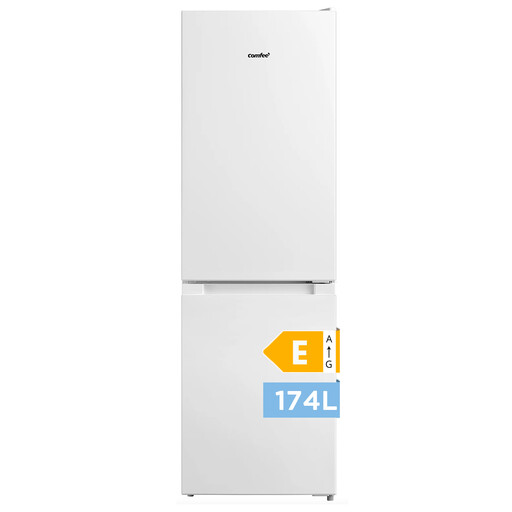 Image unavailable
This fridge-freezer is worth considering for a compact home where you want to keep fresh and frozen food separate. Its name lists a height of 150 cm, a 4-star freezer, Low Frost and 39 dB. Check the space needed for the door to open and for ventilation, and don’t assume the stated figure alone will tell you how quiet it is.
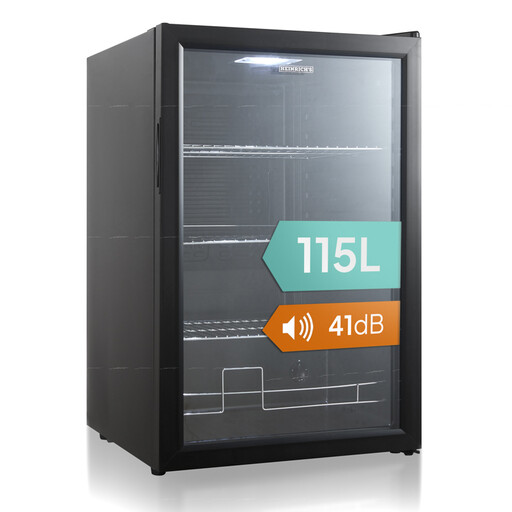 Image unavailable
Designed for cans and bottles, this model is worth considering for that purpose rather than assuming it can replace a fridge-freezer for everyday groceries. Its name lists 41 dB; check the storage conditions and whether it has a freezer compartment if you need one.
 Image unavailable
This capacity may suit larger shops or shared storage, but you’ll need to check carefully that it fits in a studio flat. The product name lists energy class C; measure the space, access routes and required clearances before choosing this size.
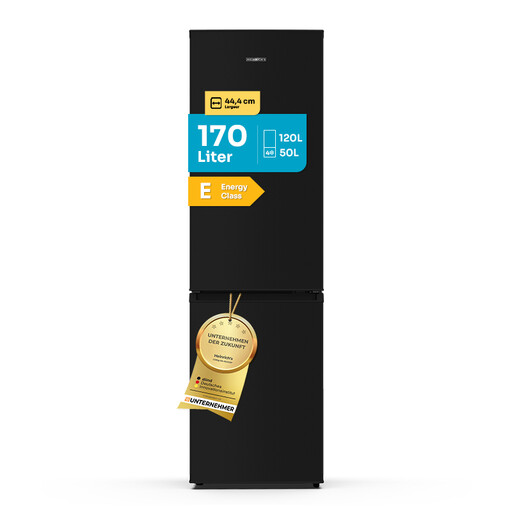 Image unavailable
For a small home where you need to store frozen food, the product name specifies 120 L of fridge space and 50 L of freezer space. It lists 40 dB and energy class E; check its full dimensions and bear in mind that the stated level doesn’t tell you everything about how noticeable the noise may be.
UFC-Que Choisir uses under 40 dBA as a starting point for the models it describes as the quietest. Compare the noise class too and, if possible, listen to the exact model. The association notes that the type of noise and vibrations affect how noticeable it is.
Compare the efficiency class on the current A to G scale, annual consumption in kWh, compartment capacities, stated noise level and noise class. For household refrigeration appliances in France, the DGCCRF refers to Delegated Regulation (EU) 2019/2016, which has applied since 1 March 2021. Compare models with similar storage capacities to suit your needs.
Choose a built-in model only if its manual confirms that the housing unit dimensions, door system and ventilation requirements are suitable. Otherwise, look for a freestanding model that fits the space. Bosch says the required housing unit height varies between its models, while Whirlpool recommends 5 cm above and 10 cm behind its freestanding fridges. These clearances don’t replace the instructions for the model you choose.
Not necessarily. If you often buy frozen food or batch-cook, check the type and capacity of the freezer compartment, not just the total capacity. UFC-Que Choisir points out that a small freezer compartment may not be enough, depending on your eating habits.