Renters with a very compact kitchen
You need to fit the appliance under a worktop or next to a wall, while leaving enough room to open the door and provide the ventilation clearance specified in the manual.


If you shop often and rarely freeze food, start by comparing table-top and compact one-door models. A built-in freezer compartment is handy if you only need to store frozen food occasionally. A small fridge-freezer needs more height and depth, while a built-in model requires a compatible housing unit. Whatever you choose, measure the space and allow for the clearances specified in the manual. Then compare the capacity of each compartment, the stated noise level and the energy label for the exact model.
You need to fit the appliance under a worktop or next to a wall, while leaving enough room to open the door and provide the ventilation clearance specified in the manual.
You want a freezer compartment that suits your shopping habits, without giving up an unnecessarily large part of your studio flat to the appliance.
If the fridge is near your sleeping area, its stated noise level matters just as much as its usable capacity and the annual energy consumption shown on the energy label.
Worth considering: if you shop often, buy few frozen foods and mainly have space under a worktop. Que Choisir describes the table-top format as suitable for studio flats.
The trade-off: this option does not provide space to store frozen food.
Worth considering: if you want to keep ice cubes or a few frozen foods from time to time, without opting for a tall fridge-freezer.
The trade-off: compared with a similarly sized model, the built-in compartment leaves less room for fresh food. Check its capacity and features.
Worth considering: if you regularly store frozen food and have a space tall enough for a separate freezer compartment.
The trade-off: it may take up considerably more space than a table-top fridge. Measure the route through to the kitchen, too.
Worth considering: if your kitchenette already has a housing unit that fits the model you have in mind.
The trade-off: the housing unit, cabinet door, fixings and airflow must all meet the installation instructions.
Once you’ve chosen a format, compare models based on the factors that matter most for your installation and shopping habits.
| Factor | What to check | Who it matters to |
|---|---|---|
| Size and installation | Measure the height, width, depth and door swing; check the ventilation clearances in the manual. | When every centimetre in the kitchenette counts, I want to be able to install the appliance and open its door without obstructing the walkway. Around 42% of consumers would prioritise this compatibility. |
| Fresh-food and freezer capacity | Compare the capacity of each compartment and the features of the freezer compartment or separate freezer. | If I regularly buy frozen food, I need to make sure there’s enough room for it without sacrificing fresh-food storage. This would be the top priority for around 33% of consumers. |
| Noise and energy use | Check the noise level in dB(A) and the kWh/year figures in the model’s documentation; compare appliances of a similar type and capacity. | With a fridge near my sleeping area, I pay attention to its noise and ongoing energy use. Around 25% of consumers would put this day-to-day comfort first. |
An appliance may fit between two cupboards but stick out beyond the worktop or stop the door from opening fully. The dimensions Bosch publishes for its table-top fridges and fridge-freezers show how sizes vary by format.
Before choosing a capacity, measure the height and depth, the delivery route and the space needed to open the door fully.
A tight fit can prevent the airflow the appliance needs. For the models it covers when installed in an alcove, a Beko manual specifies at least 5 cm between the appliance and the ceiling and wall. This measurement does not apply to every fridge.
Follow the manual for the exact model you buy, and don’t block its ventilation openings.
A fridge-freezer takes up more space than a small fridge if you only store frozen food occasionally.
Think about what you typically buy in a week: compare a model without a freezer or with a built-in freezer compartment if you rarely freeze food, and a separate freezer if you use it regularly.
Annual energy consumption alone doesn’t tell you how much storage space you’ll have or whether the appliance has a freezer. ADEME recommends using the energy label when choosing household appliances.
Compare energy consumption and energy class across appliances of a similar type and capacity, then consider the noise level in your living space.
A brand to consider for table-top fridges designed for small kitchens.
Models to compare across table-top, fridge-freezer and under-counter built-in formats.
An option for a kitchenette with a housing unit for an under-counter built-in fridge.
A brand to consider for small fridges that fit under a worktop.
These models offer two options for a studio flat: a built-in fridge, chosen to fit your existing housing unit, or a freestanding fridge-freezer, sized to suit the space you need for fresh and frozen food.
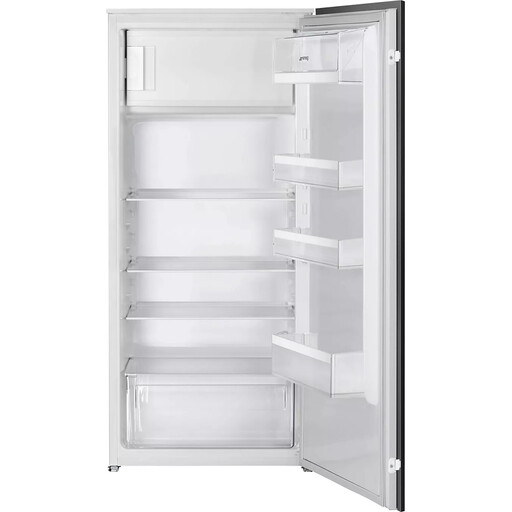 Image unavailable
Worth considering if you have a compatible housing unit and also want a freezer compartment. Check the installation dimensions, door fitting and clearances in the manual before ordering.
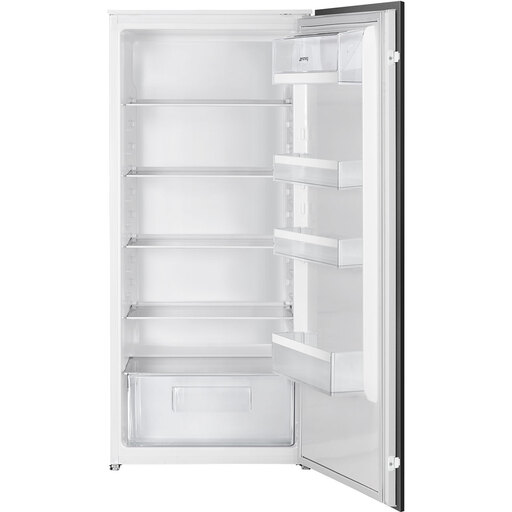 Image unavailable
Consider this model for storing fresh food in a kitchen with a suitable housing unit. Confirm the capacity of the exact model before buying, as the capacity figures listed for this reference differ. Also check the housing unit dimensions in the manual.
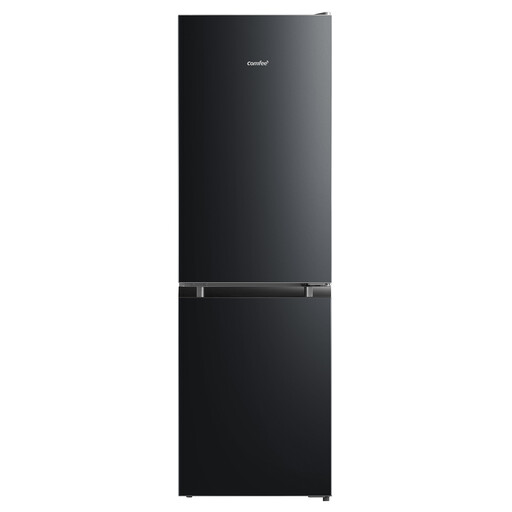 Image unavailable
Worth considering if you need to store both fresh and frozen food in a freestanding appliance. The model name lists a reversible door; still, measure the space, delivery route and door clearance, then check the product documentation for noise and energy consumption.
 Image unavailable
Worth comparing if you want a separate freezer compartment for regular frozen-food storage: the product name lists 153 L for refrigeration and 74 L for freezing, with a reversible door. Confirm the width of the exact model before deciding where to put it, as the dimensions listed for this reference do not match.
Yes, according to the clearances specified for the model you choose. For the models it covers when installed in an alcove, a Beko manual specifies at least 5 cm between the appliance and the ceiling and wall. Check your own manual before deciding where to put it.
Compare the stated noise level in dB(A) in each model’s documentation, but don’t assume that this figure alone tells you how noisy it will be in your studio flat. It’s also important to install the appliance securely and follow the manual.
Anses recommends setting the fridge below 4 °C. Check the temperature after switching it on rather than relying solely on the control setting.
Check their energy class and annual consumption in kWh, then consider the appliance type and capacity. As ADEME points out, the energy label can help you choose. However, comparing a table-top fridge without a freezer with a fridge-freezer without considering how you’ll use them could lead you to the wrong decision.
Arrange for it to be collected or taken back rather than putting it out with your household rubbish. Ecosystem lets you search for a fridge collection point; also check the removal options offered when your new appliance is delivered.