What should you check before deciding?
Start by finding out whether your existing appliance can be repaired and how much capacity you actually use. Then compare models of the same type and with a similar capacity, rather than judging them on their energy rating alone.
| Priority | What to check | Your needs |
|---|
| Condition of the appliance |
If it isn’t cold enough or has unusual frost build-up, get it checked. Before deciding whether to replace it, ask which parts and repairs are needed. |
If my appliance has one of these symptoms, I want to find out whether a repair makes sense before buying another one. ADEME recommends identifying these possible faults. |
| Format |
Decide whether you need fridge space only, a fridge and freezer in a single appliance, or a separate freezer. Take into account the space taken up by all your cooling appliances. |
I mainly store fresh food, so a fridge alone may suit my needs. If I also store frozen food, I need to choose between a fridge-freezer and a separate freezer, depending on how much capacity I need. |
| Energy use |
For appliances of the same type and similar capacity, compare the kWh/year figures on the label and the product information for the exact model. Use the A to G energy rating as an additional guide. The European Commission’s EPREL database lets you check details of models sold in the European Union. |
I want to estimate running costs using my electricity price per kWh, without assuming that an energy rating or a new appliance will automatically lower my bills. |
| Usable capacity |
Check the available capacity in litres for the fridge and freezer separately. Also measure the space and clearance needed for installation. |
A larger capacity only matters to me if I’ll use it. ADEME says that choosing a larger or more feature-packed appliance can increase bills, as it runs continuously. |
| Ease of use |
Check the noise level for the exact model. For features such as No Frost, check which compartments they apply to and always compare the kWh/year figures. |
Noise matters to me in a living area. If defrosting is a concern, I want to know exactly what the feature does, without assuming how it affects energy use. |
| Second-hand or refurbished |
Identify the exact model and check the appliance’s condition, especially the door seal and any unusual frost build-up. Check its energy information if available, and review the terms of sale. |
If I’m considering a second-hand appliance, I want to be able to assess its condition and usable capacity. EPREL data for a model doesn’t replace checking the actual appliance being sold. |
| Take-back of your old appliance |
When buying an equivalent new appliance in France, confirm with the retailer that free one-for-one take-back is available and check how it works in practice. If you’re not buying a replacement, find out about a suitable collection scheme. |
I want to know when and where to hand over my old fridge or freezer, rather than arranging its disposal after delivery. ecosystem says one-for-one take-back also applies to online sales. |
A guide to some brands
These ranges highlight features worth considering. They don’t guarantee the performance of a specific model or mean it will be included in the selection below.
Bosch
In its overview of fridge-freezers, Bosch highlights energy rating and capacity in litres as key factors when choosing a model.
- Look for a configuration and capacity that suit the way you’ll use it.
- To compare specific models, also check their kWh/year figures, noise levels and installation requirements.
Liebherr
Liebherr offers fridges with compartments kept close to 0 °C and humidity-controlled. The brand attributes food-preservation benefits to these compartments, but this doesn’t guarantee the same results across all its models or for your food.
- Check whether the model you’re considering has these compartments and how much capacity they offer.
- Also compare its kWh/year figures, noise level and installation dimensions.
Whirlpool
Whirlpool offers No Frost models among its fridges and fridge-freezers.
- If defrosting affects your choice, check which compartments have this feature.
- No Frost alone won’t tell you how much an appliance will cost to run. Compare the kWh/year figures and capacity of the exact model.
Fridge-freezers on Joybuy
These five models each combine a fridge and freezer in one appliance. They can help you compare fridge-freezer capacities, but they won’t tell you on their own whether to repair your current appliance or choose a fridge alone, a separate freezer or a second-hand model. Check the energy label for the model you choose before comparing its annual energy use.
 Image unavailable
Candy CFQQ5T817EPS, 4-door fridge-freezer, 467 L
Worth considering if you’re looking for a 467 L fridge-freezer with four doors. The product name lists an E energy rating and Total No Frost. Check the capacity of each compartment, the dimensions and the kWh/year figures on the energy label for the exact model.
View on Joybuy
 Image unavailable
LG GBBSJ1CCSW, fridge-freezer, 333 L
This 333 L fridge-freezer can be compared with other models offering similar storage capacity. Its name lists a C energy rating. Before choosing, check the fridge and freezer capacities, installation dimensions and annual energy use for the exact model.
View on Joybuy
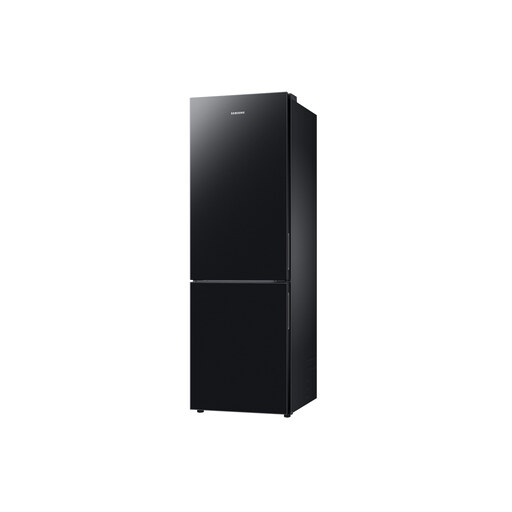 Image unavailable
Samsung RB33B612EBN, fridge-freezer, 344 L
The total capacity is listed as 344 L, and the product name mentions an E energy rating. If this format suits your space, compare the capacity of each compartment, the kWh/year figures and the door-opening clearance before ordering.
View on Joybuy
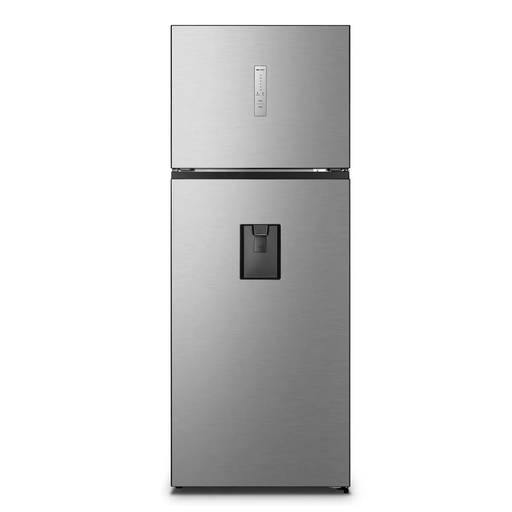 Image unavailable
Hisense FTN461WCE1, fridge-freezer, 467 L
This 467 L model has an E energy rating and is suited to anyone who needs a large fridge-freezer and has space for it. Ask for details of the defrosting system in both compartments, as product information describes it differently. Then check the dimensions and the exact energy label.
View on Joybuy
 Image unavailable
Bosch KGN33NLEB, fridge-freezer, 282 L
With a stated capacity of 282 L and a freezer at the bottom, this model may suit a household looking for this style of fridge-freezer. Its name mentions an E energy rating. Check the capacity of each compartment, the kWh/year figures, noise level and installation clearance for the exact model.
View on Joybuy
Frequently asked questions
When should you get an appliance checked before replacing it?
Ask for a diagnosis if your fridge isn’t staying cold enough or your freezer has unusual frost build-up. ADEME lists these symptoms as situations where you should identify the fault and consider a repair or, if necessary, replacement.
How can you estimate the running costs of two models?
If they’re the same type and have similar capacities, compare their annual energy use in kWh, then multiply each figure by your electricity price per kWh to get an estimate. The energy rating offers another useful guide, but neither the label nor the averages published by ADEME can guarantee your future energy use.
Is a larger fridge always better for a family?
No. First choose the fridge and freezer capacities that suit your household’s storage needs. ADEME says that choosing an appliance that’s too large or has too many features can increase your bills, so check usable capacity alongside the kWh/year figures.
How can you arrange take-back of an old fridge or freezer in France?
When you buy an equivalent new appliance, the retailer must offer free one-for-one take-back, including for online sales, according to ecosystem. When placing your order, confirm where and how to hand over the old appliance.
What should you check when buying a second-hand or refurbished fridge?
Identify the exact model and check its condition, especially the door seal and any unusual frost build-up. Then ask for any available energy information and check the terms of sale. EPREL, the European Commission’s database, can provide information about models sold in the European Union, but not the condition of the individual appliance being offered.


