What should you check before choosing?
When deciding whether to replace an appliance, start with how you use the one you have: choosing the same type doesn’t mean you need the same capacity. The options below suit different storage needs.
Keep your current appliance
Worth considering if: it works properly and you haven’t yet established how much energy it uses on its own.
Drawback: you’ll continue to use the same amount of energy; according to Enedis, household Linky data can’t isolate an individual appliance’s consumption.
Fridge with limited freezer space
Worth considering if: you mainly store fresh food and already have enough space for frozen food.
Drawback: a smaller capacity might not suit you if your shopping habits change.
Fridge-freezer
Worth considering if: you need fresh and frozen food compartments in one appliance.
Drawback: the split between compartments should suit how you use them; choosing a larger model than you need won’t necessarily reduce energy use.
Separate freezer or smaller capacity
Worth considering if: a separate appliance suits your regular frozen food storage needs; if you rarely use that space, it’s worth considering a smaller capacity.
Drawback: reducing the available capacity leaves less room for bulk shopping.
| Consideration | What to check | Who it matters to |
|---|
| Whether replacement is worthwhile |
Don’t confuse your household’s energy use with that of your old appliance. For a new one, compare the kWh/year figures for appliances with the same function and similar capacity. |
Your appliance still works, and you want to know whether replacing it would genuinely reduce your electricity use. Around 36% of consumers put this question first. |
| Capacity and installation |
Check the fresh and frozen food capacities separately, then check the dimensions and installation type. |
A narrow housing unit or less frequent shopping trips can change how much space you need. For around 29% of consumers, getting the capacity and installation right is the priority. |
| Space for frozen food |
Compare the freezer capacity you need with that of a fridge-freezer or a separate freezer. |
If you regularly freeze food, you’ll need to decide whether a compartment is enough or if you need a separate appliance. This is the priority for around 21% of consumers. |
| Noise and maintenance |
Check the noise level in dB(A) and the defrosting system on the specific model. |
Noise matters more when the appliance is near a living area; having to defrost it can also affect your choice. Around 14% of consumers prioritise ease of use. |
Fridge-freezers to explore on Joybuy
These models combine refrigeration and freezing in one appliance, with different capacities and installation types. First choose the capacity and location that work for you, then check the energy label for the exact model. This selection can’t tell you how much energy you’d save by replacing your current appliance.
 Image unavailable
Samsung RB33B612EBN, black 344 L fridge-freezer, energy rating E
Worth considering if you’re looking for a 344 L fridge-freezer. Check the model’s energy label for its kWh/year and the split between the two compartments, then make sure its dimensions suit the space you have in mind.
View on Joybuy
 Image unavailable
Hisense RB3B250SAWC, 252 L integrated fridge-freezer, No Frost, energy rating C
Worth considering as a replacement for an integrated fridge-freezer if 252 L meets your needs. Check the dimensions of the housing unit, the fixing system and the kWh/year figure on the exact model’s energy label.
View on Joybuy
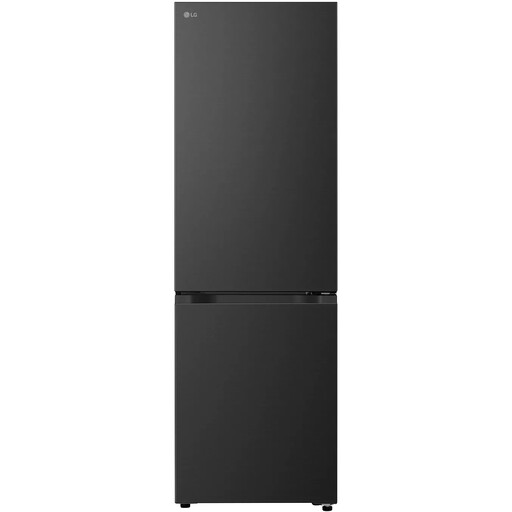 Image unavailable
LG GBBS312AEV, black 333 L fridge-freezer, No Frost, energy rating A
Worth considering if you want fresh and frozen food storage in one 333 L fridge-freezer. Compare its label’s kWh/year figure with those of similar-capacity models and check how much space you’ll need to install it.
View on Joybuy
 Image unavailable
Samsung RF50C530EB1, black 495 L multi-door fridge, energy rating E
This 495 L model is worth considering if you’ll genuinely use the extra storage space. Check its overall dimensions, kWh/year and the installation requirements for the water and ice dispenser before making your choice.
View on Joybuy
 Image unavailable
Bosch KGN33NLEB, 282 L fridge-freezer, stainless steel finish, energy rating E
Worth considering if a 282 L fridge-freezer suits your storage needs. Check the model’s specifications for the capacity split, kWh/year and noise level if it will be near a living area.
View on Joybuy
Frequently asked questions
How do I compare my old appliance with a new fridge?
Start by comparing appliances with the same function and similar capacities. For a new appliance, the energy label gives you the kWh/year and capacity, among other details. For your old one, don’t treat your household’s Linky energy use as the appliance’s own: Enedis says it doesn’t provide a breakdown for each appliance. Without figures for the old appliance’s individual energy use, you can’t calculate your personal savings from this data alone.
Is an old A+++ rating equivalent to a current energy rating?
No. The ratings on old and new energy labels aren’t directly equivalent. ADEME points out that the scale has changed, so when choosing between current models, compare their kWh/year and capacities rather than relying on the rating of your old appliance.
Will my old appliance automatically be collected when my new one is delivered?
Don’t assume that collection, disconnection and installation will all happen together. In France, retailers required to take back old appliances must offer ways to collect used equipment. Check the arrangements for your order and which tasks you’ll need to organise separately.
Does a large fridge always use too much energy?
Not necessarily. A larger capacity may suit you if you shop less often or need plenty of storage space. However, ADEME notes that a larger size and unnecessary extra features can increase energy use. Choose a capacity that suits your needs, then compare the kWh/year figures for appliances with the same function and similar capacities.


