What to compare
First work out how much space you really need for fresh and frozen food. Then compare the annual energy use and dimensions of models that meet those needs.
| What matters |
What to check before buying |
Who it matters most to |
| Annual energy use |
Check the A to G rating and kWh/year figure on the label for the exact model. Compare appliances with similar capacities and features. |
If I’m replacing an appliance that runs continuously, I want to check its energy use without sacrificing the storage space I need. Around 27% of consumers prioritise kWh/year. |
| Usable capacity |
Check the fridge and freezer capacities in litres separately. Que Choisir Ensemble suggests 100 to 150 L for one person, then 50 L for each additional person. Adapt this guide to your shopping habits. |
When my shopping varies and frozen food takes up space, I want a split between fridge and freezer capacity that suits me. Around 27% of consumers prioritise storage capacity. |
| Size and installation |
Check the height, width, depth, door opening and ventilation clearances specified for the model. Where possible, keep the appliance away from heat sources. |
If space is limited, I need to make sure the appliance and its installation will fit. This is the top priority for around 20% of consumers. |
| Maintenance and features |
Check which compartments have No Frost and which features you’ll actually use. Read the conditions attached to any energy-saving claims. |
I want to keep maintenance to a minimum without using more energy to run features I don’t need. Around 13% of consumers prioritise maintenance and features. |
| Second-hand appliances |
Ask for the full model reference, check the condition and any available energy-use information, then find out whether the seller is a business or a private individual. |
If I’m considering a second-hand appliance, I want to check its condition and energy use before comparing the purchase and running costs. Around 13% of consumers put checking a second-hand appliance first. |
Fridge-freezers on Joybuy
These fridge-freezers let you compare capacities and the split between fridge and freezer space. Check the kWh/year figure, energy rating and dimensions of each model to see how well it meets your needs.
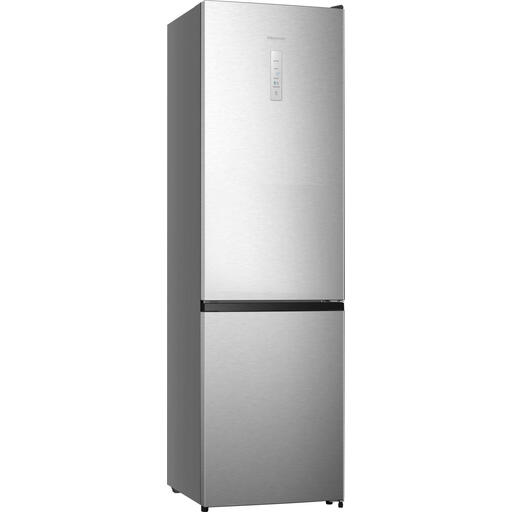 Image unavailable
Hisense RB440N4CCB, 336 L, B rating
Worth a look if you’re after a fridge-freezer with separate fridge and freezer compartments.
The product details list 135 kWh/year, 238 L for the fridge and 98 L for the freezer.
The listing mentions Total No Frost, reversible doors and a noise level of 35 dB.
View on Joybuy
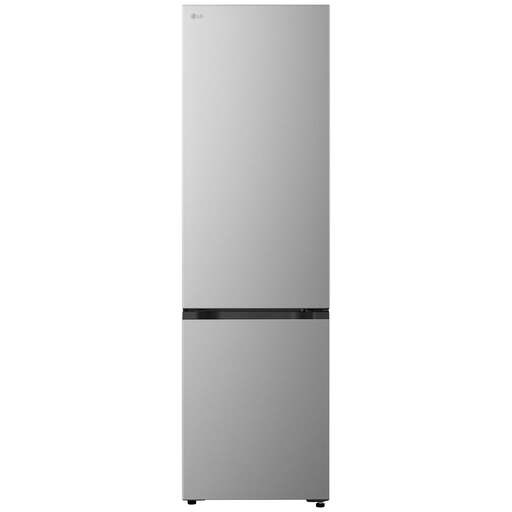 Image unavailable
LG GBBS322BPY NatureFRESH, 375 L, B rating
Consider this model if you’re looking for a 375 L fridge-freezer with a bottom freezer and Total No Frost.
This model has a B energy rating.
The product details recommend leaving at least 50 mm at the sides and 100 mm at the back for ventilation.
View on Joybuy
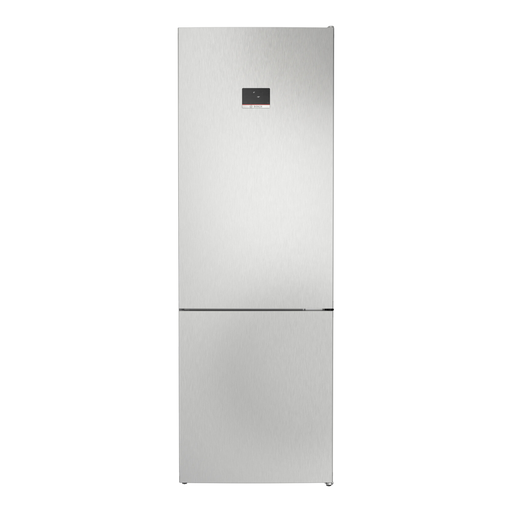 Image unavailable
Bosch KGN497LDF, 440 L, D rating
Worth a look if you need plenty of space for fresh and frozen food.
The product details list 223 kWh/year, 311 L for the fridge and 129 L for the freezer.
The listed dimensions are 70 × 203 × 66,7 cm. Check that you have enough room for it.
View on Joybuy
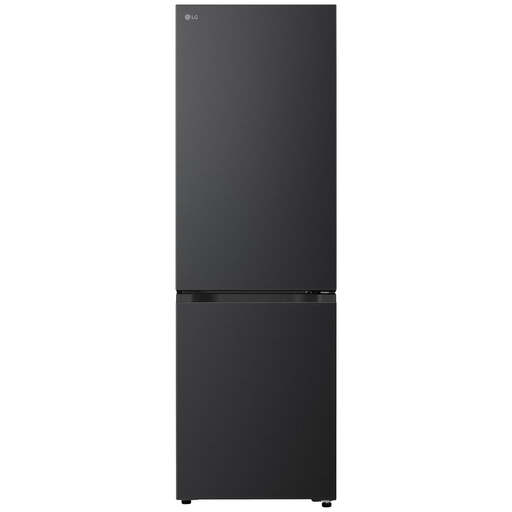 Image unavailable
LG GBBS312CEV, 333 L, C rating
Consider this model if you’d like to compare a fridge-freezer with several storage compartments.
The product details list 169 kWh/year, 183 L for the fridge, 113 L for the freezer and a 37 L compartment.
Total No Frost is listed. The product details recommend ventilation clearances of at least 5 cm at the back, above and at the sides.
View on Joybuy
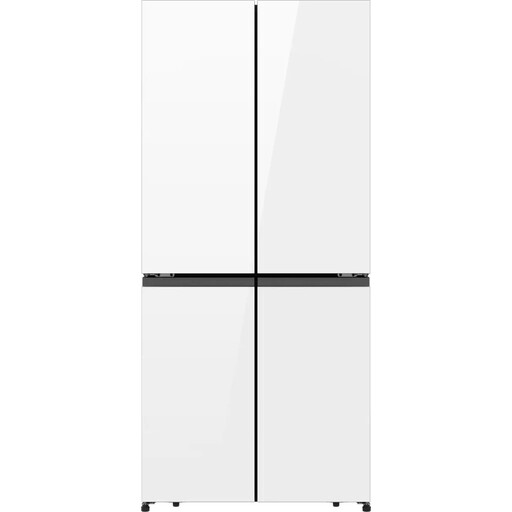 Image unavailable
Hisense RQ5P470SETE, 483 L, E rating
Worth a look if you’re after a large four-door model with a variable-temperature zone.
The product details list 293 kWh/year, 304 L for the fridge and a combined capacity of 179 L for the freezer and variable-temperature zone.
The detailed listing states that the door is not reversible.
View on Joybuy
Frequently asked questions
How do I compare the energy labels of two fridges?
For appliances that meet similar needs, compare the kWh/year figure, the A to G rating and the separate fridge and freezer capacities. The European Commission says the QR code on the label takes you to the model information in EPREL. The old scale with “+” ratings has not been used for the fridges concerned since 2021.
Does a fridge need to display a French durability index?
The page from the French Ministry responsible for the ecological transition, updated on 30 June 2025, describes the mandatory rollout of this index for televisions and washing machines, not fridges. When assessing a fridge, don’t confuse this rating with the energy label. Check the service and spare-parts information for the specific model instead.
What should I check when installing a fridge to avoid wasting energy?
Check the ventilation clearances specified for the model and, where possible, avoid placing the fridge near a heat source. Maintain the seals and rear grille according to the appliance instructions. Que Choisir Ensemble also highlights the importance of keeping it away from heat sources.
What warranty applies to a second-hand fridge?
According to the French Ministry of the Economy and Finance, the legal guarantee of conformity applies when a private individual buys a second-hand item from a professional seller, and may be used for two years from the date it is supplied. It does not apply in the same way to a private sale, so check who the seller is before relying on this protection.
Do I have to pay to have my old fridge taken away?
No. The DGCCRF says that when you buy a new product, the retailer must take back an equivalent used product free of charge under the “one for one” take-back scheme. Check the practical arrangements with the seller when arranging delivery.


