First, choose a configuration that meets your needs for fresh and frozen food and fits the available space. Then compare the annual energy consumption in kWh of appliances with a similar capacity. A fridge-freezer combines both functions in one space; a fridge without a freezer is suitable if you don’t need to store frozen food in that appliance. If you choose two separate appliances, add their annual energy consumption together before comparing them with a fridge-freezer offering suitable capacities.
Who is this choice for?
Households keeping an eye on running costs
If you’re replacing an appliance that runs continuously, compare its annual energy consumption with that of models offering the capacity you need. ADEME points out that size and extra features can affect electricity use.
Households that regularly store fresh and frozen food
To choose between a fridge-freezer and separate appliances, look at the litres available in each compartment rather than just the total capacity. The label described by the European Commission shows storage capacities separately.
Households with specific kitchen dimensions to work around
Width, height, depth and door clearance can determine your choice before you even compare energy use. If you’re replacing a built-in appliance, check the housing dimensions and fixing system for the exact model too, as illustrated by Bosch and Whirlpool product specifications.
Which criteria should you consider first?
Your need for frozen storage determines the configuration first. Then check the capacity of each compartment and the available space, before comparing kWh/year for appliances that meet the same needs.
Fridge without a freezer
Consider this if: you don’t store frozen food in this appliance or already have a suitable freezer.
The trade-off: you won’t be able to store frozen food in it; check whether your chosen model has a freezer compartment.
Fridge-freezer
Consider this if: you regularly use both fresh and frozen food storage and want them in one appliance.
The trade-off: capacity is split between two compartments, so a large total capacity doesn’t guarantee enough room for frozen food.
Separate fridge and freezer
Consider this if: you need a dedicated freezer or very different capacities for fresh and frozen food, and have space for two appliances.
The trade-off: two appliances run continuously. Add together the kWh/year shown on their labels before comparing this option with a fridge-freezer of a suitable capacity.
| Criterion |
What to check |
Consumers concerned |
| Electricity use |
Check the kWh/year on the label and compare appliances with similar configurations and capacities; don’t focus on the energy class letter alone. |
If my priority is to limit the electricity used throughout the year, I want to avoid choosing an appliance that’s bigger than I need. Around 42% of consumers would put this first. |
| Fresh and frozen storage capacity |
Check the fridge and freezer capacities separately, then compare them with your storage habits. |
If I often store frozen food, a high total capacity won’t help if the freezer is too small; around 33% of consumers would prioritise this split. |
| Installation and noise |
Measure the space, check the installation and door clearance, and, for a built-in appliance, check the housing and fixings. Also check the noise level shown. |
In a kitchen with limited space, I need to be able to install and open the appliance properly, while taking noise into account. This would be the priority for around 25% of consumers. |
Mistakes to avoid before buying
-
Relying on the energy class alone
The energy class letter alone doesn’t tell you the appliance’s absolute annual energy use or how its capacity is divided. The European Commission says that the label for refrigeration appliances also shows kWh/year, capacity and noise levels.
Compare these details across models designed for the same purpose and with similar capacities.
-
Choosing an appliance that’s larger or better equipped than you need
ADEME notes that size and some additional features, including continuous ice production, can increase electricity use.
Work out what you need for fresh and frozen food, and which features matter to you, before choosing a configuration.
-
Ordering a built-in appliance without checking how it will be installed
The housing being the right size isn’t always enough: door fitting and fixings vary between models, as the Bosch and Whirlpool product specifications show.
Measure the housing and check the instructions for the exact model, particularly the hinges or runners and door clearance.
-
Waiting until delivery to arrange disposal of your old appliance
Used fridges should be taken to a suitable electrical equipment recycling scheme, as described by ecosystem.
Before confirming delivery, ask the retailer about its take-back arrangements and check where the old appliance needs to be for collection.
Brands to know when comparing ranges
Bosch
In France, Bosch offers freestanding and built-in fridge-freezers, including several combination formats.
- Depending on the model, the brand offers features such as No Frost, freshness zones and adjustable storage.
- Features vary by model. For a built-in appliance, check that the dimensions and fixings of your chosen model suit your kitchen.
Whirlpool
Whirlpool’s French range of fridge-freezers includes freestanding and built-in models.
- For some models, Whirlpool offers Total or Dual No Frost, door alarms and dedicated compartments.
- Don’t assume these features are available across the whole range: check the model specifications, capacity, annual energy use and installation requirements.
Beko
Beko offers fridge-freezers with different cooling systems and interior layouts, depending on the model.
- The brand highlights features such as AeroFlow, HarvestFresh and Multizone on selected models.
- The availability and operation of these features depend on the model. Check the capacity, kWh/year, dimensions and noise level too.
Fridge-freezers to consider on Joybuy
These models combine fridge and freezer storage in one appliance. Compare their capacity and installation type with your needs, then check the energy label for the exact model to compare annual energy use. This selection isn’t a substitute for comparing them with a fridge on its own or two separate appliances.
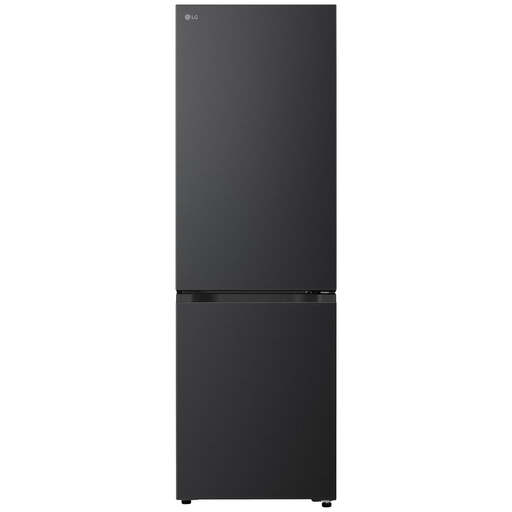 Image unavailable
LG GBBS312CEV NatureFRESH, black
Worth considering if you want to combine fresh and frozen food storage in a freestanding appliance. The model is listed with DoorCooling+ and LinearCooling+ features and a C energy class. Check the separate compartment capacities on its label and make sure it will fit your space.
View on Joybuy
 Image unavailable
Bosch KGN33NLEB, 282 L, stainless steel finish
Consider this if a fridge-freezer with a bottom freezer suits the way you organise your food. The product title states 282 L and an E energy class; check the capacity of each compartment and allow for the installation clearances specified for this model. The NoFrost feature listed for the freezer shouldn’t be assumed to apply to the fridge too without checking.
View on Joybuy
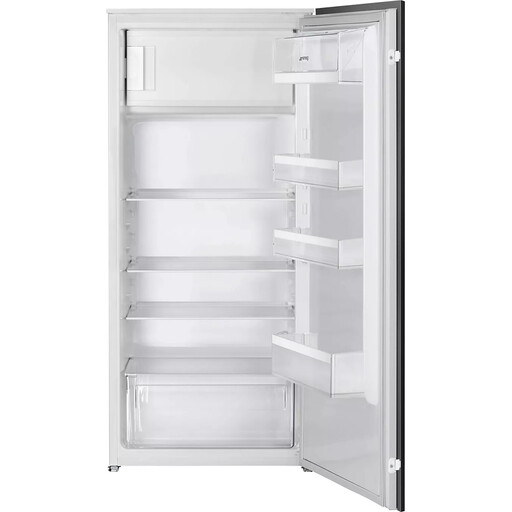 Image unavailable
SMEG S4C122E built-in, 188 L
Worth considering for a built-in kitchen if a small freezer capacity suits your needs. The product title states a total capacity of 188 L and an E energy class; check the capacity of each compartment and make sure the housing and runner system are compatible. The freezer is described as requiring manual defrosting, and the furniture door needs to be supplied separately.
View on Joybuy
 Image unavailable
Samsung RB33B612EBN, 344 L, black
Consider this if you’re looking for a fridge-freezer and its storage layout suits your household. The product title states 344 L and an E energy class; check the fresh and frozen food capacities and the model’s kWh/year on the label. Check the instructions to allow for the ventilation space required.
View on Joybuy
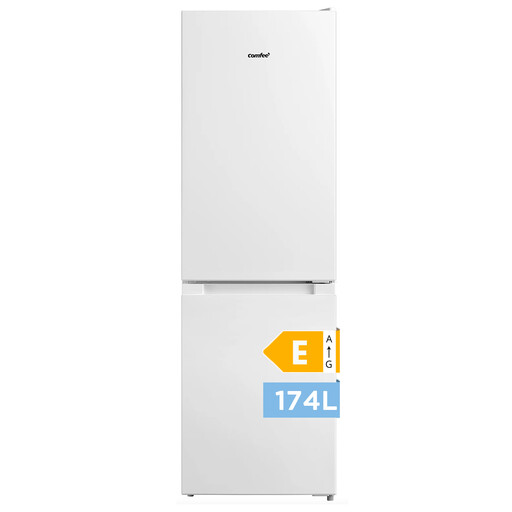 Image unavailable
Comfee' RCB169WH2(E) 70/30, 174 L, white
Consider this if a 174 L freestanding fridge-freezer meets your storage needs. The product title states a height of 150 cm, an E energy class, a reversible door and Low Frost. Check the other dimensions and energy use in kWh/year before comparing it with other models. Low Frost doesn’t mean you’ll never need to defrost it manually.
View on Joybuy
Frequently asked questions
What should I look for on a fridge or freezer energy label?
Check the annual energy consumption in kWh, the A to G energy class, the capacity of each compartment and the noise information. The European Commission provides these details for refrigeration appliances; compare them across models that meet similar storage needs.
Does a better energy class always mean lower annual energy use?
No. To find out a model’s stated annual energy consumption, check its kWh/year and take its capacity into account. ADEME notes that size and some features can affect energy use, so compare appliances with capacities suited to your needs rather than focusing on the letter alone.
Does No Frost mean I don’t need to check how a fridge-freezer will be installed?
No. This feature tells you nothing about the appliance’s dimensions or whether it will fit a housing or fixing system. For a built-in model, check the instructions for the exact model and make sure the door can open fully. Bosch and Whirlpool product specifications show that these details vary by model.


