Households keeping an eye on energy use
You want to reduce the energy use of an appliance that runs constantly, without choosing an unnecessarily large capacity. ADEME points out that size and extra features can affect your electricity bill.


To keep energy use down, start by working out how much fresh and frozen food your household actually needs to store, then compare the annual energy consumption in kWh of suitable appliances. A fridge, fridge-freezer or separate freezer will suit different needs: the energy rating alone is not enough to compare their yearly running costs.
You want to reduce the energy use of an appliance that runs constantly, without choosing an unnecessarily large capacity. ADEME points out that size and extra features can affect your electricity bill.
You need to choose between the freezer compartment in a fridge-freezer and a separate freezer, taking into account the energy use of all the appliances you leave switched on.
You’re weighing up repair or buying second-hand against replacement, taking into account the appliance’s condition, energy use and applicable guarantees.
First work out the usable capacity you need for fresh and frozen food, then compare the annual energy consumption in kWh of models that meet those needs. For a new appliance with the EU energy label, the European Commission says the label also shows the energy class, capacities and noise level.
| What matters | What to check | Who it matters most to |
|---|---|---|
| Annual energy use | Compare the kWh/year figures and energy classes for appliances with similar capacities and uses. To estimate the annual running cost, multiply the kWh/year figure by the price your household pays per kWh. | If I want to keep the energy use of an appliance running all year down, I compare the kWh/year figures for models with the capacity I need. Around 36% of consumers put electricity costs first. |
| Suitable capacity | Consider how much food you store between shops, the usable litres in each compartment, the appliance dimensions and whether it will fit through to its intended location. | When my usual shopping needs a particular amount of space, I look for enough room without powering an oversized appliance. Around 29% of consumers prioritise a capacity that suits their needs. |
| Freezer capacity | Check the capacity available for frozen food and, if you add another appliance, add together the kWh/year figures for the fridge and freezer. | If I regularly store frozen food, I check whether a fridge-freezer compartment is enough before adding another appliance. Around 21% of consumers prioritise having enough freezer space. |
| Repair or second-hand | Compare the condition and known energy use of your current appliance, a repair quote, and the information available about a second-hand appliance, its seller and any guarantees. | If my appliance could keep working or be repaired, I compare those options with a suitable new model before deciding. Around 14% of consumers prioritise keeping, repairing or buying second-hand. |
The energy class shows where an appliance sits on the label’s scale, but it doesn’t replace the annual energy consumption in kWh. Energy use also depends on the capacity and features you choose.
Work out how much fresh and frozen storage you need, then compare the kWh/year figures for suitable models. If you use two appliances, add together their annual energy consumption.
Some of the capacity is reserved for frozen food, so it isn’t available for fresh produce.
Check the usable capacity of each compartment and make sure the split suits the way you store food.
No Frost is primarily designed to make maintenance easier. Samsung says the savings claimed for some AI Energy modes depend on whether they’re activated and on your usage habits.
Assess the practical value of these features separately, then compare the kWh/year figures of models that meet your needs.
The average energy use for a product category won’t tell you how much your appliance uses. A low price alone also says nothing about the condition of the specific item being sold.
Ask for the model number, any available energy consumption information and details of the appliance’s condition. Compare these with a repair quote and a new appliance with a suitable capacity.
Your decision may also depend on the cost of a repair and the delivery or collection options offered with the deal you’re considering.
The Guide Topten France selection includes Liebherr fridges and freezers, worth considering for different storage needs.
The freestanding KGN39EXCF fridge-freezer is an example of a model with fresh-food and freezer compartments.
The RL5K370GSFC fridge is worth considering if you mainly need fresh-food storage.
The B5RCNE416HG fridge-freezer has a generous freezer compartment.
In France, the RB38C7B6AS9/EF is presented as a 387 L, class A fridge-freezer with connected features.
This selection includes fridges, fridge-freezers and a convertible chest freezer, so you can compare different storage needs and the energy consumption figures provided.
 Image unavailable
A fridge-freezer for storing fresh and frozen food in one appliance.
230 L fridge capacity and 114 L freezer capacity; 254 kWh/year; class E; freestanding; reversible door.
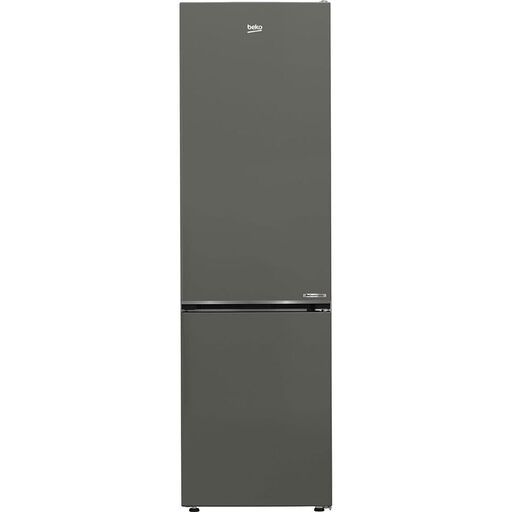 Image unavailable
A fridge-freezer with separate figures for fresh and frozen capacity, so you can choose a layout that suits your shopping habits.
249 L fridge capacity and approximately 106 L freezer capacity; 240 kWh/year; class C; freestanding; reversible door.
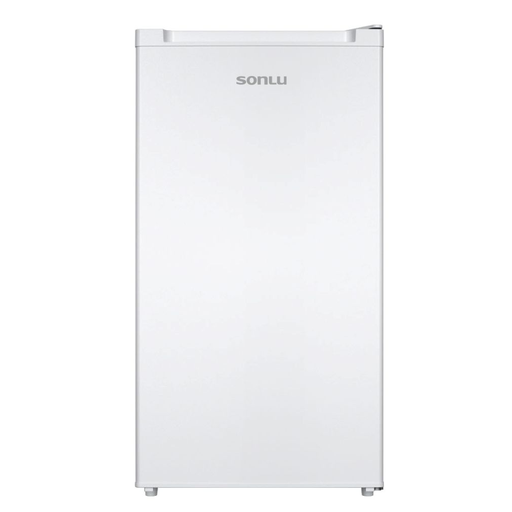 Image unavailable
A fridge for fresh-food storage, with no integrated freezer compartment.
Capacity: 82 L; 84 kWh/year; class E.
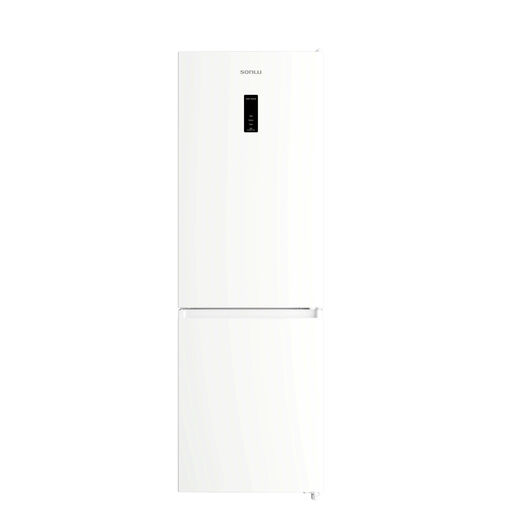 Image unavailable
This fridge-freezer lists fresh and frozen capacities separately, making it easier to compare the split with your needs.
211 L fridge capacity and 99 L freezer capacity; class E; inverter compressor; frost-free system; 60 cm wide; reversible door.
 Image unavailable
An appliance that switches between fridge and freezer modes, worth considering if you need separate storage.
Capacity: 95 L; 165 kWh/year; class E. If used alongside a fridge, its energy consumption is added to that of the other appliance.
Compare the A to G energy class, the kWh/year figure and the usable capacity of each compartment. The European Commission also says the label shows the noise level, and its QR code links to model information in EPREL. To estimate the annual running cost, multiply the kWh/year figure by the price your household pays per kWh.
No. Compare the repair quote and the energy use of your current appliance with those of a suitable replacement. In France, the Ministry of the Economy says the repair bonus may apply to out-of-warranty fridges and freezers, subject in particular to using an approved repairer and meeting the scheme’s other conditions.
When a consumer buys from a professional seller, the statutory guarantee of conformity also covers second-hand and refurbished goods for two years from delivery. The Ministry of the Economy says that, for second-hand goods, the presumption that a fault existed at the time of sale lasts for one year; the rules are different for private sales.
Anses recommends keeping the coldest part of the fridge between 0 °C and +4 °C, checking it regularly and arranging food so that air can circulate. Reducing energy use doesn’t mean letting the food-storage temperature rise.
The DGCCRF reminds retailers that they must offer free take-back of an equivalent used appliance when you buy a new product, under the ‘one-for-one’ scheme. Ask the retailer how take-back works in practice, especially when ordering online.